


 Trump Board of Peace Unveils $2.45 Billion Gaza Recovery Plan
  Russian Strikes Kill Eight Across Ukraine as Energy Sites Hit
  Gaza Faces Evacuation Crisis as War-Damaged Buildings Risk Collapse
  Taiwan Vows to Advance US Arms Sales Ahead of Trump-Xi Meeting
  US, China Extend Trade Truce to Jan. 10 Ahead of Trump-Xi Summit
  Judge Orders Trump to Restore White House Access for CNN, MS NOW and Politico
  South Korea, US Discuss Warship Building Cooperation
  Kremlin Says No Grounds Yet for Ukraine Peace Talks
  Trump Administration Plans Faster FDA Reviews for Smoke-Free Nicotine Products
  Macron Challenges Trump’s Gaza Peace Claims at UN
  Russian Missile and Drone Attack on Kyiv Kills Two, Damages Maternity Hospital
  Iran Vows ‘Crushing’ Response as US Talks Continue
  Trump Meets Venezuela’s Delcy Rodriguez at UN Assembly
  Venezuela Promises Elections as Delcy Rodriguez Pledges Democratic Transition
  Trump to Press Xi on Release of US Nuclear Expert Held in China
  US Invites Putin to Miami G20, Opening Door to Trump Summit
  Lula and Flavio Bolsonaro Tied in Brazil Runoff Poll


 Add as a preferred source on Google
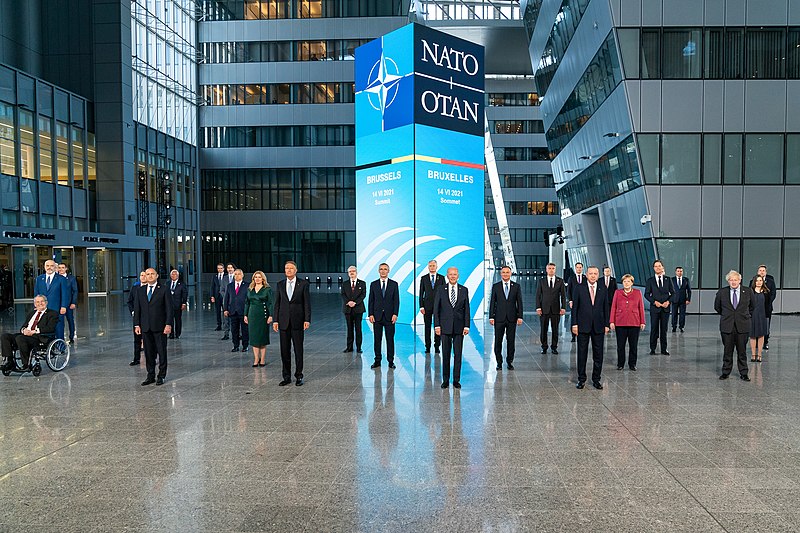
Tensions remain between Russia and Ukraine with the possibility of turning into an all-out military conflict. In an effort to negotiate with the West, Moscow has demanded that NATO stop its military activities in Eastern Europe.
Reuters reports that Moscow is demanding that NATO guarantee that it will stop its military activities in Eastern Europe as well as Ukraine. This is part of the security demands that Russia looks to negotiate with the West. Moscow detailed its demands for the first time that it claims are important in order to diffuse tensions in Europe and the conflict in Ukraine.
This comes as western nations are accusing Russia of looking to carry out a possible invasion of Ukraine after the buildup of its troops at the border the two countries share. Another demand that Russia is asking from NATO is to have veto authority over allowing Ukraine to join the alliance. The West has already ruled this request out.
Other demands suggest the removal of US nuclear weapons from Europe and the withdrawal of NATO forces from Poland, Estonia, Latvia, and Lithuania.
A senior US official said that the US was prepared to discuss the demands. However, they noted that there are demands that even Russia knows are “unacceptable.” They added that Washington will respond in the coming days with more concrete proposals regarding any discussions over the demands.
“We will not compromise the key principles on which European security is built, including that all countries have the right to decide their own future and foreign policy, free from outside interference,” said White House Press Secretary Jen Psaki.
NATO officials also told the outlet that Russia cannot have veto power on any potential expansion and that the alliance has the right to decide its own military stance.
In other related news, Ukrainian soldier and activist Kateryna Koval told Express that Russia’s waging of information and propaganda wars within Ukraine are as dangerous as an invasion. Koval explained how the Kremlin’s highly effective “information policy” made up of digital bots and trolls were able to shape anti-Ukraine policy within the country, including in the annexed Crimea and the Donbas region.
Koval explained how these digital bots and trolls have carried out what she described as the “first stage of invasion” of her country.
“They have armies of trolls and bots in social networks like Twitter, like Facebook, like Instagram,” said Koval. “And they use lots of messages concerning war, lots of messages concerning that NATO is the challenge for Russia.”







