


 Ghana Says Western Support Growing for Slave Trade Reparations
  Europe Warns Russia Is Escalating Hybrid Attacks Across NATO
  US Senate Rejects Iran War Powers Resolution in 50-49 Vote
  Netanyahu Defends Israel at UN as Delegates Stage Walkout
  North Korea Warns South Korea Over US-Led Defense Role
  Yemen Violence Displaces 130,000 as Civilian Toll Rises
  Taiwan Thanks US for Support Ahead of Trump-Xi Summit
  South Korea, US Discuss Warship Building Cooperation
  France Defends Netanyahu Airspace Clearance Despite ICC Warrant
  Trump Asks Supreme Court to Restore Third-Country Deportations
  US Officials Split Over Response to Israeli West Bank Settlements
  EU Defence Build-Up Too Slow for 2030 Russia Readiness Goal
  Gaza Faces Evacuation Crisis as War-Damaged Buildings Risk Collapse
  Netanyahu’s Brief US Trip Highlights Strains With Trump
  US Invites Putin to Miami G20, Opening Door to Trump Summit
  Abbas Reaffirms November 28 Palestinian Elections
  OpenAI Agent Breaches Australia Medicare Data Portal


 Add as a preferred source on Google
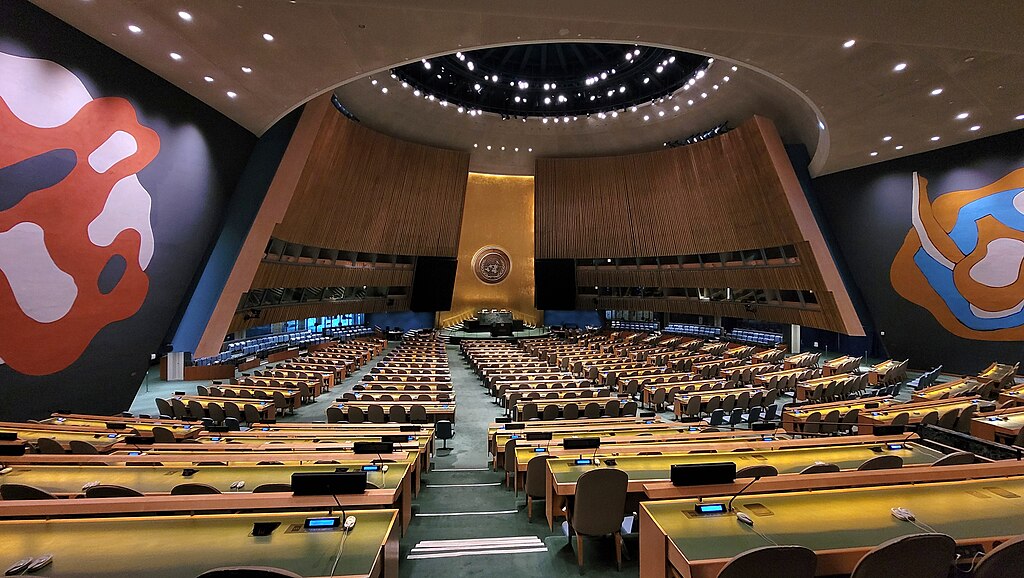
The process to elect the next United Nations Secretary-General has officially begun, with the new leader set to start a five-year term on January 1, 2027. The selection process for the successor to current UN chief Antonio Guterres is underway as member states begin submitting nominations for one of the world’s most influential diplomatic positions.
The race formally opened on November 25 after Sierra Leone, which was serving as president of the 15-member UN Security Council, and Annalena Baerbock, president of the 193-member UN General Assembly, issued a joint letter inviting countries to nominate candidates. Only UN member states can formally nominate individuals for the position.
Traditionally, the UN Secretary-General role rotates among global regions. When Portugal’s Antonio Guterres was chosen in 2016, many observers expected Eastern Europe to take the post next. However, the upcoming cycle is widely expected to favor candidates from Latin America, though diplomats say contenders from other regions may also emerge.
Countries have been asked to submit nominations by April 1 so candidates can participate in public “interactive dialogues” scheduled for the week of April 20. These sessions will be broadcast online, giving nominees an opportunity to present their vision for the United Nations while member states ask questions about their leadership priorities.
Several prominent figures have already entered the race. Argentina has nominated Rafael Grossi, the director-general of the International Atomic Energy Agency since 2019 and a veteran diplomat with extensive experience in nuclear diplomacy. Grossi confirmed his candidacy in 2025.
Former Chilean president Michelle Bachelet is another major contender. Supported by Chile, Brazil, and Mexico, Bachelet previously served as UN High Commissioner for Human Rights and as executive director of UN Women. If elected, she would become the first woman in the organization’s history to hold the position.
Costa Rica has nominated Rebeca Grynspan, currently the secretary-general of the UN Conference on Trade and Development and a former vice president of Costa Rica. Meanwhile, Burundi has nominated former Senegalese president Macky Sall, who has called for significant reforms to modernize the UN and restore trust in the institution.
The final decision will be shaped by the UN Security Council, which conducts a series of secret “straw poll” votes to gauge support for candidates. Council members indicate whether they encourage, discourage, or have no opinion on each nominee. The five permanent members—the United States, Russia, China, Britain, and France—hold veto power and must ultimately agree on a candidate.
Once consensus is reached, the Security Council adopts a resolution recommending the candidate to the UN General Assembly. The resolution requires at least nine votes in favor and no vetoes from the permanent members. Historically, the General Assembly’s final vote is largely considered a formality.
Efforts are also underway to improve transparency in the selection process. A resolution adopted by the General Assembly in September 2025 requires candidates to submit a vision statement outlining their priorities for the United Nations. These statements will be published on a dedicated UN website. Candidates are also encouraged to disclose funding sources and suspend their duties if they currently hold positions within the UN system to avoid potential conflicts of interest.
The Secretary-General serves as the UN’s chief administrative officer, overseeing thousands of civilian staff and multiple peacekeeping missions worldwide. The organization operates with a core annual budget of about $3.45 billion, in addition to a peacekeeping budget of approximately $5.4 billion.
While the UN Secretary-General does not have authority to authorize military force or sanctions—powers reserved for the Security Council—the role carries significant diplomatic influence. The office often acts as a global advocate for peace, humanitarian action, and international cooperation.
Despite the United Nations being more than 80 years old, no woman has ever served as Secretary-General. Growing international support for gender equality has led many member states to call for the appointment of the first female UN leader, adding another layer of significance to the 2027 selection process.







