


 Ripple-Backed Evernorth Set for Nasdaq Debut With 473 Million XRP
  RBI Rate Hike Bets Surge as Inflation Rises
  XRP Price Drops 3% Despite Ripple-Backed Evernorth Nasdaq Debut
  NEAR Price Surges 11% as Trading Volume Doubles
  Fed Unveils Stablecoin Rules Under GENIUS Act
  RBA Hikes Interest Rate to 4.60% as Inflation Risks Rise
  Fed’s Hammack Says More Data Needed Before Next Rate Move
  Nasdaq Faces Pullback to 26,225 Despite Bullish Outlook, UBS Says
  RBA Set for September Rate Hike as Inflation Stays High
  Crypto Derivatives Dashboard: Bulls Retain Control Amid $488M Liquidation Flush
  Cardano Hits Five-Year Transaction Record as ADA Price Falls
  XRP Ledger Foundation Confirms 100B Supply Safe After Security Fix
  Yen in Focus as BOJ, Fed Rate Hikes Reshape Currency Markets
  Trump Demands Powell Resign Over Fed Renovation Cost Overruns
  Binance to Shut Down Crypto Mining Pool Services on November 10
  RBI Uses $10 Billion Currency Swaps to Drain Excess Rupee Liquidity


 Add as a preferred source on Google
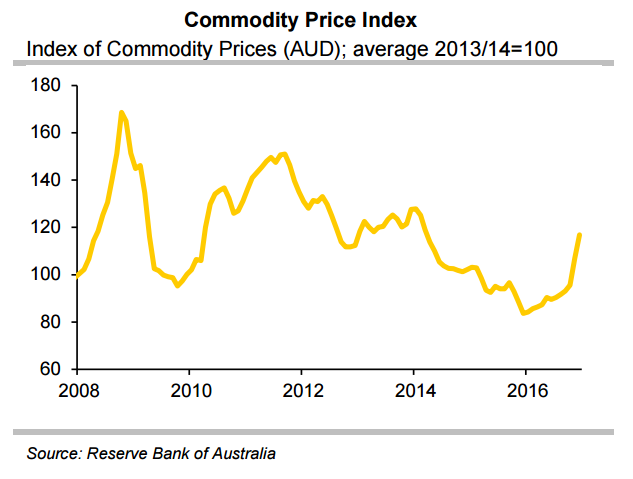
The Reserve Bank of Australia (RBA) is expected to hold its first monetary policy meeting of 2017 on February 7, where it is widely expected to maintain its bank rate at a historic low of 1.50 percent despite global uncertainties. The RBA began its current easing cycle in November 2011 and over the course of the last five years, has dropped the cash rate from 4.75 percent all the way to its current 1.50 percent.
Minutes from the December board meeting emphasised the concern the Board has with balancing the risks around financial stability and the possible need to further support a deteriorating economy. Minutes put a positive spin on the current economic outlook and analysts suggest the "hurdle" to further cutting rates is high.
Evidence now is increasingly pointing towards a positive transition point for nominal growth, inflation and wages. Australia's NAB survey showed business conditions bounced solidly in December following a string of declines. Business confidence which has been tracking sideways over the past year also nudged up.
Labour costs were reported to have risen 0.6 percent in the three months to December. While this is down slightly from the previous month’s rise of 0.7 percent, the average read in the three months to December was 0.7 percent compared with 0.6 percent in the three months to December 2015, suggesting that wage inflation is slowing picking up. If downside tail risks continue to subside and broader momentum improves as expected, RBA's next policy move will be 25 basis points hike in the first-quarter of 2018.
Australia Q4 inflation data released last month showed Australia’s underlying inflation rose by +0.4 percent for the quarter and +1.55 percent for the year, a touch weaker than expected, but in line with the RBA’s 1½ percent/yr target. The closely watched core inflation figure was 1.6 percent for the year, and 0.4 percent for the quarter. Inflation has lagged below the RBA's 2-3 per cent target band since late 2014 and numbers highlight the downside risks.
FxWirePro's Hourly AUD Strength Index remained neutral at -10.9947 (a reading above +75 indicates a bullish trend, while that below -75 a bearish trend). For more details, visit http://www.fxwirepro.com/currencyindex.







