


 Best Gold Stocks to Buy Now: AABB, GOLD, GDX
  AI can be a personal trainer in your pocket – but is it safe?
  JPMorgan Cuts Gold Price Forecast, Sees Bullion Reaching $4,500 by End of 2026
  Gold Prices Fall Amid Rate Jitters; Copper Steady as China Stimulus Eyed
  Asian Stocks Rebound as Tech Shares Rally on Fed Rate Cut Hopes and Easing Iran Tensions
  US Stock Futures Hold Steady Ahead of June Jobs Report as Fed Rate Outlook Remains in Focus
  Japan Signals Surprise Yen Intervention Strategy as BOJ Hawkish Stance Puts FX Traders on Alert
  Asian Currencies Rise as Dollar Weakens; Yen Holds Steady Amid Japan Intervention Watch
  Russia Stocks End Flat at Three-Year Low as MOEX Index Stalls, Gold Prices Climb


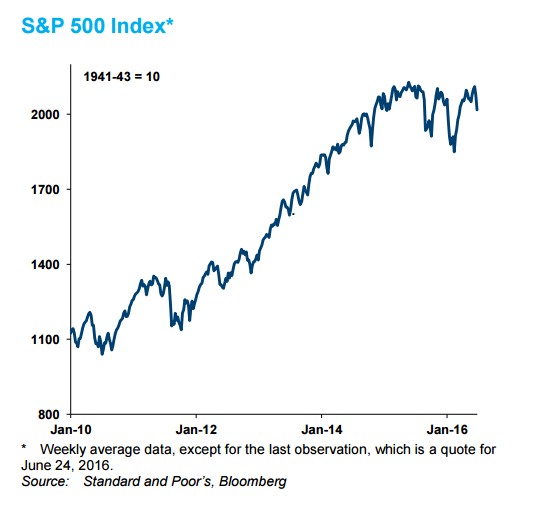
The British vote to leave the EU has rattled markets across the globe, dampening the already weak global growth outlook. Initial extreme moves during the UK trading session were pared back with a chorus of central bankers offering up liquidity to the market, but volatility is unlikely to fade yet. The biggest concern is the destabilising effect an exit could have on the European continent as a whole. If other member states follow suit, the EU itself could slowly crack.
The International Monetary Fund has said in a report recently that the Brexit could knock up to half a percentage point off the combined output of all advanced economies by 2019, including the US and has warned that it may throw Britain, a key US trading partner, into sharp recession. The most obvious risk involves a drop in exports to the United Kingdom. That said, trade between the two nations only makes up 0.5% of U.S. economic activity, so even a sharp decline would be less than catastrophic and the US should be able to absorb this shock.
Domestic demand also could weaken in response to the Brexit vote. The drop in equity values will weaken the financial positions of many households, which could dampen consumer spending. In addition, the uncertain global economic outlook, along with a higher cost of capital because of the drop in share prices, could slow already weak investment spending.
Yellen forewarned earlier this week that Brexit "would negatively affect financial conditions and the U.S. economy." Speculation is on the rise about a possible interest rate cut by the Federal Reserve this year. As of now, the CME data shows a 7% probability of a rate cut this year.
"While the economic impact on the US is likely to be more modest, a weaker trade performance, stronger dollar and tighter financial conditions are not going to be conducive to near-term tightening. A Fed hike is no firmly off the table for July, and perhaps unlikely for September, after which Presidential election uncertainty might also weigh more heavily on investment," said Daiwa Capital Markets in a report.
Brexit also raises longer-term political risks that are clouding the picture. Scotland could reignite its independence efforts to be part of Europe. Less certain but quite possibly all or part of Northern Ireland will join Ireland. Brexit might be only the first step in a restructuring of the political landscape, and economic challenges will become greater if the independent movement spreads. The European Union is one of the world's largest trading blocs and it's a major trade partner with the United States. If it breaks, it could lead to a lot of global uncertainty and many trade deals would need to be restructured.
The market has stabilised after last week’s routing. GBP/USD hovers around 1.3320, while USD/JPY was around 102.02 as of 0920 GMT. S&P 500 Index was down 0.05% at 2020.4.







