


 Kremlin Says No Decision Yet on Putin-Trump December Summit
  Lula and Flavio Bolsonaro Tied in Brazil Runoff Poll
  Taiwan Thanks US for Support Ahead of Trump-Xi Summit
  OpenAI Agent Breaches Australia Medicare Data Portal
  Russian Missile and Drone Attack on Kyiv Kills Two, Damages Maternity Hospital
  Macron Challenges Trump’s Gaza Peace Claims at UN
  Marco Rubio to Meet Russia’s Lavrov in New York
  US, China Extend Trade Truce to Jan. 10 Ahead of Trump-Xi Summit
  South Korea, US Discuss Warship Building Cooperation
  Trump Board of Peace Unveils $2.45 Billion Gaza Recovery Plan
  Gaza Faces Evacuation Crisis as War-Damaged Buildings Risk Collapse
  Iran Vows ‘Crushing’ Response as US Talks Continue
  Judge Orders Trump to Restore White House Access for CNN, MS NOW and Politico
  Taiwan Vows to Advance US Arms Sales Ahead of Trump-Xi Meeting
  Europe Warns Russia Is Escalating Hybrid Attacks Across NATO
  Mexico-US Trade Talks Delayed to October as Tariff Negotiations Continue
  US Officials Split Over Response to Israeli West Bank Settlements


 Add as a preferred source on Google
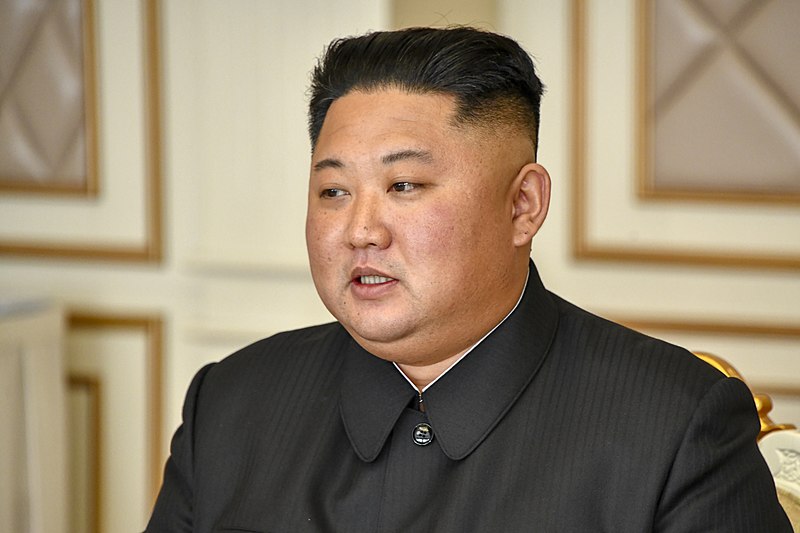
Continuing its string of weapons tests this year, North Korea has carried out another weapons test this week. The latest test follows the recent summit by the Quad regional grouping in Japan.
In a report by Reuters, Pyongyang fired three missiles Wednesday, one of which was believed to be an intercontinental ballistic missile or ICBM.
The launch followed the visit of US President Joe Biden, who made his first trip to the continent as the US leader and attended an in-person summit with his counterparts in the Quad regional grouping that is made up of Japan, Australia, India, and the US. At the time, Biden agreed to measures that could deter North Korea’s nuclear capabilities.
South Korean deputy national security adviser Kim Tae-hyo said North Korea also appeared to conduct several experiments with a detonation device to prepare for its seventh nuclear weapon test. However, the test was unlikely going to take place in the coming days.
As a response to Pyongyang’s launches, Seoul and Washington carried out live-fire drills, which included surface-to-surface missile tests that involve the US Army Tactical Missile System and South Korea’s Hyunmoo-2 SRBM.
Other military shows of force were made by the US and South Korea in response, including fighter jets flying overhead at an “elephant walk” formation.
This appeared to highlight the hardline stance that Conservative South Korean President Yoon Suk-yeol is expected to take toward the neighboring nation.
“Our military’s show of force was intended to highlight our resolve to firmly respond to any North Korean provocations including an ICBM launch, and our overwhelming capability and readiness to conduct a surgical strike on the origin of the provocation,” South Korea’s Joint Chiefs of Staff said in a statement.
Seoul and Washington also agreed over the weekend to ramp up measures that could deter Pyongyang while expanding cooperation over other issues such as cybersecurity, nuclear energy, regional security, and supply chains among others.
Yoon and Biden issued a joint statement pledging to expand the alliance to address issues beyond North Korea while still remaining open to discussions with Pyongyang.
“Both leaders agree to expand the scope and scale of combined military exercises and training on and around the Korean peninsula,” said the statement regarding North Korea, citing the growing threat of Pyongyang in the region.







