


 Sudan Rejects US Legitimacy Remarks, Defends Sovereignty
  France Defends Netanyahu Airspace Clearance Despite ICC Warrant
  China’s ‘Lipstick King’ Says AI Won’t Replace Livestream Hosts
  EU Defence Build-Up Too Slow for 2030 Russia Readiness Goal
  Netanyahu’s Brief US Trip Highlights Strains With Trump
  European Stocks Fall as Bond Yields and Geopolitical Risks Weigh
  Fed Unveils Stablecoin Rules Under GENIUS Act
  US Backs Musk in Fight Against EU’s €120 Million X Fine
  US Stock Futures Fall as Treasury Yields Surge Ahead of Trump-Xi Summit
  What ‘Taiwan Independence’ Means as Xi Presses Trump on US Policy
  Najib Razak Seeks Stay of 15-Year 1MDB Prison Sentence
  Japan Private-Sector Growth Slows as Domestic Demand Weakens
  Xi Calls for Deeper U.S.-China AI Cooperation in Trump Talks
  Saudi Arabia, Turkey and Pakistan Plan Urgent Defence Talks Over Houthi Attacks
  Netanyahu Takes Aim at Mamdani as Israel Election Nears
  Asian Stocks Fall as Bond Yields Surge Ahead of Trump-Xi Summit
  Trump, Xi Focus on Trade and AI at White House Summit


 Add as a preferred source on Google
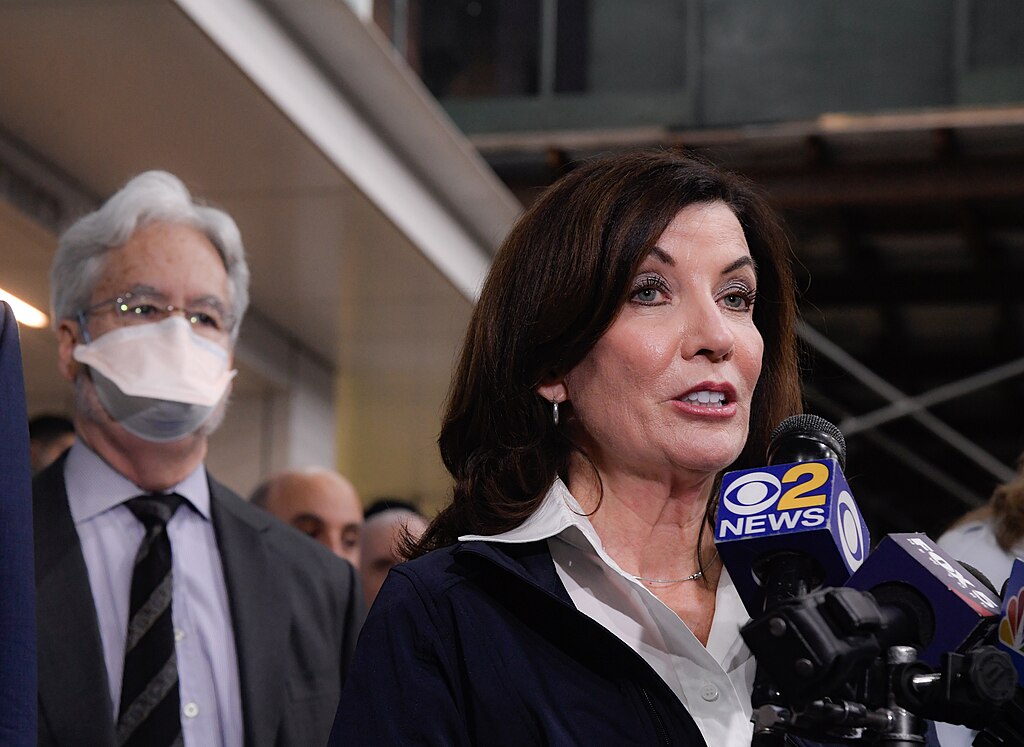
New York Governor Kathy Hochul is evaluating whether to raise corporate taxes as the state prepares for a significant budget shortfall driven in part by expected federal funding cuts, according to a source familiar with the discussions. While no final decision has been made, officials say the state’s fiscal outlook early next year will depend heavily on federal actions under the new administration.
The potential tax hike comes as New York faces a projected $34.3 billion deficit through fiscal year 2029. Although the state comptroller warned that the combined impact of the deficit and recent federal changes has pushed New York into its most challenging financial position since the 2009 economic crisis, state budget director Blake Washington insisted recently that New York remains “in a good spot financially,” adding that raising taxes is “the last thing on my mind.”
Mayor-elect Zohran Mamdani, who campaigned on affordability issues, has publicly called for increasing the state’s top corporate tax rate from 7.25% to 11.5%. His platform also includes freezing rent and imposing higher taxes on the wealthy. Mamdani’s team did not respond to requests for comment.
Tensions between state and federal leaders are adding uncertainty. President Donald Trump, who endorsed former Governor Andrew Cuomo in the mayoral race, has stated he is unlikely to provide substantial federal funds to New York City, pledging only the “minimum required” under law following Mamdani’s victory.
During a 90-minute meeting on Thursday, Hochul and Mamdani discussed the state’s finances as well as concerns over potential federal actions, including the possibility of ICE or National Guard deployments to New York City. According to a meeting readout, both leaders agreed that such a federal surge would not improve public safety. State officials also briefed the mayor-elect on preparedness plans should New York become a federal target.
The governor’s office emphasized that the state remains vigilant as it monitors federal decisions and explores strategies to safeguard New Yorkers during a period of growing political and fiscal uncertainty.







