


 European Stocks Fall as Bond Yields and Geopolitical Risks Weigh
  Gold Prices Fall as Treasury Yields Rise on Fed Rate Hike Bets
  China’s ‘Lipstick King’ Says AI Won’t Replace Livestream Hosts
  Japan Private-Sector Growth Slows as Domestic Demand Weakens
  Russian Envoy Dmitriev Heads to US for Ukraine Talks
  Mexico-US Trade Talks Delayed to October as Tariff Negotiations Continue
  Oil Prices Jump 3% as Houthi Attack Revives Supply Fears
  Oil Prices Ease as Iran Tensions Clash With Diplomacy Hopes
  Fed Unveils Stablecoin Rules Under GENIUS Act
  Soybean Futures Slip as Traders Await Trump-Xi Trade Signals
  U.S. Dollar Hits Two-Month High as Oil, Treasury Yields Surge
  Asian Stocks Fall as Bond Yields Surge Ahead of Trump-Xi Summit
  Asian Currencies Mixed as Dollar Holds Near Two-Month High
  US 10-Year Treasury Yield at 6% Emerges as New Market Risk Threshold
  Australia Unemployment Hits Five-Year High Despite Strong Jobs Growth
  Fed Unveils Stablecoin Rules Under GENIUS Act
  RBI Uses $10 Billion Currency Swaps to Drain Excess Rupee Liquidity


 Add as a preferred source on Google
U.S. stocks ended mixed on Wednesday as investors turned cautious ahead of key earnings from major technology companies while rising oil prices and escalating tensions in the Middle East added to inflation concerns.
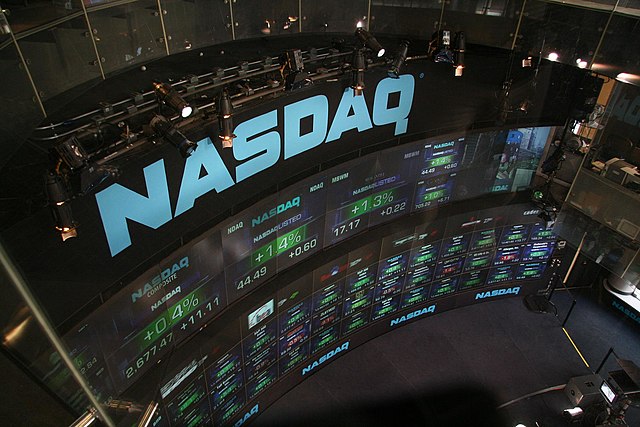
The Nasdaq Composite led losses, falling 0.57% to 25,690.90 as weakness in several technology stocks offset gains in semiconductor shares. The S&P 500 slipped 0.14% to 7,498.96, while the Dow Jones Industrial Average finished nearly flat, edging down just 6.06 points to 52,218.58.
Market attention centered on second-quarter earnings from Alphabet and Tesla, the first members of the "Magnificent Seven" to report results. Investors are looking for signs that massive artificial intelligence investments are translating into stronger financial performance. Alphabet shares fell 1.5% before earnings, while Tesla closed down 1.3% and dropped another 3% in after-hours trading after reporting negative free cash flow for the first time in more than two years.
Technology stocks continued to show mixed performance. The Philadelphia Semiconductor Index rose 0.4%, extending its recovery after recent losses. Server maker Super Micro Computer surged 19.8% after announcing more than $60 billion in fourth-quarter orders, lifting peers Dell Technologies, which gained 9.3%, and Hewlett Packard Enterprise, up 3%.
Oil prices also remained a major market driver. Crude futures climbed roughly 3% to their highest settlement since June 11 after Yemen's Iran-backed Houthi militia threatened shipping in the Red Sea. Additional geopolitical risks emerged after U.S. President Donald Trump warned that the United States would target Iranian infrastructure if Iran attacked ships in the Strait of Hormuz, fueling concerns that higher energy prices could keep inflation elevated.
Meanwhile, investors continue to monitor the Federal Reserve's policy outlook. Economists expect the Fed to leave interest rates unchanged through the remainder of 2026, while CME FedWatch data indicates markets see about a 66% probability of no rate change at next week's meeting.
Elsewhere, AT&T gained 3.5% after stronger-than-expected wireless subscriber growth, while Philip Morris International rose 3.3% on better-than-expected quarterly earnings. Overall market breadth remained weak, with declining stocks outnumbering advancers on both the NYSE and Nasdaq despite relatively light trading volume.







