


 Qualcomm Gains on $60B Amazon AI Chip Deal
  Meta CEO Zuckerberg Backs Independent AI Safety Reviews Over Development Slowdown
  SpaceX Nasdaq 100 Weight to More Than Double in Rebalance
  Paramount Skydance Faces $30 Million Film Penalty in Warner Bros. Deal
  Westinghouse Targets $50 Billion Valuation in U.S. IPO
  OpenAI Urges US-Led Global Standards for Frontier AI
  US Northeast Airports Resume Operations After Telecom Outage Disrupts Thousands of Flights
  US Federal Register Drops Alibaba Qwen AI Search Tool
  Who should own the knowledge that underpins AI technology?
  NASA, Boeing Discuss Expanding Starliner Missions
  China Reviews Broadcom Switch Use in State Data Centres
  Guterres Urges Stronger Global AI Safeguards Ahead of UN Assembly
  Hyundai CEO Warns Chinese Automakers Could Disrupt US Market
  Nike Earnings at Risk as UBS Cuts Price Target to $42
  Microsoft Stock Upgraded as Stifel Sees Stronger Azure Growth
  Big AI wants to slow down AI research. Is it a safety pause or a strategic retreat?
  Meta Partners With Shopify to Bring Shop Pay Checkout to Muse AI


 Add as a preferred source on Google
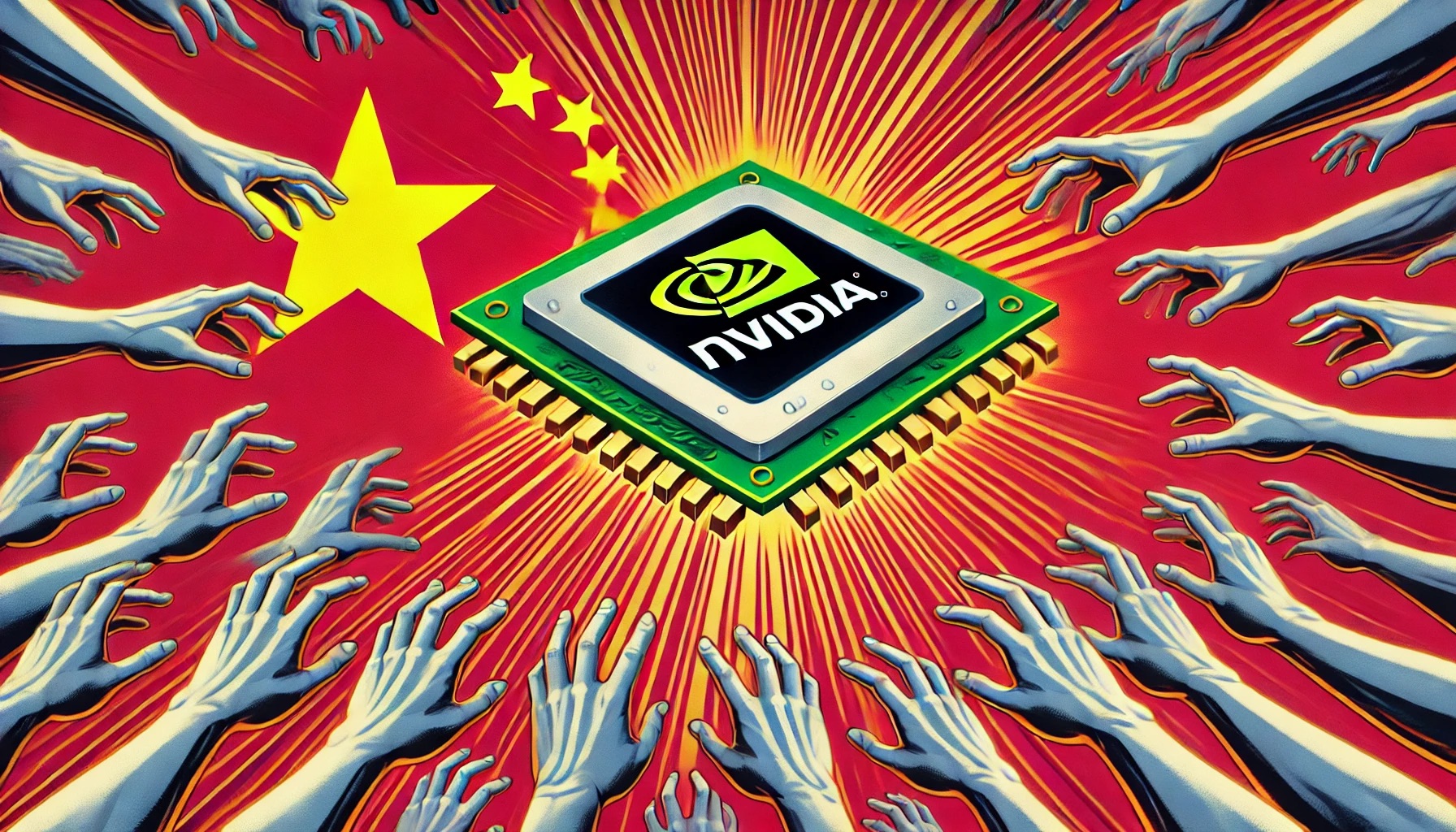
China’s AI sector faces a dilemma between relying on NVIDIA’s powerful chips or transitioning to domestic alternatives. A new report highlights the limitations of China’s AI hardware and suggests sticking with NVIDIA for optimal performance amid increasing US sanctions.
NVIDIA’s Dominance in China’s AI Market
The future of China's artificial intelligence (AI) processing capacity is a hotly contested topic, with many pointing out that the country's AI companies can no longer depend on hardware from companies like NVIDIA due to the increasing impact of US sanctions.
While Huawei's domestic solutions have helped alleviate some of the problems, a recent study from the China Academy of Information and Communications Technology (CAICT) argues that Chinese data centers shouldn't rely solely on domestic products because of their limitations.
Domestic AI Solutions Face Limitations
A report on China's growing computing power released on Sunday by the China Academy of Information and Communications Technology (via SCMP) said, "If the conditions allow, [data centres] can choose [Nvidia’s] A100 and H100 high-performance computing units, if the need for computing power is limited, they can also choose H20 or alternative domestic solutions."
NVIDIA’s Continued Success in China Despite Sanctions
According to WCCFTECH, NVIDIA has found success in China, a market hit hard by US trade restrictions; the country accounts for over 10% of the company's year-over-year revenue.
Team Green's hardware is crucial for Chinese AI companies like ByteDance and Tencent. Their enormous consumer base means they need a lot of AI computing capacity. An indication of China's enormous demand for AI hardware, CAICT revealed that GPU-based processing power for AI training and inference experienced a YoY rise of 70% in the region.
Chinese AI Chipmakers Struggle Against NVIDIA
Companies such as BirenTech and Huawei have introduced their own artificial intelligence chips to compete with NVIDIA's market dominance; Huawei's Ascend 910B AI GPU has been particularly successful in driving sales for the Chinese tech giant.
According to rumors, the company will also unveil the more powerful Ascend 910C. However, the CAICT thinks it's not worth the hassle to adapt existing LLMs developed on NVIDIA's compute stack and implement domestic solutions for code porting.







