


 Scott Bessent Eyed as Trump’s New AI Czar
  Trump Administration to Launch Autism Initiatives Targeting Acetaminophen Use and New Treatment Options
  Apple Pay Set for India Launch With Axis Bank
  NASA and SpaceX Target Crew-11 Undocking From ISS Amid Medical Concern
  Trump Plans Federal AI Force and AI Czar
  China vs. NASA: The New Moon Race and What's at Stake by 2030
  SpaceX Prioritizes Moon Mission Before Mars as Starship Development Accelerates
  Burnham Eyes UK Leadership Role in AI Ahead of Trump Meeting
  SpaceX Nasdaq 100 Weight to More Than Double in Rebalance
  MediaTek Unveils 2nm Dimensity 9600 Pro AI Chip
  China Reviews Broadcom Switch Use in State Data Centres
  Microsoft Stock Upgraded as Stifel Sees Stronger Azure Growth
  Blue Origin’s New Glenn Achieves Breakthrough Success With First NASA Mission
  SoftBank Launches $11 Billion Bond Sale to Fund OpenAI Investment
  AI is supercharging money scams – here’s what you can do to protect yourself
  DOJ Will Investigate AI-Related Crimes, Attorney General Blanche Says


 Add as a preferred source on Google
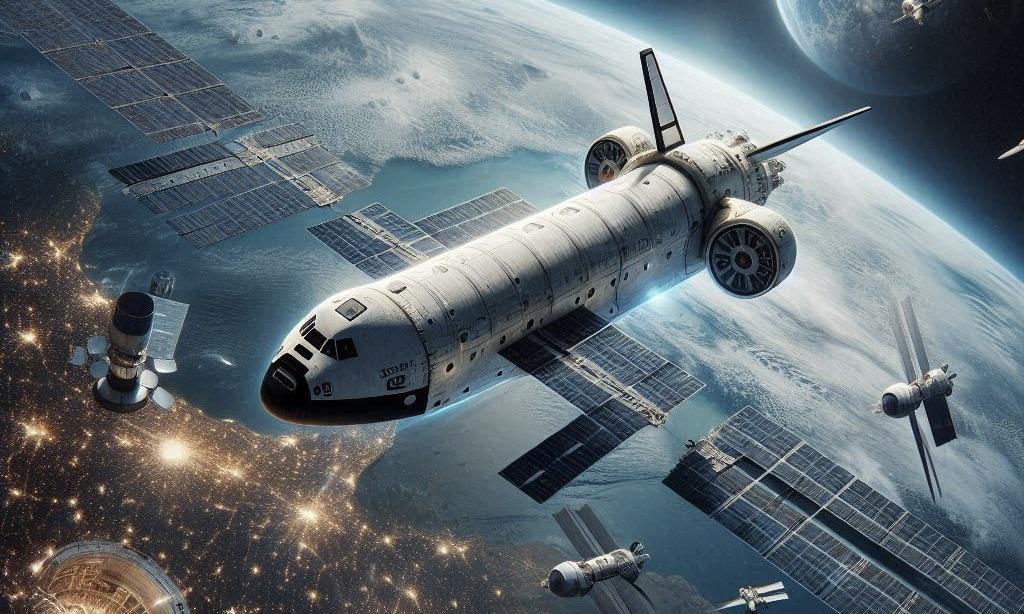
NASA and SpaceX have unveiled plans to deorbit the International Space Station by 2031. The $843 million contract awarded to SpaceX includes designing and constructing a deorbit vehicle to guide the ISS to its final descent and reentry safely.
SpaceX Secures $843 Million NASA Contract to Design Deorbit Vehicle for International Space Station's 2031 Descent
NASA and SpaceX officials have disclosed new information regarding their intention to deorbit the International Space Station (ISS) after its operational lifespan in 2030. NASA awarded SpaceX a $843 million contract late last month to design and construct a vessel that will rendezvous with the ISS and propel it toward Earth. NASA's selection document for the award disclosed that SpaceX and Northrop Grumman were the sole remaining contenders. SpaceX prevailed due to its Dragon platform's inherent strengths.
During a media conference earlier today, NASA disclosed that the International Space Station's de-orbit will be lengthy. The de-orbit vehicle will dock at the station one year and a half before its final reentry burns.
NASA's Space Station Program Manager, Dana Weigel, disclosed the agency's intentions for the multi-million-dollar de-orbit vehicle. The de-orbit vehicle will be operated by NASA, in contrast to other missions to the ISS, which SpaceX and Northrop Grumman conduct. As Weigel revealed, NASA will decide to select a launch company independently in the future. She stated that NASA will store the vehicle and conduct "periodic maintenance" before its launch. The vehicle will be launched by NASA approximately one and a half years before the final reentry fire.
NASA will conduct several checks to guarantee the vehicle's "health" following docking. The NASA official disclosed that the station will require "approximately one to one and a half years to complete its descent,"with the crew remaining on board for as long as feasible to ensure its continued health. The personnel will depart the station approximately six months before its reentry.
Weigel disclosed that the ISS's final de-orbit maneuvers will occur at 220 kilometers just before the vehicle commences its final de-orbit fires. Subsequently, the station will require four days to complete the concluding reentry burns.
NASA's Deorbit Vehicle for ISS to Carry 35,000 Pounds of Fuel, Feature 46 Draco Engines
According to Wccftech, due to its launch profile, the de-orbit vehicle will carry over 35,000 pounds of fuel, particularly the delta-v requirement of 57 meters per second. NASA may "do it a bit earlier," according to Weigel, but it will not integrate the rocket and the spacecraft until it is committed to launch. Procuring a rocket typically requires a minimum of three years before it can be launched. If the mission requires it, SpaceX's director of Dragon mission management, Sarah Walker, has a "couple of different configurations across the Falcon product line" at her disposal.
The de-orbit vehicle will be substantially larger than SpaceX's current Dragon ships, which deliver crew and cargo to the ISS, as it will be required to effectively fly the station independently. Walker of SpaceX disclosed that this vehicle will require "six times the useful propellant, and three to four times the power generation and storage" of the current Dragon spacecraft. This fuel will be used to maintain the ship in orbit and to perform the fires necessary to deorbit the ISS. These burns include "orbit shaping burns" to place the station in a low elliptical orbit and a "final reentry burn" to lower the perigee to intersect with Earth at the intended location.
During the call, Walker disclosed that the vehicle would have 46 Draco engines. The Dragon's engines employ hyperbolic fuels during its in-space maneuvers. According to Walker, the Dragon de-orbit vehicle will have "46 Draco engines." Of these, "16 are already on the capsule for attitude control." Thirty, for the delta-v maneuvers on the trunk. She further stated that the "aft-facing Dracos" will discharge simultaneously to facilitate the de-orbit burn, generating approximately ten thousand newtons of thrust.
Weigel of NASA clarified that the specific location of the ISS's final Earth destination has not yet been determined; however, the South Pacific Ocean is a prospective option. Regarding the mission's timeline, NASA will rely on solar cycles to assist in planning the station's final days.
According to Weigel, "We can control the launch of the USDV, but the actual time that it takes to drift down from where we fly right now to those final altitudes that I've been talking about the burn, that's a variable that's got a little bit of flexibility that we can't control.
“As a result, NASA will use estimates, but right now, the normal plan or end of life at the end of 2030 means we splash in the ocean in January of 2031."







