


 Morgan Stanley Names BAE Systems Top European Defence Stock Despite Lower Price Target
  Trump Reports $1.4 Billion in Crypto Income as Digital Assets Become Top Wealth Source
  Goldman Sachs Flags 3 Key Risks Ahead of Europe’s Earnings Season
  Trump Administration to Launch Voluntary AI Standards for Frontier Models
  In a rebuke to Trump, the Supreme Court rules that birthright citizenship is the law of the land
  Apple Eyes Chinese Memory Chips as AI Shortage Pressures iPhone Supply Chain
  Trump has made more than $1 billion from crypto in a year. How?
  Kawasaki Heavy Shares Slide on Report of ¥200 Billion Capital Raise Plan
  Goldman Sachs Raises USD/JPY Forecast, Sees Yen Weakness Persist Through 2027
  Apple Expands iPhone Lineup, Boosts Foldable iPhone Production Plans Through 2027
  JPMorgan Cuts Gold Price Forecast, Sees Bullion Reaching $4,500 by End of 2026
  Super Micro Employees Detained in Taiwan AI Server Export Investigation
  Meta CEO Zuckerberg Says AI Agent Development Has Slowed Despite Massive AI Investment
  Smartphones are helping filmmakers tell the stories the movie industry overlooks
  AI can be a personal trainer in your pocket – but is it safe?


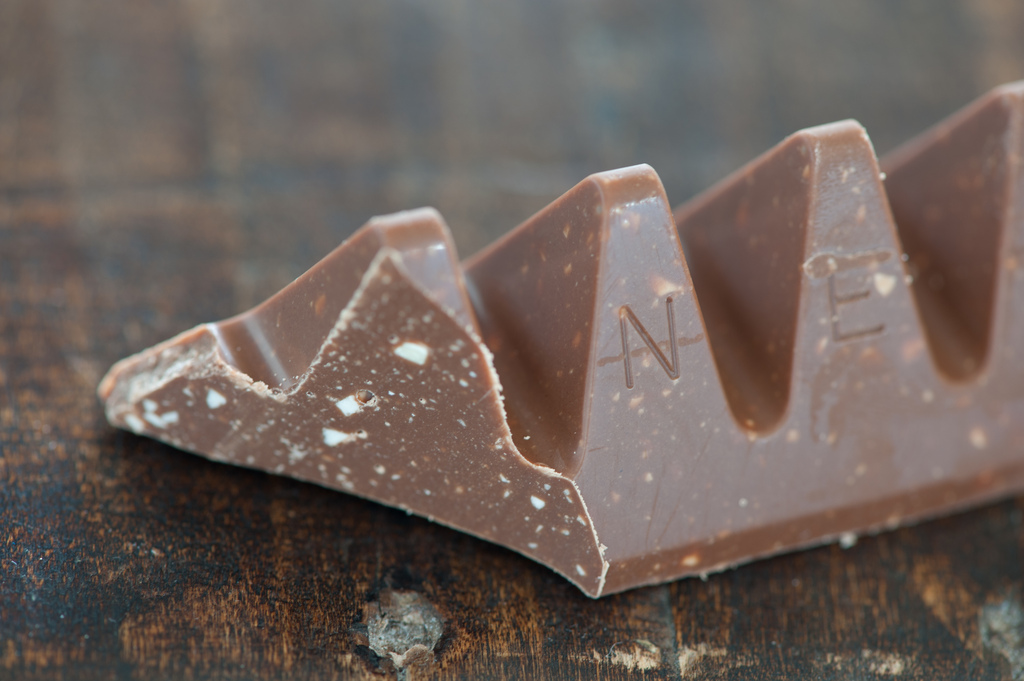

Toblerone chocolate is a brand instantly recognisable for its bars studded with pyramid-shaped mountains of chocolate. So the announcement from Mondelez International, the brand’s Swiss owner, of a redesign that will mess with its iconic shape seems an odd and ill-conceived decision. In reducing the number of pyramids by increasing the gaps between them, the firm risks permanently reminding its customers that they have bought a product that is no longer complete: the lingering impression is that they have bought a hole, not a whole, and that the product is less than it was.
If the motivation behind the decision is to tackle increased costs and reduced profit margins by shrinking the bar from 170g to 150g, surely it would have made more sense to make the bar smaller, rather than change the brand’s instantly recognisable shape. Among confectioners this approach has been used before in response to increased costs. As long ago as the 1930s, the KitKat has sold its two-finger bar alongside the four-finger version, and the smaller product remains the bestseller.
KitKat producers Nestle also devised a three-finger version for the Middle East market, and also introduced the enlarged KitKat Chunky. But these variations are a positive enhancement to the product’s iconic finger biscuit shape, and are imaginative and logical extensions of the brand’s image. On the other hand, it’s difficult to see how the Toblerone decision can be seen any way but negatively.


It’s well known in design that the spaces in between – what is referred to as “negative space” – when used carefully can become as important and effective as the positive forms that appear inside it. For example, look at the FedEx logo with its cunningly hidden arrow, or US broadcaster NBC and its peacock logo. These two brands have developed logos which make a virtue of how negative space can become a positive element in their communications.
But with Toblerone, the negative space is just that. Artists and designers employ white space as an important element in composition to create harmony and balance. The Toblerone design is the opposite: an extended space that appears out of place – like missing teeth, it generates a sense of a gap that needs to be filled. There is a strong symbolic suggestion of disharmony and loss.
Over the years, there have been many examples of brands that lost their way, making decisions they later regretted due to poor consumer response or adverse political or cultural reactions. For example, re-branding the Post Office Group as Consignia was a hugely expensive decision, costing £1.5m to launch and a further £1m when the group reverted back to Royal Mail in 2002. The perceived wisdom was that the name caused confusion in the eyes of the public and failed to clearly communicate the services on offer.
In an effort to re-position British Airways as an inclusive, global airline, branding agency Interbrand Newell and Sorrell caused enormous controversy 20 years ago by dropping the existing livery’s red, white and blue and replacing it with diverse cultural images applied to the tailfins of BA’s fleet.
Newspapers leapt on what looked like an abandoning of the national flag, and former prime Minister Margaret Thatcher draped a handkerchief over a model bearing a newly branded tailfin design in a thinly veiled message of disapproval at what she saw as a betrayal of a proud national identity.
Replacing a cherished national symbol or name is controversial enough, but increasing the gap as a means of maintaining margins at the expense of the brand seems a foolhardy, potentially disastrous move. The problem with gaps is that you don’t always see them until it’s too late – and Toblerone’s manufacturers don’t seem to have heeded the warning.
 Mike Sheedy does not work for, consult, own shares in or receive funding from any company or organisation that would benefit from this article, and has disclosed no relevant affiliations beyond the academic appointment above.
This article was originally published on The Conversation. Read the original article.







