


 FCC Chair Brendan Carr to Face Senate Oversight After Controversy Over Jimmy Kimmel Show
  Novo Nordisk Raises 2025 Outlook Despite Wegovy Pill Miss and CagriSema Setback
  Novo Nordisk Eyes Turnaround as Oral Wegovy Challenges Eli Lilly in Weight-Loss Drug Race
  DOJ Antitrust Chief Rejects Political Fast-Track for Paramount-Skydance Deal
  Tennessee Plans to Rename Nashville Airport After Dolly Parton
  3 clinical-grade skincare creams you really shouldn’t buy online
  Trump Threatens Legal Action Against Disney’s ABC Over Jimmy Kimmel’s Return
  Anderson Cooper to Exit CBS News’ 60 Minutes After Nearly 20 Years
  AstraZeneca Shares Sink After Wainua Trial Misses Key Heart Disease Goal
  Paramount’s $108.4B Hostile Bid for Warner Bros Discovery Signals Major Shift in Hollywood
  US-Backed Pediatric HIV Treatment Drops After Foreign Aid Changes, Study Finds
  France Battles Mediterranean Wildfires as Heatwave Fuels Fire Risk
  George Clooney Criticizes Trump’s Tariff Threat, Calls for Film Tax Incentives
  Eli Lilly Eyes AtaiBeckley Acquisition to Expand Psychedelic Mental Health Pipeline
  Netflix Shuts Down Boss Fight Entertainment, Developer of “Squid Game: Unleashed” Amid Gaming Strategy Shift
  Disney Investors Demand Records Over Jimmy Kimmel Suspension Controversy


 Add as a preferred source on Google
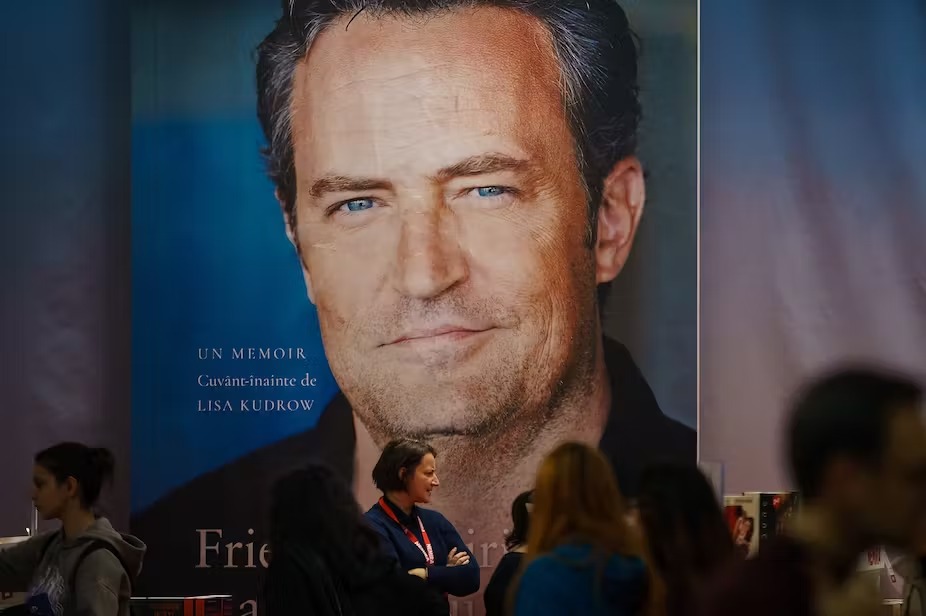

As the outpouring of tributes from celebrities and fans shows, the actor Matthew Perry and his Friends character, Chandler Bing, meant a huge amount to many people.
But Perry, who died suddenly at 54, said himself that he did not want to be remembered solely for his role on the sitcom: “When I die I don’t want ‘Friends’ to be the first thing that’s mentioned, I want that [helping people] to be the first thing that’s mentioned. And I’m going to live the rest of my life proving that.”
Perry was referring to his lifelong battle with addiction and opioids, which he documented candidly in his autobiography. Having visible figures like Perry speak publicly about their struggles can challenge the social stigma of addiction and inspire people to seek treatment.
In my research and work with drug users, I have explored public understandings of addiction and substance dependency. It can take years for people to seek help for addiction issues, and they often report feelings of guilt and shame. Many people still associate addiction with a lack of control and personal chaos, which can evoke fear in those who do not have personal experience of addiction themselves.
Perry himself subscribed to the view of addiction as a disease. He wanted people to be open and compassionate to the struggles of addiction, describing it as an adversary that is just “outside doing one-arm push-ups, waiting to get you alone”.
After his passing, a clip of Perry’s 2013 Newsnight debate with controversial commentator Peter Hitchens went viral. The debate focused on the topic of specialist drug courts, an alternative to the normal court system, which Perry supported. Hitchens, who disagrees with the concept of addiction as a disease and describes drug use as a choice, particularly rankled Perry that night.
In his heated interaction with Hitchens, Perry made it clear that he was a person who was not afraid to stand up for others whose struggles with addiction are misunderstood. This, from someone as famous as Perry, was a powerful moment.
Celebrities and public struggle
Perry is not the first famous person to share their personal battles and demons. Celebrity influence can be a powerful force, particularly when viewers identify with the actor or singer, or the character they play on screen.
In 1993, Diana, Princess of Wales spoke publicly about her battles with bulimia. In the years following, the number of women who sought support for bulimia doubled.
Others, including Demi Lovato, Charlie Sheen and Joaquin Phoenix have all discussed their battles with mental health and addiction.
Research has shown that celebrity stories can inspire behaviour change when it comes to health. A celebrity cancer diagnosis can inspire people to get screened, or a public struggle with alcohol may motivate someone to seek help themselves.
This may be because of the one-sided relationship an audience has with a public figure. Fans develop a psychological and emotional attachment and may view the famous person as a friend or someone who can be trusted. Indeed, in Perry’s death, many people felt they had lost a friend.
When Perry’s autobiography was released in 2022, he proudly reported that several people checked into rehab after reading his book. Other fans attributed their sobriety to his inspirational memoir because Perry was a person they could identify with.
A lasting legacy
Publicly sharing experiences with addiction is a gamble, as stars may be judged and rejected by fans. Perry himself faced a negative reaction on social media during the Friends reunion in 2021.
Comments focused on his aged appearance and his “slurred” speech, possibly lasting effects of a years-long battle with addiction. It would have been easy for Perry to retire from the public view and hide his struggles.
But in his final years, Perry made clear that he wanted to use his story to help others. He demonstrated this commitment when in 2013 he converted his Malibu mansion into Perry House – a sober-living house for men in recovery.
The project ran for two years, closing due to the financial cost. Before his death, he was reportedly setting up a new foundation to support people living with substance-use issues.
While he may influence some to begin their journey to recovery, perhaps his most lasting legacy will be that he brought a human face to addiction. In a world where people still feel judged and ashamed when struggling with drugs or alcohol, Perry reminded us all that an addict is more than their addiction.







