


 Dow Hits 50,000 as U.S. Stocks Stage Strong Rebound Amid AI Volatility
  Japanese Pharmaceutical Stocks Slide as TrumpRx.gov Launch Sparks Market Concerns
  RBI Holds Repo Rate at 5.25% as India’s Growth Outlook Strengthens After U.S. Trade Deal
  Trump Signs Executive Order Threatening 25% Tariffs on Countries Trading With Iran
  Bank of Japan Signals Readiness for Near-Term Rate Hike as Inflation Nears Target
  India–U.S. Interim Trade Pact Cuts Auto Tariffs but Leaves Tesla Out
  Oil Prices Slip as U.S.-Iran Talks Ease Middle East Tensions
  Dollar Near Two-Week High as Stock Rout, AI Concerns and Global Events Drive Market Volatility


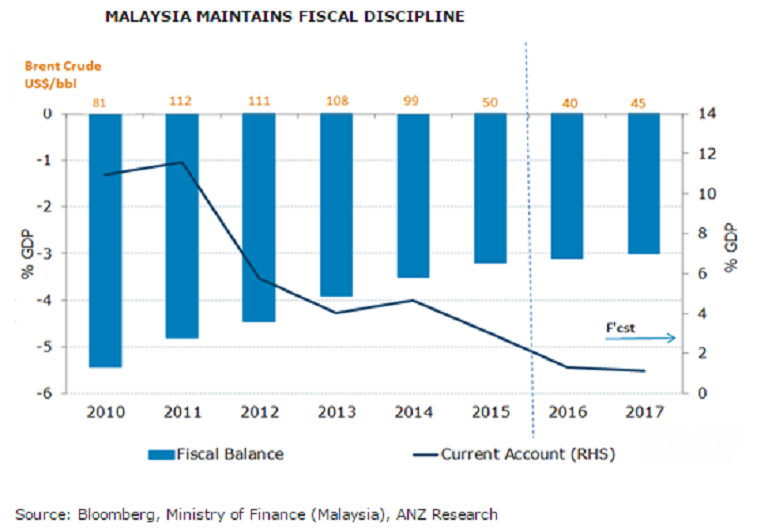
The Malaysian government underlined their commitment to fiscal consolidation when they unveiled Budget 2017 last week. Cutbacks to spending for this year were outlined to keep the fiscal deficit at 3.1 percent of the gross domestic product (GDP) in 2016, with a slight improvement to 3.0 percent in 2017 forecast.
This display of fiscal discipline puts Malaysia’s sovereign credit rating of A- (stable outlook) on a firm footing, particularly with the diversification of its revenue base away from oil. Given that Budget 2017 is supportive of private consumption, Bank Negara Malaysia (BNM) is expected to leave the overnight policy rate unchanged at 3.00 percent at the final meeting of the year on November 23.
Also, the ringgit has underperformed, below market expectations. MYR’s weakness is notable in light of the rebound in oil prices. Despite expectations of rebound in oil prices that prices will stay above USD50/bbl, the near-term outlook for the MYR remains challenging, ANZ reported.
Further, the narrowing in the current account surplus provides less support for the ringgit. US monetary policy normalization and a steeper yield curve in the major developed markets will result in more volatile capital flows.
"For now, we maintain our year-end USD/MYR forecast at 4.15, as we look for some near-term retracement. But the risk is clearly tilted towards further ringgit weakness," ANZ commented in its latest research report.













