


 Iran-Oman Talks Lay Groundwork for Hormuz Reopening
  Canada Seeks ‘Unique Alliance’ With EU, Carney Rules Out Membership
  US Immigration Arrests Surge as Deportations Lag Behind
  Takaichi-Backed Koja Wins Okinawa Governor Race
  China’s Global Times Slams Anthropic CEO’s AI Slowdown Plan as ‘Cold War’ Strategy
  Trump Downplays Report Iran Obtained Chinese Satellite Images Before Jordan Attack
  What is Zionism? The different meanings of a contested term
  Russian Strikes Across Ukraine Kill Nine, Injure Dozens
  Houthi Red Sea Gains Strengthen Iran’s Leverage Over Gulf States
  Philippines Holds Historic Bangsamoro Election Amid Tight Security
  Trump Backs United Ireland During Dublin Visit
  Ukraine Prepares for October Peace Talks With Russia and US
  China to Push Global Security Vision at Xiangshan Forum
  Banking scandal rocks Brazil’s politics and the country’s presidential election in October
  Judge Blocks Trump Rule Limiting Foreign Student Visas
  Trump Vows to Keep U.S. Ahead of China in AI Race
  Trump Touts $5,000 Checks if Republicans Win Congress


 Add as a preferred source on Google
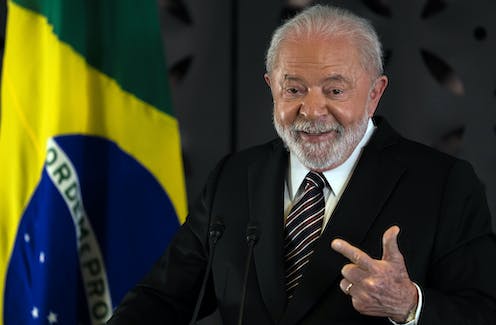
Brazilian President Luiz Inacio Lula da Silva and right-wing Senator Flavio Bolsonaro are locked in a statistical tie in potential runoff matchups ahead of Brazil’s presidential election next month, according to two polls released Monday.
The latest BTG Pactual/Nexus survey showed Lula narrowly reclaiming the lead over Bolsonaro, the eldest son of former President Jair Bolsonaro. Meanwhile, a separate Quaest poll commissioned by Globo put Bolsonaro numerically ahead of the incumbent for the first time.
Bolsonaro’s improving poll numbers have drawn attention from financial markets, with Brazilian assets rallying last week as investors view the senator as a more market-friendly candidate.
Under Brazil’s election system, a candidate must secure more than 50% of valid votes in the October 4 first round to win outright. Otherwise, the top two candidates will compete in a runoff scheduled for October 25.
In the BTG Pactual/Nexus poll, Lula received 47% support in a hypothetical second-round contest, compared with 46% for Bolsonaro. The result reversed the previous week’s survey, when Bolsonaro led Lula 46% to 45%, his strongest performance in the poll since March.
For the first round, Nexus placed Lula at 42%, ahead of Bolsonaro at 37%. Augusto Cury followed with 6%, Ronaldo Caiado had 5%, and Renan Santos received 2%.
Nexus surveyed 2,003 voters between September 11 and 13, with a margin of error of two percentage points.
The Quaest survey painted a slightly different picture. Bolsonaro received 42% against Lula’s 40% in a potential runoff. That marked an improvement from the September 7 poll, when both candidates were tied at 41%.
In Quaest’s first-round scenario, Lula remained ahead with 36%, followed by Bolsonaro at 31%, Cury at 7%, and Caiado and Santos at 4% each.
Quaest surveyed 2,004 people from September 10 through September 13. Its margin of error was also two percentage points, leaving the Brazil presidential race highly competitive with the first-round vote approaching.







