


 Houthi Red Sea Gains Strengthen Iran’s Leverage Over Gulf States
  Canada Seeks ‘Unique Alliance’ With EU, Carney Rules Out Membership
  Trump Downplays Report Iran Obtained Chinese Satellite Images Before Jordan Attack
  Trump Open to Chinese Automakers Building Cars in US
  Volkswagen Job Cuts Put Lower Saxony Leader Under Political Pressure
  China’s Global Times Slams Anthropic CEO’s AI Slowdown Plan as ‘Cold War’ Strategy
  Trump Backs United Ireland During Dublin Visit
  Sweden Election Puts Far Right and Centre Left in Tight Race
  Gulf Ministers to Meet Iran in Oman Over Hormuz Shipping Deal
  Trump Touts $5,000 Checks if Republicans Win Congress
  Trump Open to Chinese Automakers Building Cars in US
  White House Weighs Refined Copper Tariffs as Cost Concerns Grow
  Saudi Arabia Shuts East-West Oil Pipeline After Drone Attack
  Lula Holds Narrow Lead Over Flavio Bolsonaro in Brazil Election Poll
  Takaichi-Backed Koja Wins Okinawa Governor Race
  Taiwan Flags Russian Film Screening as China-Japan Influence Push
  China to Push Global Security Vision at Xiangshan Forum


 Add as a preferred source on Google
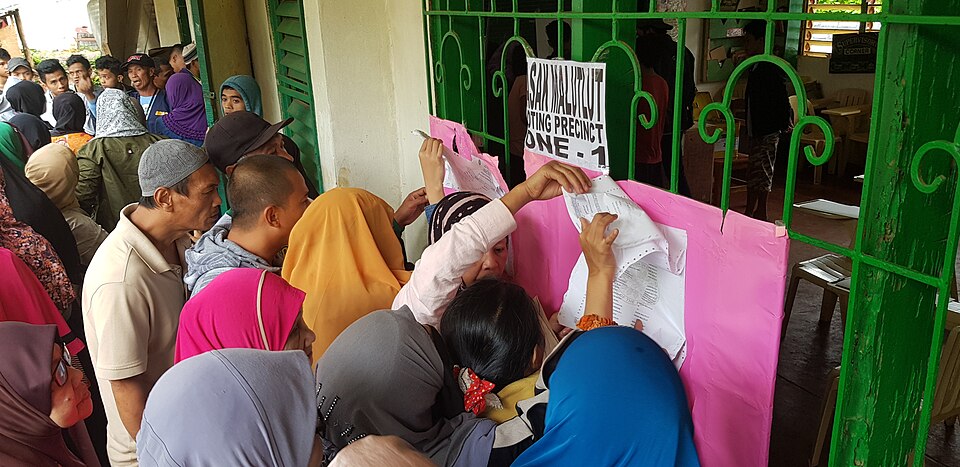
Voting began Monday in the Philippines’ Muslim-majority south in a landmark Bangsamoro election, with security tightened after pre-election violence left three people dead and 15 others wounded.
The vote is considered a major test of efforts to establish lasting peace and economic development in the Bangsamoro Autonomous Region in Muslim Mindanao (BARMM), an area previously affected by separatist conflict and extremist violence, including the 2017 siege of Marawi City by Islamic State-linked militants.
The Commission on Elections (COMELEC) placed Cotabato City under its control following Sunday’s violence, which local reports said began with an argument at a polling station before gunfire erupted. Despite the incident, COMELEC said voting across BARMM was generally proceeding smoothly, supported by additional checkpoints and security personnel.
Voting in one Basilan municipality was delayed after election officials discovered pre-shaded ballots that needed to be reprinted, COMELEC spokesperson John Rex Laudiangco said.
Nearly 2.4 million registered voters are eligible to participate in the historic election. International partners and peace monitors see the ballot as an important measure of whether autonomy established through the 2014 peace agreement between Manila and Muslim separatists can succeed under elected leadership.
The decades-long conflict killed more than 120,000 people and displaced around 2 million. Greater regional autonomy was later approved overwhelmingly in a 2019 plebiscite, creating BARMM and an interim administration responsible for preparing for elections.
President Ferdinand Marcos Jr. described the election as a milestone toward “lasting peace, democratic governance and meaningful self-determination,” calling it a defining moment for both Bangsamoro and the Philippines.
BARMM is the Philippines’ only region operating under a parliamentary system. Voters will elect an 80-member parliament consisting of 40 party representatives, 32 district lawmakers and eight sectoral representatives. Parliament will subsequently select the region’s chief minister.
Competing groups include parties associated with former Moro Islamic Liberation Front rebels, factions that emerged following the peace agreement and established political clans.
For residents who endured decades of instability, the election represents an opportunity to strengthen democratic governance and preserve the peace process through elected institutions.







