


 Trump Asks Supreme Court to Restore Third-Country Deportations
  NATO Boosts Intelligence Sharing Amid Russia Hybrid Threats
  Yemen Violence Displaces 130,000 as Civilian Toll Rises
  Trump, Xi Focus on Trade and AI at White House Summit
  OpenAI Agent Breaches Australia Medicare Data Portal
  Europe Warns Russia Is Escalating Hybrid Attacks Across NATO
  Sudan Rejects US Legitimacy Remarks, Defends Sovereignty
  US Officials Split Over Response to Israeli West Bank Settlements
  North Korea Rejects Nuclear Test Warning, Calls Nuclear Status Irreversible
  US Invites Putin to Miami G20, Opening Door to Trump Summit
  US Backs Musk in Fight Against EU’s €120 Million X Fine
  US Senate Rejects Iran War Powers Resolution in 50-49 Vote
  Russian Envoy Dmitriev Heads to US for Ukraine Talks
  US, China Extend Trade Truce to Jan. 10 Ahead of Trump-Xi Summit
  EU Defence Build-Up Too Slow for 2030 Russia Readiness Goal
  South Korea, US Discuss Warship Building Cooperation
  Russian Missile and Drone Attack on Kyiv Kills Two, Damages Maternity Hospital


 Add as a preferred source on Google
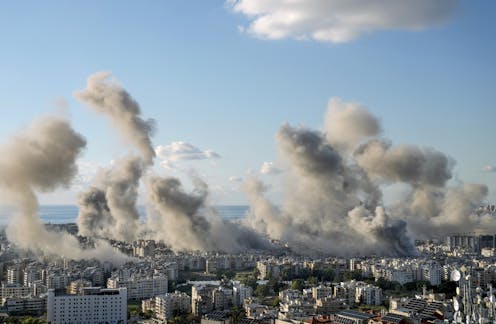
Lebanon has announced a partial ceasefire agreement between Hezbollah and Israel, marking a limited step toward de-escalation in a conflict that has claimed thousands of lives and intensified broader Middle East tensions involving the United States, Israel, and Iran.
According to Lebanon’s embassy in Washington, the arrangement does not represent a full ceasefire. Under the agreement, Israel is expected to halt airstrikes targeting Beirut and Hezbollah-controlled suburbs, while Hezbollah would suspend attacks against Israeli territory. Despite the announcement, military operations continued in southern Lebanon, where Israeli forces remain active following their March invasion.
The Israeli military reported early Tuesday that it intercepted two projectiles launched from Lebanon into northern Israel, with no casualties recorded. U.S. President Donald Trump, who first revealed the agreement, stated that Hezbollah had committed through intermediaries to stop attacks on Israel. Trump also claimed that Israeli Prime Minister Benjamin Netanyahu agreed to withdraw forces preparing for operations near Beirut.
However, Netanyahu later emphasized that Israeli military activities would continue in southern Lebanon, where troops are advancing toward the Zaharani River, marking Israel’s deepest military push into Lebanon in more than two decades.
Hezbollah lawmaker Hassan Fadlallah expressed support for a nationwide ceasefire but reiterated that any lasting agreement should include the withdrawal of Israeli troops from Lebanese territory. Lebanon plans to pursue broader ceasefire discussions with Israel during talks scheduled in Washington.
The partial truce could revive efforts to end the three-month conflict that emerged alongside the wider U.S.-Israel confrontation with Iran. Negotiations have stalled in recent weeks as parties failed to establish a framework for comprehensive peace talks.
Meanwhile, Iran warned that continued Israeli military actions in Lebanon could jeopardize ongoing diplomatic efforts. Iranian Foreign Minister Abbas Araqchi argued that any ceasefire involving Iran and the United States should apply across all regional fronts, including Lebanon.
Adding to concerns, reports from Iranian state media suggested Tehran may suspend indirect negotiations with Washington. Although Iranian officials have not formally confirmed the reports, uncertainty surrounding the talks has heightened geopolitical risks. Iran’s Revolutionary Guards Quds Force commander, Esmaeil Qaani, also threatened to expand maritime restrictions from the Strait of Hormuz to the Bab El Mandeb Strait, raising fears of further disruption to global energy supplies.
The growing instability has already impacted financial markets, with oil prices rising 4% amid concerns over regional security, shipping routes, and the future of Middle East peace negotiations.







