


 Macron, Trump Discuss Ukraine-Russia Energy Strike Moratorium
  US, Denmark and Greenland Set to Sign Arctic Security Deal
  Zelenskiy Meets CIA Chief John Ratcliffe at Ireland’s Shannon Airport
  Russian Strikes Kill Eight Across Ukraine as Energy Sites Hit
  Lula and Flavio Bolsonaro Tied in Brazil Runoff Poll
  Paramount-Warner Bros $110 Billion Deal Draws Antitrust Backlash
  Marco Rubio to Meet Russia’s Lavrov in New York
  China Tightens Fentanyl Rules Ahead of Trump-Xi Summit
  Macron Challenges Trump’s Gaza Peace Claims at UN
  UK, Mauritius Seek Diego Garcia Base Deal
  Iran Vows ‘Crushing’ Response as US Talks Continue
  Canada Unveils Bill to Fast-Track Major Resource Projects
  Trump Meets Venezuela’s Delcy Rodriguez at UN Assembly
  Trump Administration Prepares Sanctions Against Entire ICC
  Zelenskiy Warns Russia Preparing Major Attack on Ukraine
  Burnham Eyes UK Leadership Role in AI Ahead of Trump Meeting
  Trump Board of Peace Unveils $2.45 Billion Gaza Recovery Plan


 Add as a preferred source on Google
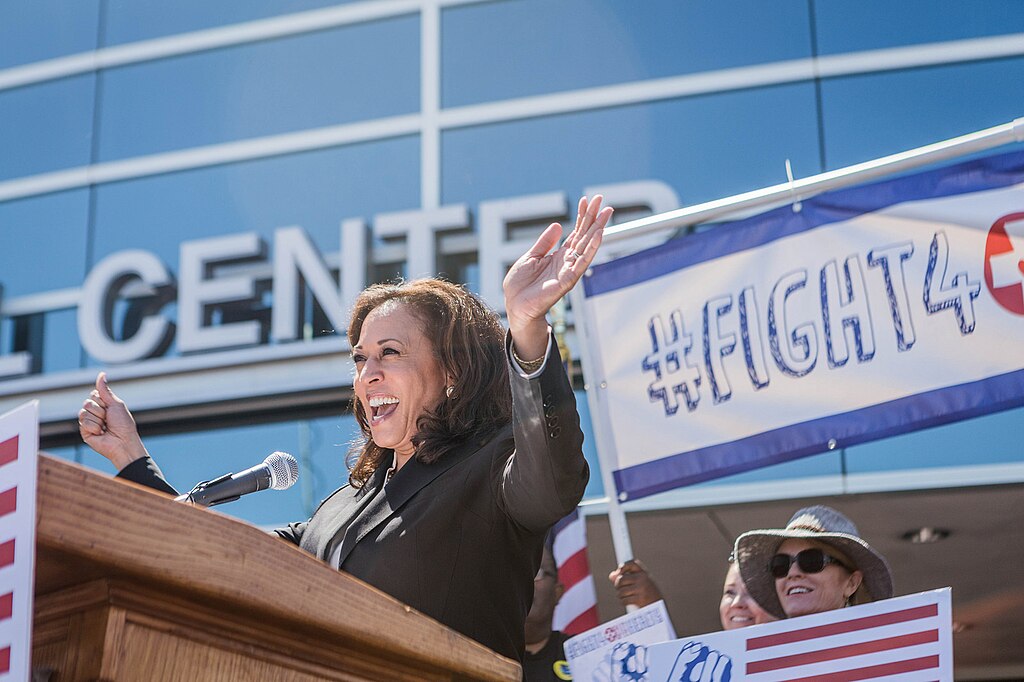
A prominent Republican group has invoked one of the most infamous Supreme Court decisions in U.S. history to argue that Vice President Kamala Harris is ineligible to run for president. The National Federation of Republican Assemblies (NFRA), a 90-year-old organization with deep ties to the GOP, cited the 1857 Dred Scott v. Sandford decision in its case against Harris’s eligibility, claiming that the ruling supports their interpretation of the Constitution’s requirements for presidential candidates.
The NFRA’s resolution, outlined on page 37 of its platform document, argues that Harris should be disqualified from holding the office of president based on several "precedent-setting U.S. Supreme Court cases." Among these cases is the Dred Scott decision, widely condemned as one of the most unjust rulings in American legal history. The NFRA's resolution claims that Harris, along with other candidates like Nikki Haley and Vivek Ramaswamy, does not meet the constitutional standard of being a "natural-born citizen" because her parents were not U.S. citizens at the time of her birth.
The group’s argument hinges on its interpretation of Article II, Section 1, Paragraph 5 of the Constitution, which states that only natural-born U.S. citizens are eligible to serve as president. According to the NFRA, a "natural-born citizen" must be born on American soil to parents who are both U.S. citizens. This narrow interpretation, however, has been widely criticized and challenged by legal scholars and historians.
Critics have pointed out that the NFRA’s interpretation would have rendered several early U.S. presidents, including George Washington, John Adams, and Thomas Jefferson, ineligible for office, as their parents were born when the American colonies were under British rule. Santiago Reich, a Dallas-based attorney, highlighted the flawed reasoning by noting that these historical figures would not meet the NFRA’s criteria for natural-born citizenship.
Further undermining the NFRA’s position, the group also cited the 1939 Perkins v. Elg decision, which states that a child born in the U.S. to alien parents becomes a U.S. citizen. Legal experts have pointed out that this ruling directly contradicts the NFRA’s core argument. Critics on social media have labeled the NFRA’s stance as legally unsound, noting that key amendments to the Constitution, such as the 13th, 14th, and 19th Amendments, have long since invalidated the Dred Scott decision and similar rulings.
The Dred Scott case, which denied citizenship rights to African Americans, is particularly controversial. The Supreme Court’s decision, written by Chief Justice Roger Taney, declared that descendants of slaves could never be U.S. citizens. This ruling was later overturned by the 14th Amendment, which granted citizenship to all persons born or naturalized in the United States.
The NFRA’s use of the Dred Scott decision to challenge Harris’s eligibility has drawn widespread criticism, with many arguing that the group is clinging to outdated and discredited legal precedents. The controversy highlights the ongoing debates over constitutional interpretation and the qualifications for the highest office in the land, as well as the enduring impact of America’s troubled racial history on contemporary politics.







