


 Trump to Press Xi on Release of US Nuclear Expert Held in China
  Judge Orders Trump to Restore White House Access for CNN, MS NOW and Politico
  Lula and Flavio Bolsonaro Tied in Brazil Runoff Poll
  Russian Missile and Drone Attack on Kyiv Kills Two, Damages Maternity Hospital
  Kremlin Says No Grounds Yet for Ukraine Peace Talks
  US Officials Split Over Response to Israeli West Bank Settlements
  Marco Rubio to Meet Russia’s Lavrov in New York
  Sudan Rejects US Legitimacy Remarks, Defends Sovereignty
  Trump Meets Venezuela’s Delcy Rodriguez at UN Assembly
  Iran Vows ‘Crushing’ Response as US Talks Continue
  China Tightens Fentanyl Rules Ahead of Trump-Xi Summit
  South Korea, US Discuss Warship Building Cooperation
  US Invites Putin to Miami G20, Opening Door to Trump Summit
  Trump Administration Plans Faster FDA Reviews for Smoke-Free Nicotine Products
  Trump Says ‘Freedom’ Is Coming to Cuba
  Macron Challenges Trump’s Gaza Peace Claims at UN
  US, China Extend Trade Truce to Jan. 10 Ahead of Trump-Xi Summit


 Add as a preferred source on Google
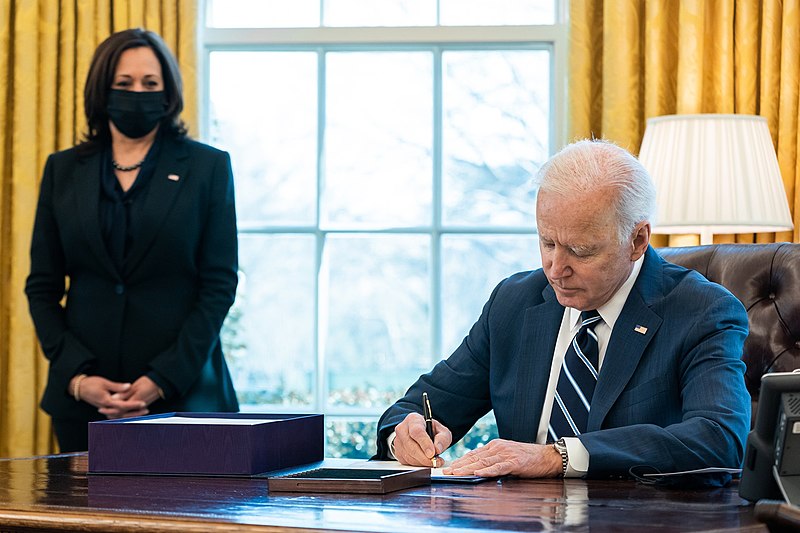
This week marks a big achievement by the Biden administration halfway through Joe Biden’s first 100 days in office as the new president. Biden officially signed into law his sweeping $1.9 trillion COVID-19 relief package.
Biden signed the bill into law at the White House Oval Office Thursday, a day earlier than expected, following the House’s swift passage of the final version of the bill. The House’s second approval of the bill also comes several days after the Senate passed the bill. The passage was done on party lines as both House and Senate Democrats moved the sweeping relief package forward without a single vote of support from their Republican counterparts. This would mark the first significant legislative achievement by Biden and his administration.
Biden did not take questions from the media that were present during the signing. However, he made a primetime address to the public hours later, marking the first anniversary of the COVID-19 shutdowns in the country. Vice President Kamala Harris was also present at the signing of the bill.
“In the weeks that this bill has been discussed and debated, it is clear that an overwhelming percentage of the American people -- have made it clear they strongly support the American Rescue Plan,” said Biden in his remarks prior to the signing. “Their voices were heard.”
The $1.9 trillion package includes $1400 stimulus checks to American households, increased funding for vaccine distribution efforts, funding to help schools reopen safely, as well as extended unemployment benefits until September, among many other aspects. Despite the signing taking place a day earlier than expected, White House Chief of Staff Ron Klain tweeted that the administration would still hold a celebration of the bill’s passage with congressional leaders on Friday.
During his primetime address, Biden discussed the administration’s response to the pandemic so far. Biden expressed optimism that the country can somewhat go back to normal by July in time for Independence Day. In order to be able to reach the goal of going back to some kind of normal by that time, Biden recently directed all the states to make all American adults eligible for COVID-19 vaccinations by May 1.







