


 Trump Scales Back Endangered Species Act Protections
  Trump Administration Prepares Sanctions Against Entire ICC
  US Plans Two New Military Bases in Greenland Under Arctic Deal
  Canada Unveils Bill to Fast-Track Major Resource Projects
  Trump Board of Peace Unveils $2.45 Billion Gaza Recovery Plan
  Trump Meets Venezuela’s Delcy Rodriguez at UN Assembly
  China Tightens Fentanyl Rules Ahead of Trump-Xi Summit
  Trump to Press Xi on Release of US Nuclear Expert Held in China
  Burnham Eyes UK Leadership Role in AI Ahead of Trump Meeting
  Macron Challenges Trump’s Gaza Peace Claims at UN
  Scott Bessent Eyed as Trump’s New AI Czar
  Zelenskiy Meets CIA Chief John Ratcliffe at Ireland’s Shannon Airport
  Macron, Trump Discuss Ukraine-Russia Energy Strike Moratorium
  Trump Says U.S.-Iran Peace Deal Near After UN Talks
  CNN, MS NOW and Politico Sue Trump Over White House Media Ban
  Vietnam, US Trade Deal Could Be Signed Soon, To Lam Says
  Taiwan Vows to Advance US Arms Sales Ahead of Trump-Xi Meeting


 Add as a preferred source on Google
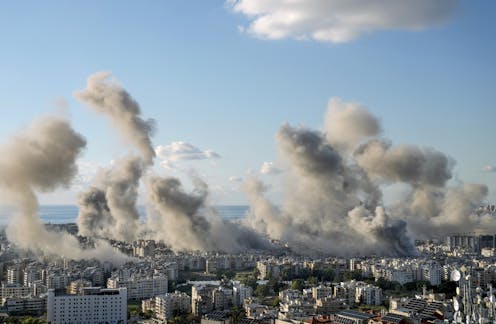
Israel and Iran-backed Hezbollah agreed to a ceasefire on Friday following days of intensified fighting in Lebanon that threatened to undermine the recently announced U.S.-Iran agreement aimed at ending broader Middle East hostilities.
A U.S. official confirmed that the ceasefire began at 4 p.m. GMT, with both an Israeli official and Hezbollah sources verifying the arrangement. According to the Israeli official, military operations would remain suspended as long as Hezbollah refrains from launching attacks. However, Israeli troops will continue to maintain positions in southern Lebanon.
Despite the truce, reports of violence persisted shortly after it took effect. Lebanese security officials said Israeli forces carried out several airstrikes during the first hour of the ceasefire, although no further strikes were recorded after 5 p.m. Israel denied conducting the reported number of attacks. Later in the evening, Lebanon’s National News Agency reported that a drone strike killed two people traveling on a motorcycle in southern Lebanon. Israel did not immediately comment on the incident.
The latest escalation has taken a heavy toll on both sides. Lebanon’s health ministry said at least 47 people were killed in Israeli airstrikes on Friday alone, while Israel reported the deaths of four soldiers in one of Hezbollah’s deadliest attacks since the conflict intensified.
The ceasefire is linked to the interim U.S.-Iran agreement, which calls for an immediate and permanent halt to military operations across regional fronts, including Lebanon. Hezbollah lawmaker Hassan Fadlallah stated that Iran informed the group negotiations with Washington could not continue without a comprehensive ceasefire.
U.S. and Qatari negotiators, with support from Iran, helped broker the agreement. Nevertheless, Israeli officials remain critical of the broader U.S.-Iran understanding, arguing it fails to adequately address concerns surrounding Iran’s nuclear program.
The conflict remains volatile despite the ceasefire. Israel says it targeted Hezbollah fighters and infrastructure in response to repeated violations, while Hezbollah accuses Israel of breaching truce terms through continued strikes and military incursions.
Heavy clashes overnight centered around the strategically significant Ali al-Taher hill north of the Litani River. Hezbollah claimed it destroyed three Israeli Merkava tanks and inflicted casualties on advancing forces. Israel continues to hold a security zone in southern Lebanon, arguing it is necessary to protect northern Israeli communities from future attacks.
Since hostilities escalated on March 2, Lebanon says nearly 4,000 people have been killed in Israeli attacks, including civilians and medical personnel. Israel’s death toll from the conflict includes at least 32 soldiers and four civilians, underscoring the human cost of the ongoing confrontation despite diplomatic efforts to restore stability.







