


 Wall Street Falls as Treasury Yields Surge, Oil Rebounds on Iran Tensions
  Netanyahu’s Brief US Trip Highlights Strains With Trump
  Gaza Faces Evacuation Crisis as War-Damaged Buildings Risk Collapse
  Europe Warns Russia Is Escalating Hybrid Attacks Across NATO
  Trump, Xi Focus on Trade and AI at White House Summit
  Mexico-US Trade Talks Delayed to October as Tariff Negotiations Continue
  Gold Drops Over 1% as Dollar, Treasury Yields Surge on Fed Rate Hike Bets
  South Korea, US Discuss Warship Building Cooperation
  Taiwan Thanks US for Support Ahead of Trump-Xi Summit
  US, China Extend Trade Truce to Jan. 10 Ahead of Trump-Xi Summit
  Asian Stocks Fall as Bond Yields Surge Ahead of Trump-Xi Summit
  U.S. Treasury Yields Surge as 30-Year Hits 22-Year High
  Oil Prices Ease as Iran Tensions Clash With Diplomacy Hopes
  RBI Uses $10 Billion Currency Swaps to Drain Excess Rupee Liquidity
  European Stocks Fall as Bond Yields and Geopolitical Risks Weigh
  US Stock Futures Fall as Treasury Yields Surge Ahead of Trump-Xi Summit
  Oil Prices Surge as U.S.-Iran Diplomacy Hopes Fade


 Add as a preferred source on Google
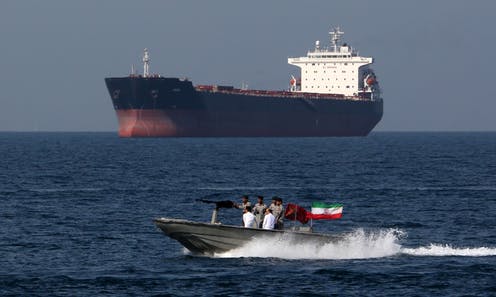
U.S. intelligence assessments now confirm that Iran has no intention of loosening its grip on the Strait of Hormuz anytime soon. Tehran views control over this critical oil corridor as its most powerful bargaining chip against Washington — and it's using that leverage deliberately.
The strait, a narrow 21-mile passage responsible for moving roughly 20% of the world's oil supply, has become the centerpiece of Iran's economic warfare strategy. By throttling this artery, Iran has driven crude prices to multi-year highs, stoking inflation fears across Western economies at a politically sensitive time for the Trump administration ahead of November's midterm elections.
What analysts initially expected to be a swift U.S.-led military campaign to dismantle Iranian regional influence has instead exposed a significant strategic vulnerability. Tehran's blockade has proven more disruptive than many anticipated, with some experts now calling it a "weapon of mass disruption" — arguably more effective as a deterrent than a nuclear arsenal. Even with U.S. forces in the region, Iran's Islamic Revolutionary Guard Corps can sustain maritime disruption through low-cost drones and mainland missile capabilities, making the strait effectively uninsurable for most commercial shipping carriers.
Intelligence reports further indicate that Iran is looking beyond the immediate crisis. Rather than maintaining a temporary blockade, Tehran is reportedly working toward institutionalizing its maritime control — potentially through a "passage fee" framework that would fund post-war reconstruction while cementing long-term deterrence power in any future peace negotiations with the U.S.
The White House has expressed confidence that the strait will reopen, while quietly signaling that NATO allies and Gulf nations should shoulder more of the security burden. That shift in tone reflects just how complicated — and costly — resolving this crisis has become, with global energy markets, supply chains, and geopolitical stability all hanging in the balance.







