


 North Korea Warns South Korea Over US-Led Defense Role
  Sudan Rejects US Legitimacy Remarks, Defends Sovereignty
  Abbas Reaffirms November 28 Palestinian Elections
  Trump Asks Supreme Court to Restore Third-Country Deportations
  US Officials Split Over Response to Israeli West Bank Settlements
  Netanyahu Defends Israel at UN as Delegates Stage Walkout
  Gaza Faces Evacuation Crisis as War-Damaged Buildings Risk Collapse
  US, China Extend Trade Truce to Jan. 10 Ahead of Trump-Xi Summit
  NATO Boosts Intelligence Sharing Amid Russia Hybrid Threats
  Netanyahu’s Brief US Trip Highlights Strains With Trump
  Trump, Xi Focus on Trade and AI at White House Summit
  North Korea Rejects Nuclear Test Warning, Calls Nuclear Status Irreversible
  Ghana Says Western Support Growing for Slave Trade Reparations
  Kremlin Says No Decision Yet on Putin-Trump December Summit
  Russian Missile and Drone Attack on Kyiv Kills Two, Damages Maternity Hospital
  Russian Envoy Dmitriev Heads to US for Ukraine Talks
  US Backs Musk in Fight Against EU’s €120 Million X Fine


 Add as a preferred source on Google
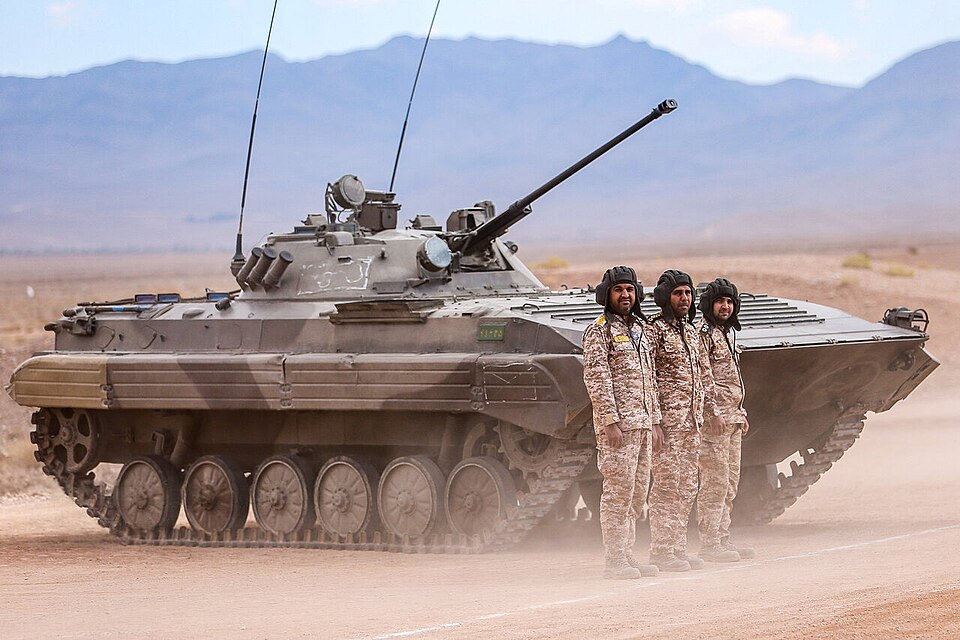
Geopolitical tensions in the Middle East have intensified dramatically as Iran's Islamic Revolutionary Guard Corps (IRGC) issued a stark warning targeting U.S.-affiliated universities across neighboring countries. The IRGC declared these academic institutions legitimate military targets, urging all students, faculty, and staff to maintain at least a one-kilometer distance. Tehran claims the move is a direct response to alleged American and Israeli involvement in a strike on the Tehran University of Science and Technology.
The threat puts prominent American campuses at serious risk, particularly those operating in the UAE and Qatar — including NYU Abu Dhabi and Qatar's Education City, home to Georgetown, Carnegie Mellon, and Northwestern. These institutions represent massive long-term investments, and according to Open Doors data, nearly 4,900 Americans were enrolled across the Middle East and North Africa in the 2023–2024 academic year, with over 1,000 based in the UAE.
On the military front, the situation is rapidly evolving. Specialized U.S. Marine Expeditionary Units have arrived in the region aboard the USS Tripoli, signaling a potential shift from air and sea operations toward ground-based military engagement. The White House frames the deployment as a precautionary measure to protect energy corridors and critical infrastructure, though analysts warn it could signal a prolonged ground conflict.
Amid the volatility, Iran granted Pakistan safe passage for 20 additional vessels through the strategically vital Strait of Hormuz, offering modest relief to regional maritime trade. Pakistani Foreign Minister Ishaq Dar called the agreement a meaningful confidence-building step.
Meanwhile, Yemen's Houthi forces launched fresh drone and missile attacks against Israel, further complicating the regional security outlook. Despite the escalation, diplomatic channels remain active. U.S. envoy Steve Witkoff confirmed that negotiations with Iranian officials are ongoing, centered on a 15-point framework requiring Iran to halt uranium enrichment and surrender approximately 10,000 kilograms of enriched material under international oversight.







