


 Dollar Gains as Fed Rate Hike Bets Rise Ahead of Trump-Xi Summit
  Havana Protests Erupt as Cuba Faces Severe Blackouts and Fuel Crisis
  ASX Names Former Euronext Executive Anthony Attia as New CEO
  Trump Faces Uphill Battle Seeking China’s Help on Iran Conflict
  Wall Street Futures Rise Ahead of Trump-Xi Summit as Tech Stocks Lead Market Rally
  Australia Housing Tax Reform Sparks Debate Over Property Investor Tax Breaks
  Trump and Xi Temple of Heaven Visit Highlights Trade and Diplomacy Goals
  New Zealand Budget 2026 Focuses on Fiscal Discipline and Infrastructure Investment
  Oil Prices Slip as Strait of Hormuz Disruptions and U.S. Inventory Data Keep Markets on Edge
  OECD Sees Bank of Japan Raising Interest Rates to 2% by 2027
  Dollar Surges as Inflation Data Fuels Fed Rate Hike Expectations
  Asian Currencies Slide as Indian Rupee Hits Record Low Amid Iran Tensions
  U.S. Urges China to Help Curb Iran’s Actions in Gulf, Rubio Says
  Asian Currencies Hold Steady as Strong U.S. Inflation Data Boosts Dollar
  Gold Prices Steady Ahead of Trump-Xi Meeting as Inflation and Oil Concerns Persist
  US Stock Futures Slip as Iran Tensions and Hot Inflation Data Pressure Wall Street


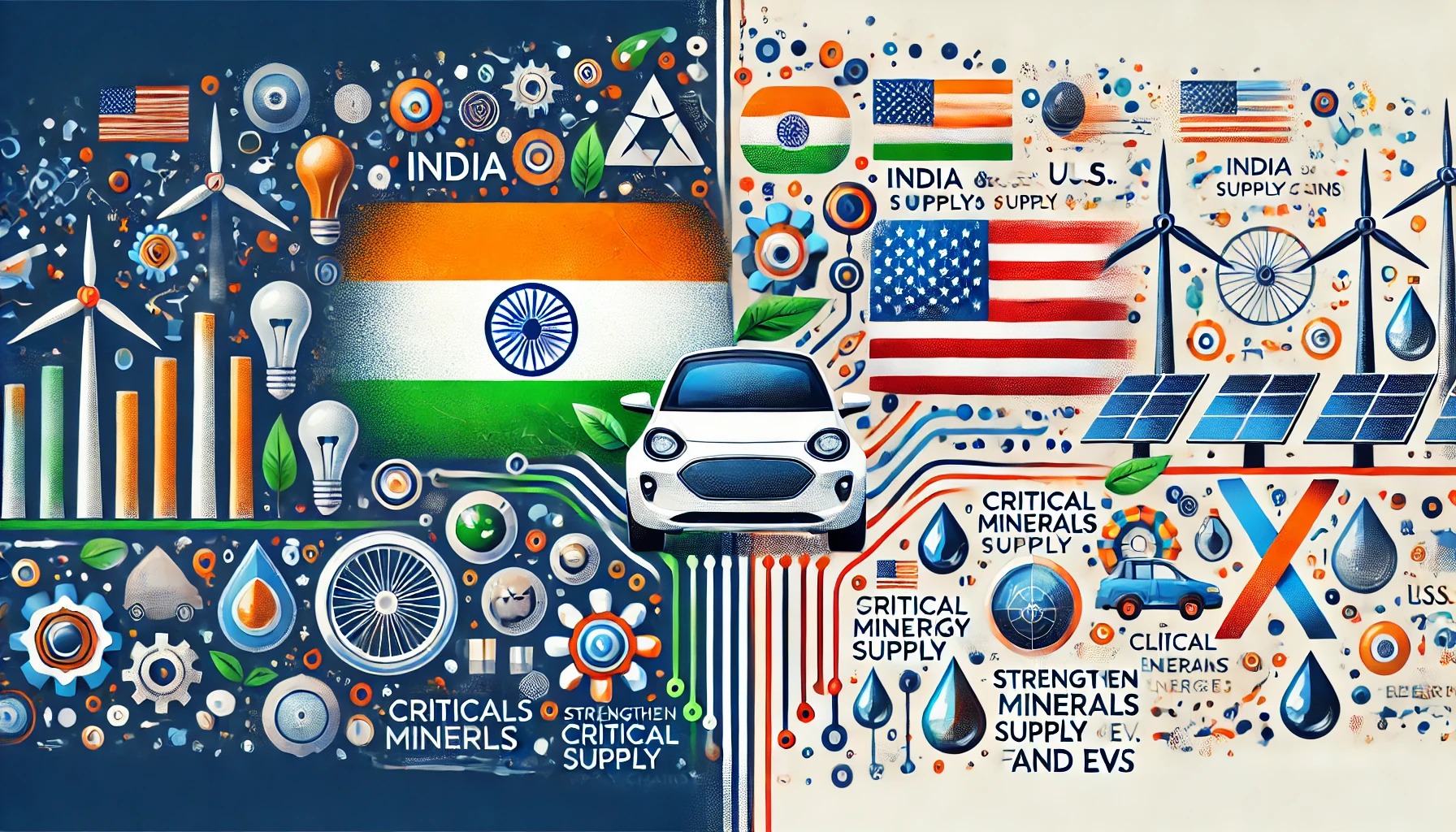
India and U.S. Sign Critical Minerals Supply Chain Agreement for Electric Vehicles
Indian Trade Minister Piyush Goyal and U.S. Commerce Secretary Gina Raimondo have signed an agreement to enhance supply chain cooperation between India and the U.S. for critical minerals such as lithium and cobalt, vital for electric vehicles (EVs) and clean energy applications.
The critical minerals supply chain memorandum of understanding (MOU), signed during Minister Goyal's visit to Washington, is intended to bolster resilience for both countries in the EV sector and clean energy industries.
Focus on Supply Chain Resilience
The U.S. Commerce Department's statement highlighted that the MOU aims to establish strong supply chains for critical minerals. Priority areas include identifying necessary equipment, services, policies, and best practices to support the commercial development of critical minerals exploration, extraction, processing, refining, recycling, and recovery for both the U.S. and India.
Speaking at the Center for Strategic and International Studies in Washington, Goyal described the MOU as a "multi-dimensional partnership." The agreement will involve open supply chains for materials, technological advancements, and investment flows to support the development of green energy.
Inclusion of Third Countries
Minister Goyal emphasized that the cooperation between India and the U.S. on critical minerals will also include engagement with third countries, particularly those rich in minerals in Africa and South America, to further secure the supply chain for EV production.
Scope of the Agreement Compared to Japan-U.S. Trade Deal
Although the MOU marks a significant step in U.S.-India relations, it does not constitute a full critical minerals trade agreement. Such a trade deal would have allowed India to access the U.S. electric vehicle tax credit of $7,500.
In comparison, Japan signed a comprehensive deal with the U.S. Trade Representative’s office last year. This deal enables Japanese automakers to fully benefit from the EV tax credit, aiming to decrease mineral dependence on China and reduce export control restrictions on critical minerals like lithium, nickel, cobalt, graphite, and manganese.







