


 FDA Approves Mirum’s Atebrioz for Rare Bone Disorder FOP
  Trump Signs Order to Cut Routine Childhood Vaccines
  Novartis Shares Plunge After Muscle Drug Fails Phase III Trial
  Novo Nordisk Eyes Turnaround as Oral Wegovy Challenges Eli Lilly in Weight-Loss Drug Race
  Moderna Wins FDA Approval for mFLUSIVA mRNA Flu Vaccine for Adults 50+
  Hims & Hers Shares Fall as GLP-1 Costs Widen Q2 Loss
  SK Biopharmaceuticals Secures Global Rights to Biohaven Epilepsy Drug Opakalim
  US-Backed Pediatric HIV Treatment Drops After Foreign Aid Changes, Study Finds
  AstraZeneca Q2 Earnings Beat Forecasts as Oncology Growth Supports 2026 Outlook
  U.S. Issues Cuba Health Alert as Illnesses Rise
  Novo Nordisk Raises 2025 Outlook Despite Wegovy Pill Miss and CagriSema Setback
  Moderna Short Sellers Hit With $4.8 Billion Loss as Stock Soars
  Hanmi Pharm Soars 30% on $2.3 Billion Genentech Obesity Drug Deal
  New Mexico Measles Outbreak Cost Reached $5.4 Million, Study Finds
  GLP-1 Weight-Loss Drug Use Surges Among U.S. Children


 Add as a preferred source on Google

While some of us love the winter chill, this winter others will notice itchy or tender red lumps on their fingers and toes.
These small bumps are called chilblains (also known as pernio) and they occur with exposure to cold. While children and the elderly are most commonly affected, other age groups are not immune to this problem.
Several hours after exposure to cold, damp weather, the blood vessels in the fingers and toes tighten up and get smaller (called vasoconstriction) to keep the warm blood as far away from the skin as possible, as this is where heat is lost.
When returning to a warm environment from the cold, these blood vessels expand again, but can get inflamed (called vasculitis) if this happens too quickly.
This causes itch and burning in the affected area. Small reddish lumps can appear on the skin, which may become painful or blistered. In those with skin of colour, chilblains may look purple-ish or even present as a brown patch of skin. The most commonly affected areas include the fingers, toes, ears and nose.
If they’re untreated, chilblains can swell and form blisters, with a risk of ulcers, scarring and infection. But usually, if extremities are warmed, they will get better on their own in a few weeks.
This reaction is more common in people who have a family history of chilblains and those who have problems with their blood circulation. Smoking, diabetes and high cholesterol can lead to poorer blood circulation. People who are underweight or have diseases that affect connective tissue (such as lupus) are also at increased risk of chilblains.
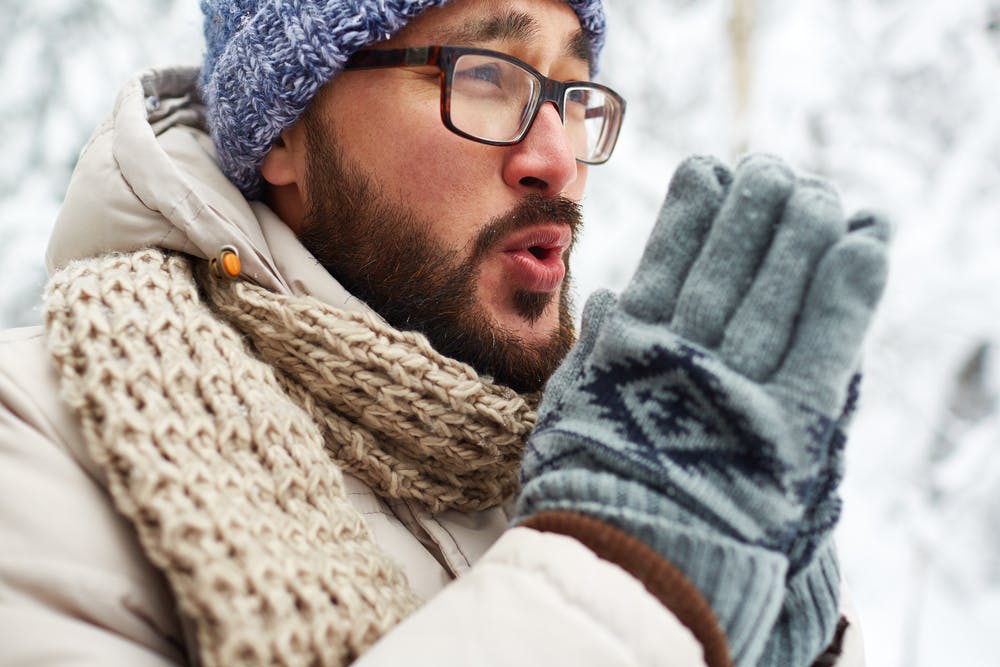
Keep your extremities covered, and warm them up slowly if they get cold. from www.shutterstock.com
The diagnosis is usually straightforward and no extra tests are needed. But occasionally other conditions need to be excluded, such as lupus and Raynaud’s disease (where small arteries narrow, limiting blood circulation). For this, your doctor might need to do some blood tests or even take a small piece of skin (skin biopsy) to confirm the diagnosis.
If the weather gets the better of you and chilblains do appear, your doctor is likely to suggest topical steroid creams to help with itch and inflammation. For more severe cases, medications that open (dilate) blood vessels, such as nifedipine and diltiazem, can be used.
But we all know prevention is better than cure, so here are some tips to avoid chilblains:
-
clothing: keep your extremities warm with covered shoes, gloves and ear muffs
-
temperature control: keep your skin dry and warm, and when you’re rewarming your skin, do it slowly and gently
-
get active: staying active and keeping fit with physical activity improves circulation so will decrease the risk of developing chilblains
-
avoid smoking and eat well to optimise the health of your blood vessels.








