


 Venezuela Promises Elections as Delcy Rodriguez Pledges Democratic Transition
  US Plans Two New Military Bases in Greenland Under Arctic Deal
  US, China Extend Trade Truce to Jan. 10 Ahead of Trump-Xi Summit
  Zelenskiy Warns Russia Preparing Major Attack on Ukraine
  Canada Unveils Bill to Fast-Track Major Resource Projects
  Marco Rubio to Meet Russia’s Lavrov in New York
  US, Denmark and Greenland Set to Sign Arctic Security Deal
  Iran Vows ‘Crushing’ Response as US Talks Continue
  Macron Challenges Trump’s Gaza Peace Claims at UN
  Gaza Faces Evacuation Crisis as War-Damaged Buildings Risk Collapse
  Trump Says ‘Freedom’ Is Coming to Cuba
  Macron, Trump Discuss Ukraine-Russia Energy Strike Moratorium
  US Officials Split Over Response to Israeli West Bank Settlements
  Trump to Press Xi on Release of US Nuclear Expert Held in China
  Vietnam, US Trade Deal Could Be Signed Soon, To Lam Says
  Trump Meets Venezuela’s Delcy Rodriguez at UN Assembly
  Kremlin Says No Grounds Yet for Ukraine Peace Talks


 Add as a preferred source on Google
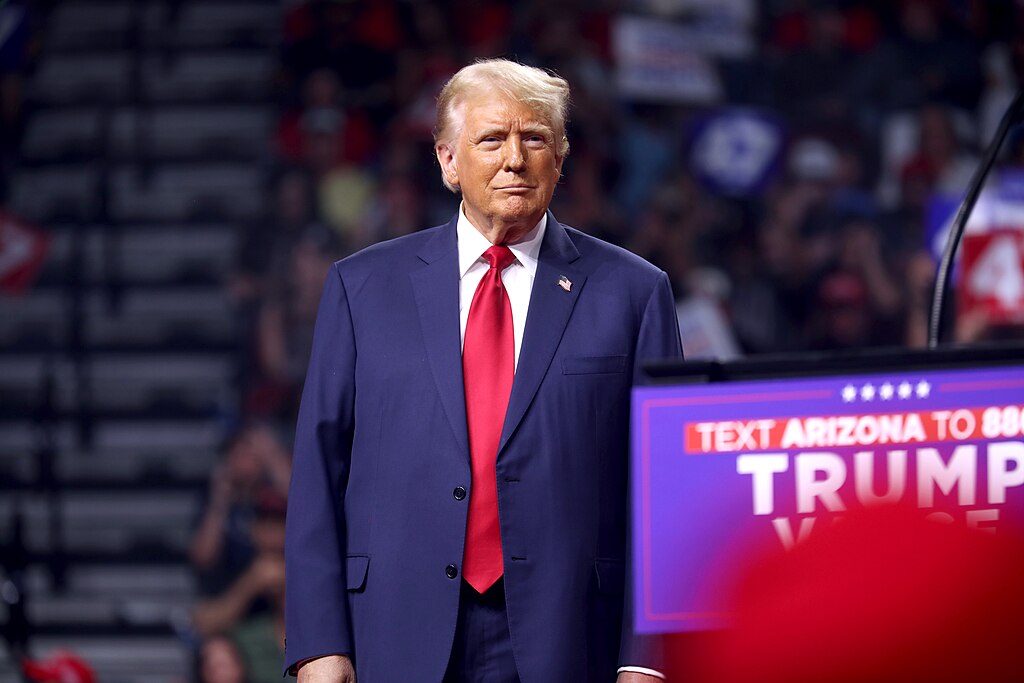
In a major decision, the Georgia Supreme Court has ruled in favor of the Republican National Committee (RNC) and the Georgia GOP, mandating that no election office within the state may extend voting hours or accept ballots submitted after Election Day. The ruling has intensified an already heated debate over voting rights and election integrity, with Republicans celebrating the decision as a safeguard against election irregularities and Democrats arguing that it could disenfranchise voters.
The court’s ruling underscores the critical importance of deadlines in Georgia’s election process, specifying that any ballots not received by the close of polls on Election Day will not be counted. This decision aligns with similar rulings in other states, where GOP-led efforts have focused on ensuring that all votes are cast and counted within a specific timeframe to maintain electoral integrity. The court’s opinion emphasized that election laws must be followed precisely to protect public trust in the outcome, stating that “election rules are established to provide uniformity and prevent last-minute changes that could impact results.”
For Republicans, the ruling is seen as a victory in their fight to ensure election security. The RNC issued a statement lauding the decision, claiming that it “reinforces the fundamental principle that election laws cannot be bent or altered to fit any agenda.” The Georgia GOP echoed these sentiments, asserting that the ruling protects the voice of lawful voters by ensuring that election results are timely and trustworthy.
However, Democrats and voting rights advocates have sharply criticized the court’s decision, arguing that the strict deadline could exclude ballots cast by eligible voters who encounter unforeseen challenges, such as mail delays or technical issues with electronic voting. Stacey Abrams, a prominent voting rights advocate in Georgia, warned that the ruling could harm voter participation, particularly in marginalized communities. “This decision puts up barriers for Georgians who are already struggling to have their voices heard,” Abrams said. “Election integrity means ensuring every eligible voter has their ballot counted, not creating artificial deadlines.”
The ruling is expected to have significant implications for Georgia’s status as a key battleground state, especially as the upcoming election is projected to be closely contested. Both parties have poured resources into Georgia, with Republicans focusing on election integrity measures while Democrats aim to boost voter turnout. The decision has fueled ongoing national debates about voting rights, election security, and the balance between ensuring lawful votes and expanding access.
Legal experts suggest that the ruling aligns with longstanding principles of election law that emphasize strict adherence to deadlines. “This ruling is consistent with the traditional view that elections have clearly defined endpoints,” said Dr. Lisa Brown, a professor of election law at the University of Georgia. “The court has upheld the idea that deadlines ensure a fair process, though it’s a perspective that’s increasingly contested in today’s political climate.”
With Election Day approaching, the Georgia Supreme Court’s ruling has become a focal point for both parties, highlighting the broader challenges in balancing election security with voter accessibility. As campaigns intensify, Georgia’s decision on ballot deadlines underscores a deepening divide over how elections should be conducted and whether stringent deadlines benefit or hinder democratic participation.







