


 Fed Minutes Signal Another Rate Hike by Year-End
  Gold Prices Fall Amid Rate Jitters; Copper Steady as China Stimulus Eyed
  RBA Hikes Interest Rate to 4.60% as Inflation Risks Rise
  Australia Consumer Confidence Plunges as RBA Rate Hike Hits Households
  BlackRock’s Rick Rieder Favors Bonds Over Stocks as Treasury Yields Surge
  Philippines Current Account Deficit Seen at $19.1 Billion in 2026
  Fed’s Hammack Says More Data Needed Before Next Rate Move
  Best Gold Stocks to Buy Now: AABB, GOLD, GDX
  Fed Unveils Stablecoin Rules Under GENIUS Act


 Add as a preferred source on Google
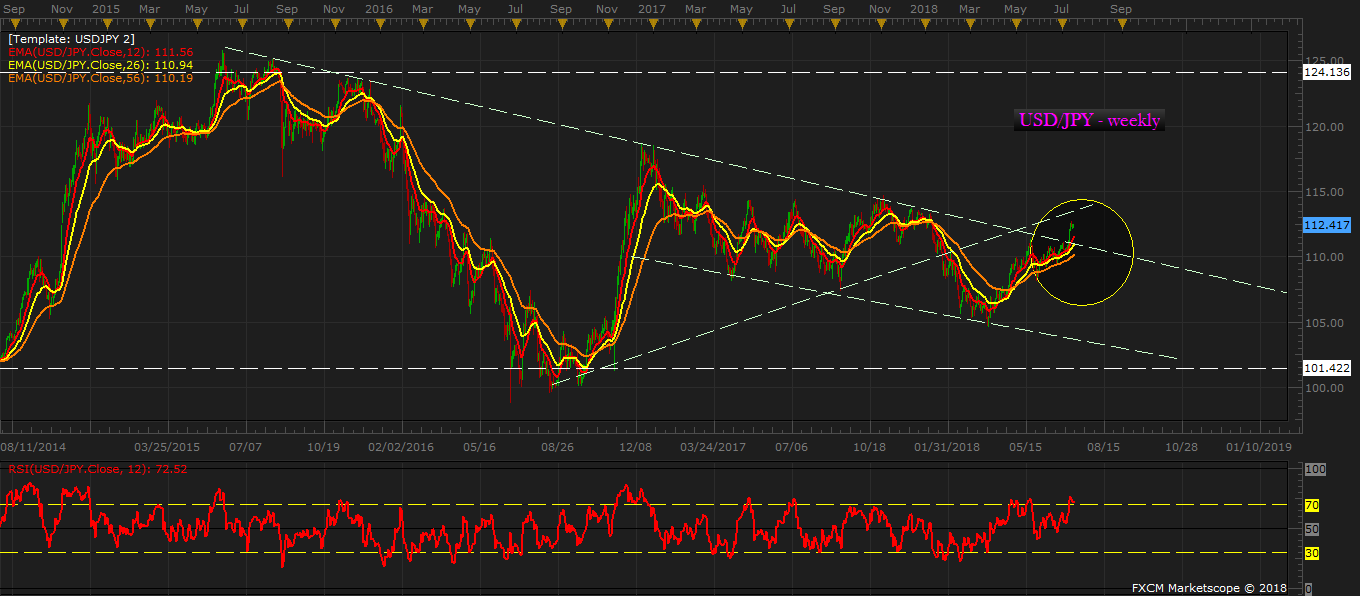
After strengthening to as high as 104.6 per dollar in March this year and showing some signs that it might strengthen further riding on risk aversion stemming from trade war between the United States and China, the yen has steadily weakened to reach as low 112.4 per dollar as of today.
As the global risk aversion subsided despite the ongoing trade dispute between the United States and the rest of the world and equities rose, the yen bulls have taken a back seat. However, we believe that one of the major factors that contributed to the decline of the yen is growing monetary policy divergence between the U.S. Federal Reserve and Bank of Japan (BoJ).
While the Federal Reserve has hiked rates seven times since December 2015, the Bank of Japan (BoJ) has indicated that it would be in no hurry to move away from its ultra-loose monetary policy, under which, it is purchasing government bonds and other securities at the pace of ¥80 trillion per annum.
Based on our latest calculations, we suspect that the yen has further to decline unless the financial markets get hit my massive risk aversion. We see the yen weakening by another 10 percent or so and retest its 2015 bottom around 122-125 area.
Technically speaking, the above chart shows that the USD/JPY has broken a key resistance line, which has been in place since the 2015 bottom.







