


 Yen Near 40-Year Low as USD/JPY Approaches Key 162 Level, Raising Intervention Concerns
  China Keeps Loan Prime Rates Unchanged for 13th Straight Month as Policymakers Prioritize Credit Demand Recovery
  France Faces Long Road to Economic Rebalancing as Weak Demand and High Rates Weigh, Says Citi
  US Dollar Hits One-Year High as Hawkish Fed Outlook Overshadows Middle East Developments
  Singapore Inflation Stays Muted in May as Core CPI Misses Forecasts Ahead of MAS Review
  New Zealand Fast-Tracks Gold Mining as Industry Revival Gains Momentum
  US Stock Futures Recover as Iran Signals Progress in Peace Talks
  Bessent Says U.S. Must Strengthen Supply Chains and Economic Security
  Russian Stocks End Flat as MOEX Index Hits New 52-Week Low
  100+ Global Companies Push Governments to Prioritize Electrification for Economic Growth
  U.S.-Iran Diplomacy Helps Drive Gasoline Prices Down 15% From May Highs
  Japan Keeps Markets Guessing as Yen Nears 40-Year Low, Raising Intervention Risks
  South Korea Stocks Tumble as AI-Fueled Rally Faces Profit-Taking Pressure
  South Korea’s KOSPI Rebounds as Samsung and SK Hynix Lead Tech Stock Recovery
  Oil Prices Fall as Iran Peace Talks Progress, Hormuz Reopens, and U.S. SPR Hits 1983 Low
  Asian Stocks Slide as AI Rally Pauses, South Korean Chipmakers Lead Regional Decline


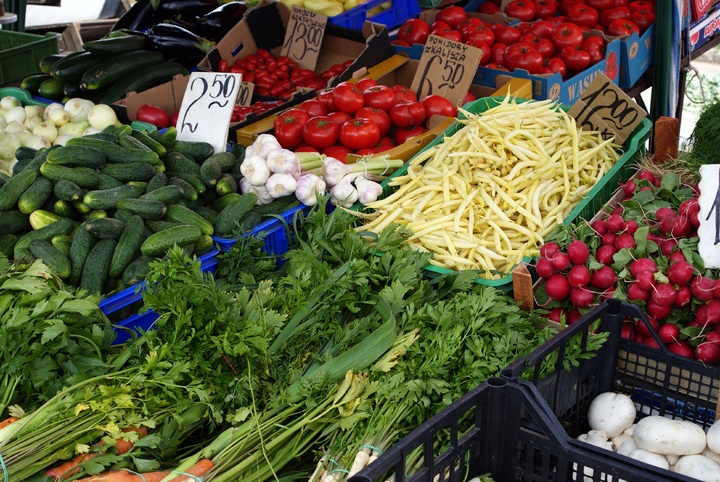

Fruit and vegetable prices are expected to be 8% higher than they would have been over the December and March quarters as a result of the floods, according to budget figures released by Treasurer Jim Chalmers.
And inflation, still forecast to peak at 7.75% in the December quarter, is set to stay higher for longer, largely because of energy prices.
Tuesday’s budget will show tax receipts revised upwards by more than $100 billion over the forward estimates, predominantly due to high commodity prices and the strong labour market.
But most of the upgrades are in the first two years of the budget period. Later, with expected lower commodity prices and slower employment growth, the upgrade is more than offset by outlays being revised up. Higher inflation will increase indexed payments, programs such as the NDIS will face cost pressures, and the government will have higher interest payments on debt.
As a result, the deficit in the final two years of the forward estimates is forecast to be bigger than in the Pre-election Economic and Fiscal Outlook (PEFO) released before the election. Spending pressures are anticipated to continue to build over the medium term.
Chalmers said on Friday that while it was too early to put a precise final price tag on the extensive flooding, which has hit NSW, Victoria and Tasmania, “we already know it will push up prices, slow growth in the near term, and cost billions”.
About a quarter of a percentage point is expected to be subtracted from GDP growth in the December quarter by the flooding, but this is likely to be mostly offset by increased activity in the first half of next year.
The floods will add an estimated 0.1 percentage point to inflation in the December quarter, followed by a similar amount in the March quarter.
But in the figures prepared for the budget, the forecast that inflation will peak at 7.75% in the December quarter has not been revised.
Chalmers points out this number is affected by swings and roundabouts, notably lower fuel prices than were expected in his July ministerial statement.
But energy prices are forecast to stay higher for longer because of foreign and local factors.
The overseas energy market remains increasingly disrupted. The domestic issues keeping up high energy prices have been exacerbated by ageing electricity assets and inadequate policy certainty to support investment in new infrastructure, the government says.
Unemployment, currently 3.5% on figures released this week, is forecast in the budget to rise to 4.5% in 2023-24.
Unemployment is expected to be higher than estimated in Chalmers’ July statement for 2023-24 and 2024-25. This is as a result of the global slowdown and rising interest rates and cost of living pressures affecting economic activity next year.







