


 UK, Mauritius Seek Diego Garcia Base Deal
  US Plans Two New Military Bases in Greenland Under Arctic Deal
  Trump Says U.S.-Iran Peace Deal Near After UN Talks
  Carney Condemns Belleville Synagogue Shooting That Wounded Police Officer
  Canada Unveils Bill to Fast-Track Major Resource Projects
  Trump Meets Venezuela’s Delcy Rodriguez at UN Assembly
  Paramount-Warner Bros $110 Billion Deal Draws Antitrust Backlash
  Trump to Press Xi on Release of US Nuclear Expert Held in China
  Macron, Trump Discuss Ukraine-Russia Energy Strike Moratorium
  US, Japan and South Korea Back Taiwan Ahead of Trump-Xi Summit
  Vietnam, US Trade Deal Could Be Signed Soon, To Lam Says
  Taiwan Vows to Advance US Arms Sales Ahead of Trump-Xi Meeting
  Trump Administration Prepares Sanctions Against Entire ICC
  Trump Board of Peace Unveils $2.45 Billion Gaza Recovery Plan
  Scott Bessent Eyed as Trump’s New AI Czar
  China Tightens Fentanyl Rules Ahead of Trump-Xi Summit
  Burnham Eyes UK Leadership Role in AI Ahead of Trump Meeting


 Add as a preferred source on Google
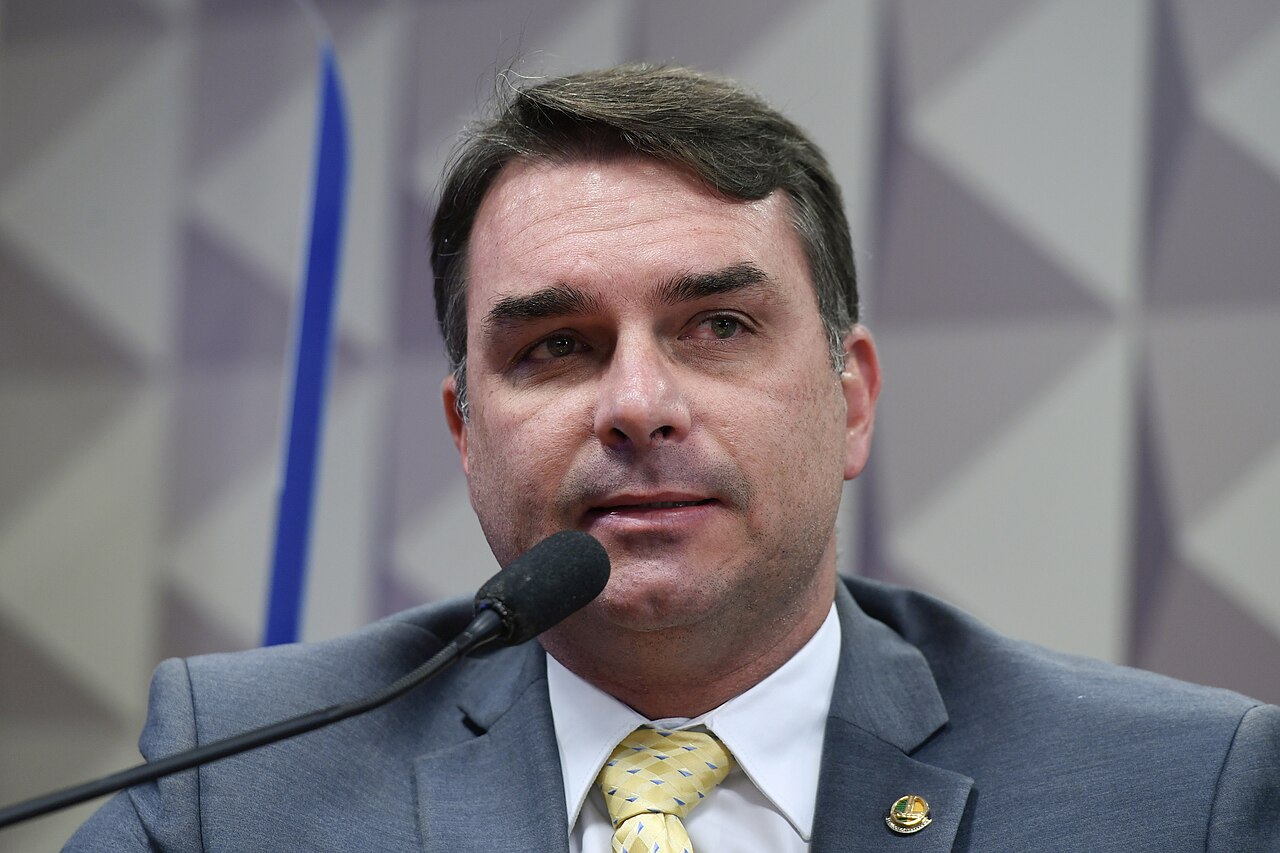
Brazilian Senator Flavio Bolsonaro is intensifying his focus on public security as he seeks to strengthen support among independent voters and consolidate his political base ahead of Brazil’s October presidential election. The senator recently introduced a comprehensive crime-fighting strategy built around 12 key measures aimed at tackling organized crime and improving public safety across the country.
A central component of Bolsonaro’s proposal is the classification of major Brazilian criminal organizations as terrorist groups. Speaking during the launch of the plan in São Paulo, he pledged a forceful response against armed gangs, stating that security forces would use intelligence and enforcement measures to dismantle criminal networks operating throughout Brazil.
Flavio Bolsonaro, son of former President Jair Bolsonaro, has embraced a law-and-order agenda similar to the one promoted by his father during his administration. Public security continues to be a major concern for Brazilian voters, particularly in urban areas where street crime remains a persistent issue.
The senator’s plan specifically targets two of Brazil’s most influential criminal organizations, Comando Vermelho and Primeiro Comando da Capital (PCC), which have long been linked to drug trafficking, violence, and organized crime activities. His proposal follows a diplomatic success in Washington, where U.S. President Donald Trump recently designated both groups as foreign terrorist organizations after lobbying efforts supported by Bolsonaro.
Brazilian President Luiz Inácio Lula da Silva criticized the U.S. decision, describing it as interference in Brazil’s domestic affairs. Legal analysts have also warned that the designation could create challenges for businesses operating within the country.
In addition to targeting criminal factions, Bolsonaro has proposed lowering Brazil’s criminal responsibility age from 18 to 16, deploying elite security units along national borders, and constructing five maximum-security prisons inspired by El Salvador’s anti-crime model. He stated that the initiative aims to shift fear away from law-abiding citizens and onto criminals.
Despite his aggressive security platform, Bolsonaro’s campaign has faced recent challenges. His poll numbers have declined following controversy surrounding his admission that he received funding from a jailed banker to support a film about former President Jair Bolsonaro. According to a recent CNT/MDA survey, Lula leads a potential October runoff with 49.3% support compared to Bolsonaro’s 36.8%, highlighting the uphill battle facing the senator as the election approaches.







