


 Zcash Price Analysis: Can ZEC Rebound Above $1,300?
  Ripple-Backed Evernorth Set for Nasdaq Debut With 473 Million XRP
  ECB May Stop Rate Hikes After December, Capital Economics Says
  Trump Calls for Zelenskyy Replacement Amid Russian Diesel Deal
  Fed’s Hammack Says More Data Needed Before Next Rate Move
  European Auto Stocks Rise as EU-China Trade Deal Targets Hybrid Imports
  UK Finance Minister Healey Calls for Fiscal Discipline Amid Global Risks
  RBA Signals More Rate Hikes as Inflation Risks Rise
  Fed Unveils Stablecoin Rules Under GENIUS Act
  Arthur Hayes Announces FLOP Testnet Launch Within Weeks
  IMF Maintains 2027 Global Growth Forecast at 3.4% Amid Rising Risks
  S&P 500 Rally Masks Losses for Over 40% of Stocks in 2026
  BlackRock’s Rick Rieder Favors Bonds Over Stocks as Treasury Yields Surge
  XRP Price Drops 3% Despite Ripple-Backed Evernorth Nasdaq Debut
  Gold Prices Rise Above $4,200 as Russia-Ukraine Energy Truce Eases Oil Concerns


 Add as a preferred source on Google
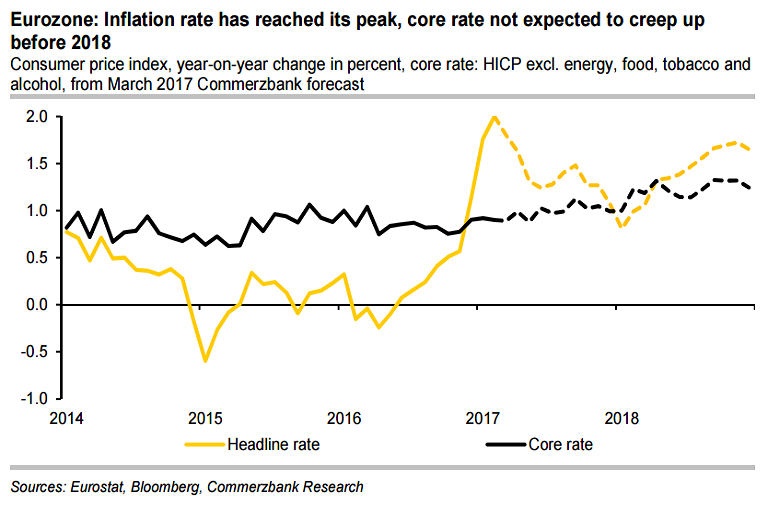
Eurozone inflation has risen above the European Central Bank's (ECB) target rate for the first time in four years, data from statistical agency Eurostat showed on Thursday. Inflation in the 19-nation bloc hit 2 percent in February, up from a rate of 1.8 percent the month before. February's core inflation rate - which strips out the impact of energy and food prices - was unchanged at 0.9 percent.
The increase in inflation is largely due to rising energy prices, and analysts do not expect the ECB to alter its current stimulus programme. Analysts expect the inflation rate to move a bit lower again in spring, and in a few months it is expected to drop back below 1½ percent. Only an increase in the underlying inflationary pressure will send the rate of inflation sustainably higher, which is quite unlikely.
"The rise of the inflation rate to 2.0% in February is likely to further fuel the debate about the ECB soon starting to exit its very expansionary monetary policy. However, the ECB is likely to wait for the rate excluding volatile energy, food, drink and tobacco prices to turn much higher as well," said Commerzbank in a report.
The ECB has maintained an ultra-loose monetary policy to stimulate growth in the eurozone and avoid deflation. In December, the ECB said it would extend its bond-buying programme until at least December 2017, although the €80bn-a-month quantitative easing (QE) scheme will be trimmed to €60bn a month from April.
Solid manufacturing survey data this week suggest the eurozone economy is on course to grow at a robust pace in the first quarter of 2017. Separate jobs data on Thursday showed eurozone unemployment stood at 9.6 percent in January, unchanged from the previous month.
The ECB is due to meet next week to decide monetary policy when it will also publish new growth and inflation projections. Howard Archer, chief UK and European economist at IHS Markit, said: "We believe the ECB will remain wedded to its current monetary policy stance.
EUR/USD was trading 0.32 percent lower on the day at 1.0512 at around 1230 GMT. Intraday bias remains lower. Upside remains capped by 21-4H EMA. Violation there could see upside till 1.0630. FxWirePro Euro Hourly Currency Strength Index was at 17.3106 (Neutral). For more details on FxWirePro's Currency Strength Index, visit http://www.fxwirepro.com/currencyindex.







