


 AstraZeneca Q2 Earnings Beat Forecasts as Oncology Growth Supports 2026 Outlook
  US-Backed Pediatric HIV Treatment Drops After Foreign Aid Changes, Study Finds
  Alcohol is one of the most dangerous drugs, yet its presence is ubiquitous in social settings and celebrations
  Novartis Shares Plunge After Muscle Drug Fails Phase III Trial
  France Keeps Top Health Alert as Officials Brace for Another Heatwave
  Moderna Short Sellers Hit With $4.8 Billion Loss as Stock Soars
  Novo Nordisk Raises 2025 Outlook Despite Wegovy Pill Miss and CagriSema Setback
  Hims & Hers Shares Fall as GLP-1 Costs Widen Q2 Loss
  Moderna Wins FDA Approval for mFLUSIVA mRNA Flu Vaccine for Adults 50+
  Hanmi Pharm Soars 30% on $2.3 Billion Genentech Obesity Drug Deal
  FDA Investigates New Cyclospora Outbreak as U.S. Cases Continue to Rise
  Venezuela Earthquake Health Risks Rise as Disease Monitoring Intensifies
  U.S. Issues Cuba Health Alert as Illnesses Rise
  GLP-1 Weight-Loss Drug Use Surges Among U.S. Children
  3 clinical-grade skincare creams you really shouldn’t buy online


 Add as a preferred source on Google
A connection between eczema and food allergies have long been established. Studies have shown that food allergies can worsen eczema in some patients. And, there is also proof that what triggers allergies to develop in the first place is eczema.
This same pattern has been identified in other studies, and scientists have referred to it as the "atopic march" which is described as the pattern of development in which eczema generally appears first, then followed by food allergies, seasonal allergies, and asthma.
The Lancet published a 2017 review that reported that 81 percent of those who had eczema also had a food allergy.
Thus, food allergies have now been accepted as a related health condition to eczema, allergic rhinitis, and asthma.
According to the health experts, the "itch-scratch cycle" is what often triggers an eczema flare-up. When you scratch an itch, it triggers the release of inflammatory compounds, which brings about the flare. Eczema symptoms will then lead to more itching, just repeating the cycle.
Aside from itching, other eczema symptoms are dry and sensitive skin, inflamed skin, dark-colored patches of skin, rough, leathery or scaly patches of skin, oozing or crusting, and areas of swelling.
On the other hand, eczema is one of the symptoms of food allergy along with tingling or itching in the mouth, hives, swelling of the lips, face, tongue and throat or other parts of the body, abdominal pain, diarrhea, nausea or vomiting, dizziness, lightheadedness or fainting.
Although food allergies do not cause eczema, they can certainly trigger a flare-up, and it varies on the type of food eaten and the immunologic response of the individual.
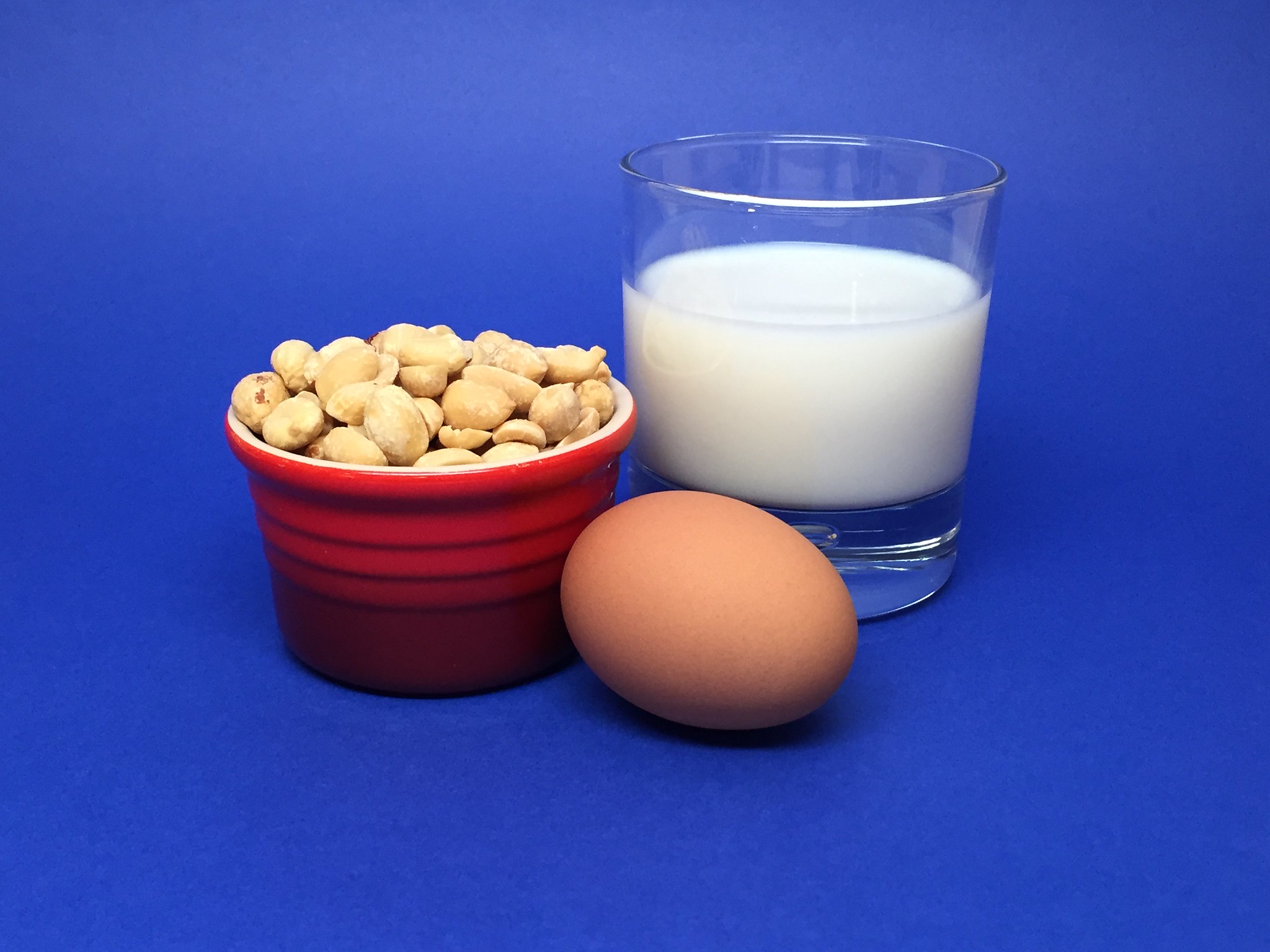
Among the food that can trigger an eczema flare-up are eggs, milk, soy, wheat, and peanuts.
Eczema patients have also reported food sensitivities, which means that they get a reaction from eating these types of food, although there is no food allergy involved.
Some of these are sugar, citrus, tomatoes, apples, kiwi, tree nuts, spices, vanilla, and caffeine.
Aside from avoiding these foods, treatment for eczema and food allergies also involves attending to the symptoms as they occur.
Like eczema, there is also no known cure for allergies, but their symptoms could be alleviated.
Image credit courtesy of NIAID/Flickr







