


 Putin Says Ukraine Peace Proposals Remain on Table
  US Comfortable With Canada Trade Standoff as Import Bans Loom
  Xi Calls for Deeper U.S.-China AI Cooperation in Trump Talks
  Pope Leo Warns UN, Multilateral Groups Face Crisis
  Pezeshkian Says US Must Choose When Iran War Ends
  Saudi Arabia Seeks Military Support as Houthi Attacks Escalate
  Pope Leo Backs Press Freedom After White House Media Ban
  Ukrainian Drone Attacks Hit Russian Regions, Injuring at Least 12
  Saudi Arabia, Turkey and Pakistan Plan Urgent Defence Talks Over Houthi Attacks
  US Backs Musk in Fight Against EU’s €120 Million X Fine
  Netanyahu Defends Israel at UN as Delegates Stage Walkout
  Trump, Xi Visit US National Archives After White House Summit
  North Korea Rejects Nuclear Test Warning, Calls Nuclear Status Irreversible
  France Defends Netanyahu Airspace Clearance Despite ICC Warrant
  Evan Gershkovich Says FSB Set Trap for 2023 Russia Arrest
  What ‘Taiwan Independence’ Means as Xi Presses Trump on US Policy
  Najib Razak Seeks Stay of 15-Year 1MDB Prison Sentence


 Add as a preferred source on Google
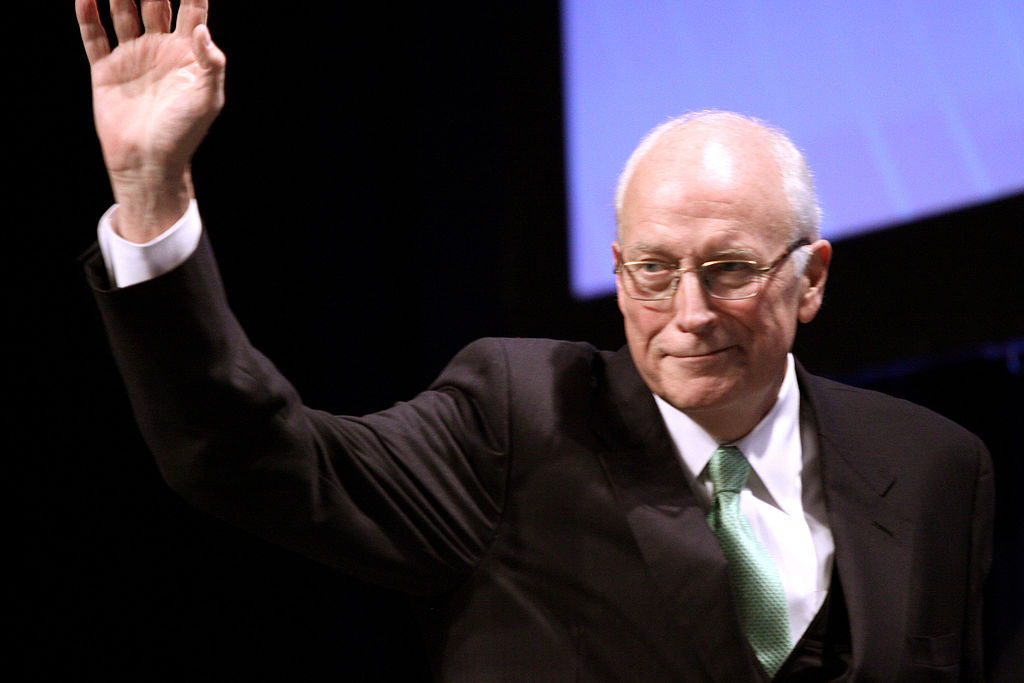
Dick Cheney, one of the most powerful vice presidents in U.S. history and a key figure behind the 2003 Iraq invasion, died Monday at age 84 from complications of pneumonia and heart disease, his family announced. A dominant Republican force, Cheney served as vice president under George W. Bush from 2001 to 2009, shaping U.S. foreign policy in the post-9/11 era and expanding executive authority in Washington.
A former Wyoming congressman and defense secretary under George H.W. Bush, Cheney played a pivotal role in pushing for the Iraq War, asserting that Saddam Hussein possessed weapons of mass destruction—a claim later disproven. Despite criticism, Cheney defended the invasion as justified by the intelligence available at the time. He also championed controversial “enhanced interrogation” methods that human rights groups later condemned as torture. His deep influence and aggressive approach to national security earned him comparisons to “Darth Vader,” a label he humorously embraced.
Born in Lincoln, Nebraska, on January 30, 1941, Cheney grew up in Wyoming and earned degrees from the University of Wyoming after briefly attending Yale. Before entering politics, he worked on power line construction projects. His long-time political ally Donald Rumsfeld mentored him early in his career, and together they shaped Republican defense policy for decades.
Cheney’s private-sector career included leading Halliburton, an oil services company that profited heavily from Iraq War contracts, drawing scrutiny over potential conflicts of interest. His daughter Liz Cheney followed him into politics, later clashing with the Trump wing of the Republican Party. Cheney, once a stalwart conservative, publicly denounced Donald Trump, calling him the greatest threat to U.S. democracy.
Despite decades of controversy—from the Iraq War to a hunting accident that made global headlines—Cheney’s impact on American politics and foreign policy remains profound. He is survived by his wife Lynne and daughters Liz and Mary.







