


 Dollar Steadies Ahead of ECB and BoE Decisions as Markets Turn Risk-Off
  Trump Lifts 25% Tariff on Indian Goods in Strategic U.S.–India Trade and Energy Deal
  How a hybrid heating system could lower your bills and shrink your carbon footprint
  From NIMBY to YIMBY: How localized real estate investment trusts can help address Canada’s housing crisis
  Colorado takes a new – and likely more effective – approach to the housing crisis
  Silver Prices Plunge in Asian Trade as Dollar Strength Triggers Fresh Precious Metals Sell-Off
  China Extends Gold Buying Streak as Reserves Surge Despite Volatile Prices
  RBI Holds Repo Rate at 5.25% as India’s Growth Outlook Strengthens After U.S. Trade Deal
  South Korea’s Weak Won Struggles as Retail Investors Pour Money Into U.S. Stocks
  Why you may not be able to get on the housing ladder or buy a bigger home in 2024


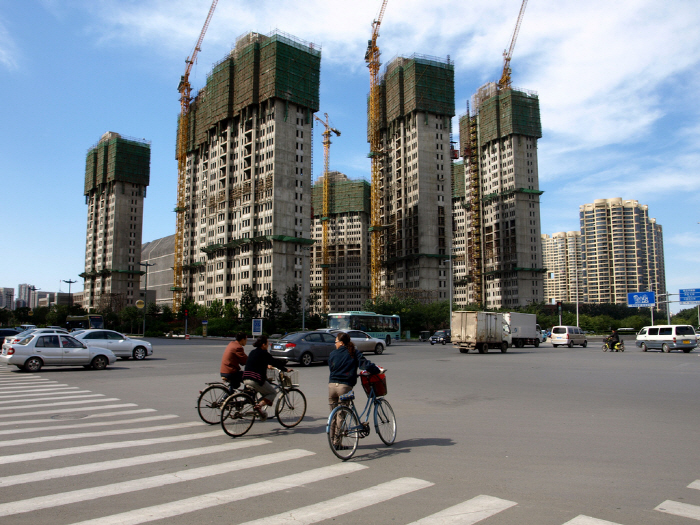
According to latest data released today by National Bureau of Statistics (NBS), property prices in China edged up by 2.5% in January, from a year ago. This is highest reading since August 2014 and fourth consecutive positive reading.
Back in 2013, China's house price were rising sharply and in January, nationwide house prices were up 9.9% from a year ago. However, as supply outpaced demand that boom turned into bust and throughout 2014, price growth dropped and finally to negative territory by October 2014. Moreover about the same time, China's stock market was booming and lot of money was chasing stocks instead of housing. Similar trend reversed when stock market went bust last summer and house price also started to recover. By May last year, yearly price deflation bottomed in May and by November, prices were rising again on yearly basis.
However, unlike the good old days, prices rises are mainly due to sharp rise in house prices in Tier 1 cities and somewhat in Tier 2 cities. Prices are still in decline in Tier3 and Tier 4 cities.
- In Shenzhen price rose by 52% y/y, 18% y/y in Shanghai and in Beijing prices rose by 10% y/y. But country wise data, not so cheerful though. 45 of the 70 cities surveyed, reported price drop. Worst hit is Zhanjiang, where price dropped by almost 5% from a year back.
We expect, People's Bank of China (PBoC) and government to keep providing support to housing sector, so this recovery trend is likely to continue but that doesn't put China in a better place with highly levered housing sector.
China's benchmark stock index is up 0.3% for the day, trading at 2750.













