


 UK Housing Market Slows Amid Tax Hike Concerns
  Volkswagen Shares Slide After 2026 Profit Outlook Cut
  Hyundai CEO Warns Chinese Automakers Could Disrupt US Market
  Sharehousing can be fun, but fraught with risk – and the law offers little protection. These 3 changes could help
  US Federal Register Drops Alibaba Qwen AI Search Tool
  fnny Beta Launches With a Simple Idea: Find an Event, Show Up, Get Rewarded
  Goldman Sachs Names Simon Lyons UK Investment Banking Co-Head
  Paramount-Warner Bros $110 Billion Deal Draws Antitrust Backlash
  Trump Bans CNN, MS NOW and Politico From White House
  NASA, Boeing Discuss Expanding Starliner Missions
  Paramount Skydance Faces $30 Million Film Penalty in Warner Bros. Deal
  SoftBank Launches $11 Billion Bond Sale to Fund OpenAI Investment
  Stamp duty is holding us back from moving homes – we’ve worked out how much
  A ‘sponge city’ may be your home in 2050
  Trump Plans Federal AI Force and AI Czar


 Add as a preferred source on Google
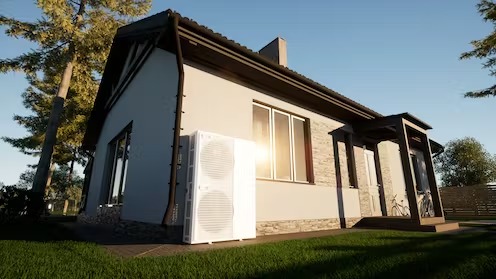

To heat your home without damaging the climate, you will need to replace your gas boiler. UK government advisers recommend switching to appliances that run on electricity.
However, if a root-and-branch conversion to electric heating is too expensive, even a partial shift to “hybrid heating” can cut your energy bills and household emissions relatively quickly – although phasing out gas and oil is still essential in the long run for averting climate breakdown.
A hybrid heating system combines two or more technologies to heat a building. Typically, this involves pairing a conventional gas boiler with a renewable alternative like an electric heat pump. But there are other possibilities. For instance, roof-mounted solar panels can generate electricity to help run an immersion heater, or solar-thermal panels can complement your heat pump or boiler by making hot water.
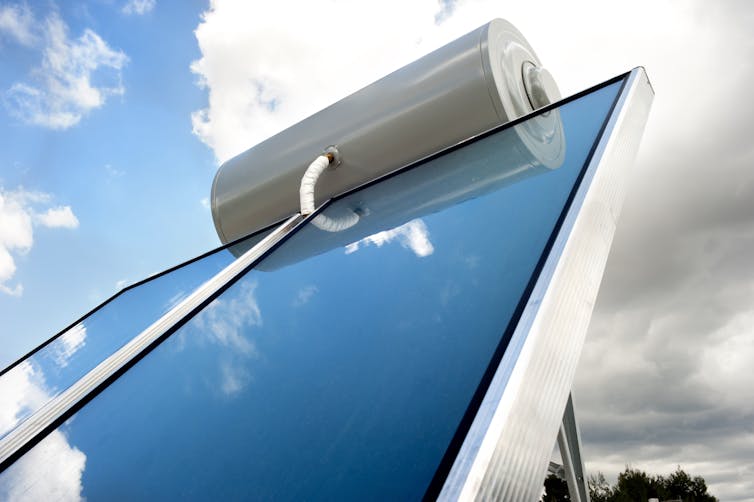
Solar-thermal technology can convert solar energy into heat. Antlio/Shutterstock
Gas boilers supplied 92% of home heating across the UK in 2017. Emissions from the average boiler are equivalent to 2.2 tonnes of CO₂ a year, making residential heating one of the country’s biggest contributors to climate change. The UK government will stop the sale of new gas boilers from 2035.
Meanwhile, heat pumps are slowly gaining popularity through the government boiler upgrade scheme, which offers grants of up to £7,500 (US$9,400). Electric heat pumps convert electricity to heat very efficiently by extracting heat from the air or ground outside and transferring it to water that is pumped through radiators.
The International Energy Agency says that installing a heat pump can significantly lower household emissions, especially when the electricity powering it is from a renewable source like wind or solar.
Is hybrid heating right for you?
Hybrid heating systems can bring a number of advantages: a smaller carbon footprint as well as lower bills, while increasing the energy efficiency and value of a property.
From 2026, hybrid heating systems will become a standard replacement for gas heating in the Netherlands. In Germany, the heating industry favours a more gradual shift from oil and gas using hybrid heating systems.
Heat pumps can be difficult and expensive to install in some houses. This is because they generate heat at a lower temperature to gas boilers, so larger radiators and underfloor heating may be necessary to heat a home as efficiently on particularly cold days (especially if your house is poorly insulated).
Complex renovations that are often necessary to install heat pumps require additional investment and can deter homeowners, obstructing the roll-out of low-carbon heating.
If insulating your home is particularly expensive or arduous, installing a heat pump and keeping a gas boiler as a back-up for particularly cold days could still slash your household emissions while maintaining the standard of heating you’re used to. It may also give you time to save up for renovations that can help you make the final shift to an all-electric system.

Energy-efficiency improvements, like installing insulation, are unavoidable for heat pump-only properties. Serhii Krot/Shutterstock
How do hybrid systems compare?
A 2021 study found that a hybrid heating system consisting of an air-source heat pump and a condensing gas boiler reduced a typical UK household’s greenhouse gas emissions from heating by 30%.
A hybrid heat pump requires less remedial work: you may keep the original boiler and radiators. Cavity-wall and other forms of insulation will help you retain heat and use less energy, and these changes are essential for heating a property with a heat pump alone. Compared with an oil boiler, a hybrid heat pump system (combined with energy-efficiency measures) consumed roughly 70% less energy according to one study – similar to a standalone heat pump.
A case study in Ireland also showed that hybrid heat pumps have 7% lower annual operating costs than a gas boiler alone, and 23% lower than an electric heat pump on its own. The disparity is because electricity can be a lot more expensive than gas, depending on fluctuating energy prices and how long the heat pump operates.
While insulating homes and replacing gas heating systems with electric alternatives should remain the goal, installing a hybrid heating system can reduce bills and emissions quickly, especially when government support for upgrading your heating is insufficient.







