


 Who should own the knowledge that underpins AI technology?
  China Reviews Broadcom Switch Use in State Data Centres
  Apple Pay Set for India Launch With Axis Bank
  US Federal Register Drops Alibaba Qwen AI Search Tool
  NASA Resumes Cygnus XL Cargo Docking with Space Station After Software Fix
  Japan, U.S. Discuss $19 Billion GlobalFoundries Chip Plant
  Trump and Merck KGaA Partner to Slash IVF Drug Costs and Expand Fertility Coverage
  FDA Adds Fatal Risk Warning to J&J and Legend Biotech’s Carvykti Cancer Therapy
  SK Hynix, Intel Discuss U.S. Memory Chip Production Deal
  SpaceX Delays Starship V3 Launch Ahead of Potential Record IPO
  Blue Origin’s New Glenn Achieves Breakthrough Success With First NASA Mission
  Is space worth the cost? Accounting experts say its value can’t be found in spreadsheets
  Big AI wants to slow down AI research. Is it a safety pause or a strategic retreat?
  Eli Lilly’s Inluriyo Gains FDA Approval for Advanced Breast Cancer Treatment
  Physicists zoom into the birth of cosmic rainstorms with new CERN study
  Meta CEO Zuckerberg Backs Independent AI Safety Reviews Over Development Slowdown


 Add as a preferred source on Google
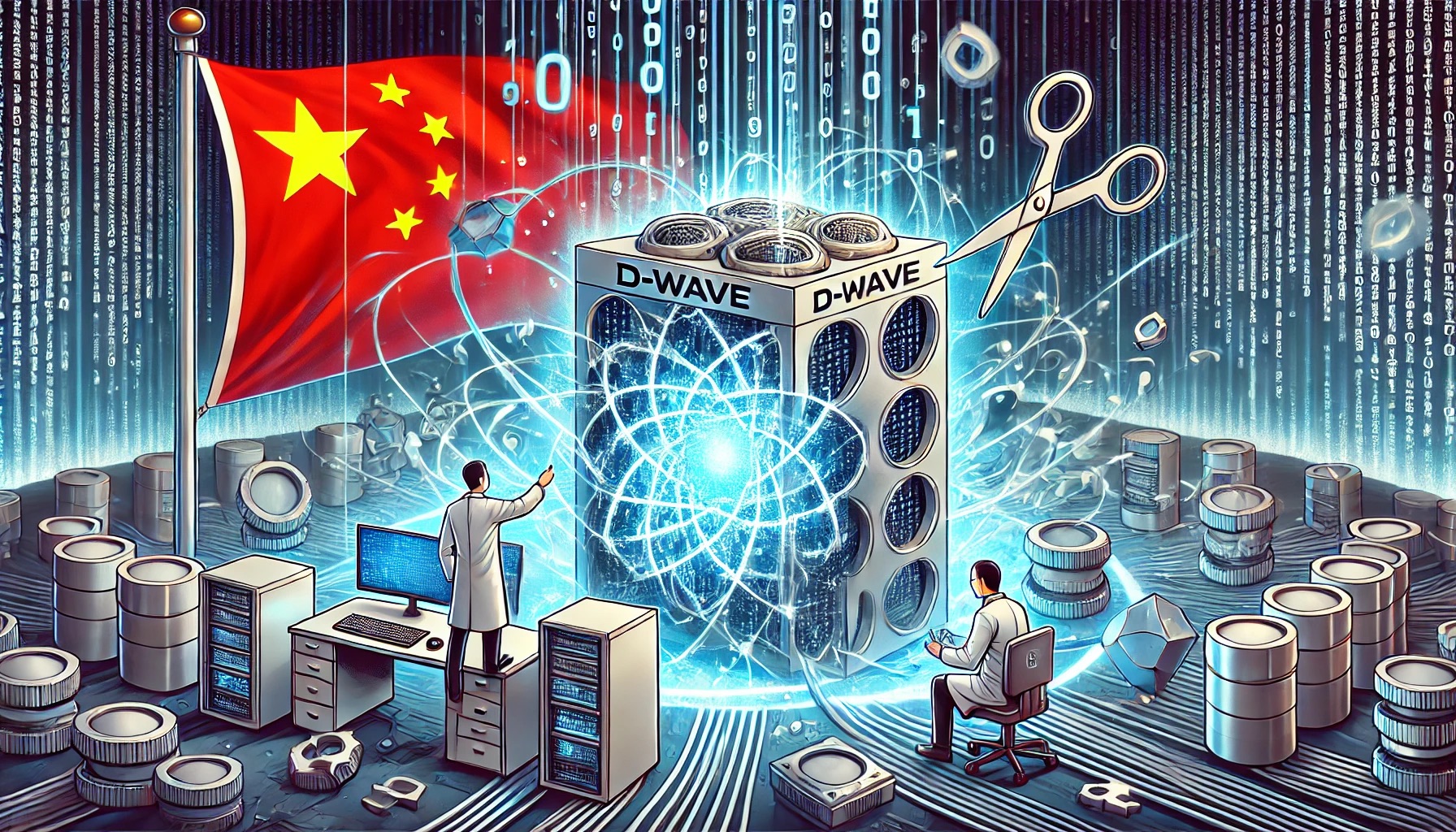
In a groundbreaking development, Chinese researchers have reportedly used a D-Wave quantum computer to crack encryption algorithms once thought unbreakable. The breakthrough raises concerns over the future of digital security, especially in critical sectors like banking and military operations.
Chinese Researchers Use D-Wave Quantum Computer to Crack Key Encryption Algorithms, Sparking Security Concerns
China’s scientists have reportedly used Western quantum computing technology, specifically from D-Wave, to crack encryption algorithms that were once deemed unbreakable. This breakthrough marks a significant step forward for the emerging field of quantum cryptography and raises concerns about the security of critical digital infrastructures.
According to a report by the South China Morning Post, a team of researchers led by Wang Chao from Shanghai University has successfully broken some of the most widely used encryption algorithms. In a peer-reviewed paper, the team describes this advancement as a “real and substantial threat” to encryption methods currently used in sectors such as banking and the military.
The researchers utilized a quantum computer from Canada's D-Wave to crack foundational encryption algorithms, including Present, Gift-64, and Rectangle. These algorithms play a crucial role in the security framework of digital systems globally. The team employed a technique known as quantum annealing; a process central to D-Wave’s computing technology. This process uses quantum fluctuations to identify the global minimum in possible solutions.
Quantum Breakthrough Could Threaten AES-256 Encryption, Raising Alarms Over Future Digital Security
By combining quantum annealing with conventional mathematical techniques, Wang Chao’s team developed a novel computational architecture capable of breaking widely used encryption methods. Most notably, the researchers believe this method could eventually be used to crack AES-256, an encryption standard widely regarded as “military-grade” due to its robustness.
While the method has yet to reveal encrypted passcodes, the researchers are closer than ever to achieving this outcome. However, several limitations still need to be addressed, including environmental factors, hardware being developed, and creating a single attack strategy that can breach multiple encryption algorithms.
According to Wccftech, this development raises serious questions about the future of digital security, particularly as quantum computing advances and its potential for innovation and disruption becomes more apparent.







