


 US Stock Futures Rise as Markets Brace for Fed Rate Hike
  Asian Currencies Subdued as Yen Slides Ahead of Fed, BOJ Decisions
  Hormuz Vessel Traffic Drops to Single Digits
  Japanese Yen Retreats as Dollar Rises Ahead of Fed, BOJ Rate Decisions
  German 2-Year Yield Hits 2023 High as Rate Hike Bets Rise
  Hong Kong Unveils First Five-Year Plan to Boost Finance, Tech and Housing
  Gold Prices Fall as Hot U.S. Inflation Boosts Fed Rate Hike Bets
  Saudi Arabia Raises Security Alerts as Houthi Attacks Threaten Oil Routes
  Asian Bank Stocks Slide as BofA Warning and Rising Yields Hit Sentiment
  BOJ Flags Import Costs and Yen Shocks as Persistent Inflation Risks
  Oil Prices Surge as Houthi Attacks Raise Saudi Supply Fears
  Gold Prices Steady as Oil Disruptions Boost Fed Rate Hike Bets
  UK Inflation Rises to 3.1% Ahead of BoE Rate Decision
  US Futures Fall as Fed Meeting, Oil Surge Rattle Markets
  Finland Raises 2026 Growth Forecast as Exports and Investment Surge
  Oil Prices Fall as U.S. Crude Inventories Rise, Middle East Risks Persist


 Add as a preferred source on Google
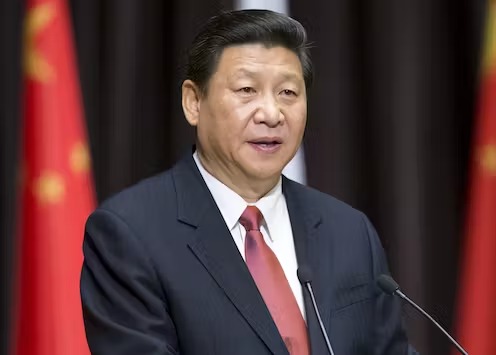

In his new year address, Chinese president Xi Jinping claimed that Taiwan would “surely be reunified” with China. Against the backdrop of increased Chinese military posturing in the Taiwan Strait, some western journalists are framing Xi’s remarks as an overt and direct threat against Taiwan. They argue that Xi’s rhetoric validates concerns about a potential invasion.
This framing misses the point and overlooks the domestic political context of Xi’s speech. Xi also celebrated the successes of the Chinese nation and economy, while acknowledging the economic struggles of the Chinese people. Rather than threatening Taiwan, this rhetoric is intended to protect Xi’s regime.
Western governments draw their legitimacy from a popular mandate, which is established through elections. The legitimacy of the Chinese Communist Party (CCP) to govern China is also premised on a mandate. But instead of through elections, this mandate is established through the party’s record on ensuring continued economic prosperity and national success.
In this context, Xi’s emphasis on economic growth and the nation should be considered performative – an example of political theatre portraying the CCP in a carefully curated way for a Chinese audience.
Following the Cultural Revolution (which had disastrous consequences for China’s people and economy) and Mao’s death in 1976, the CCP re-established its legitimacy on twin pillars of economic prosperity and nationalism.
Former leader Deng Xiaoping secured the economic pillar in the 1980s through reforms that raised 800 million people out of poverty. The nationalist pillar involved retelling Chinese history. The regime emphasised historical achievements, commemorated national struggles and portrayed the CCP as the vanguard of the Chinese nation.
Under Mao, Japan’s invasion of China in the second Sino-Japanese war (the Chinese theatre of the second world war) was presented as an ideological class struggle. According to this narrative, both Chinese and Japanese workers were exploited by militaristic bourgeois elites. Nowadays, China’s nationalist narrative presents Japan as a foreign oppressor that China heroically resisted and overcame under the CCP’s leadership.
Such narratives of Chinese history have resulted in a contemporary Chinese nationalism sensitive to what it considers renewed victimisation of the Chinese nation. This includes international opposition to reunification with Taiwan, a historic province of China.
Relying on nationalism
As China’s economy slows, the CCP has become increasingly reliant on the nationalist pillar to retain its legitimacy. This limits the CCP’s options in nationalistic disputes as it must act in such a way that upholds its nationalist credentials.
In 2005, China saw large anti-Japanese protests triggered by Japan’s downplaying of the atrocities it committed during its invasion of China. Within the context of 11.4% economic growth, the CCP shut down public transport to block protesters from arriving in the largest cities and officials condemned the protests.
But, by 2012, China’s economic growth had slowed to 7.9%. And the CCP was notably silent during similarly large anti-Japanese protests over the Senkaku Islands (known as the Diaoyu Islands in China) – a territorial dispute in the East China Sea associated with the second Sino-Japanese war.
China’s nationalist movement criticised the CCP for being too soft on Japan, prompting then vice-president Xi to publicly renounce Japan’s territorial claim. This constitutes a performative acquiescence to nationalist pressure, with Xi acting to secure the nationalist pillar while the economic pillar faltered.
Understanding Xi’s performance
Xi’s mention of national reunification with Taiwan in his new year address is in keeping with the CCP’s increased reliance on nationalism to secure legitimacy as China’s economy slows.
This can also explain China’s posturing in the Taiwan Strait. China experienced 3% economic growth in 2022, the lowest growth rate since Deng’s reforms (excluding the height of the COVID pandemic). So to deflect scrutiny, the CCP is intensifying its embrace of brinkmanship in the Taiwan Strait.
Ultimately, this brinkmanship is unlikely to culminate in a war considering how an invasion could backfire on the CCP. In the event of an unsuccessful invasion, the CCP would suffer significant damage to its reputation. Even a successful but prolonged conflict with heavy losses would have a similar effect.
Either way, the near-certain economic consequences, such as sanctions and embargoes, would topple the party’s economic pillar.
Acknowledging economic shortcomings
More interesting than Xi’s talk of reunification is his admission of the economic struggles of the Chinese people. In his address, Xi explained that “some people had difficulty finding jobs and meeting basic needs”.
There is very little precedent for acknowledging the shortcomings of the CCP’s delivery of economic prosperity. Doing so contradicts the economic pillar. It is particularly odd given that the CCP has recently suppressed negative commentaries on China’s economy to avoid damaging public confidence in its economic stewardship.
As brinkmanship in the Taiwan Strait reaches its limits, it seems the CCP is shifting away from an over-dependence on the nationalist pillar. Instead, it may be pursuing a less immediately risky strategy, acknowledging current economic issues while emphasising the potential for economic growth under the CCP. This approach would be a safer way to maintain the party’s legitimacy than escalating tensions in the Taiwan Strait.
Xi’s speech indicates a changing nuance in CCP discourse – one that may become increasingly apparent over the course of the coming year.







