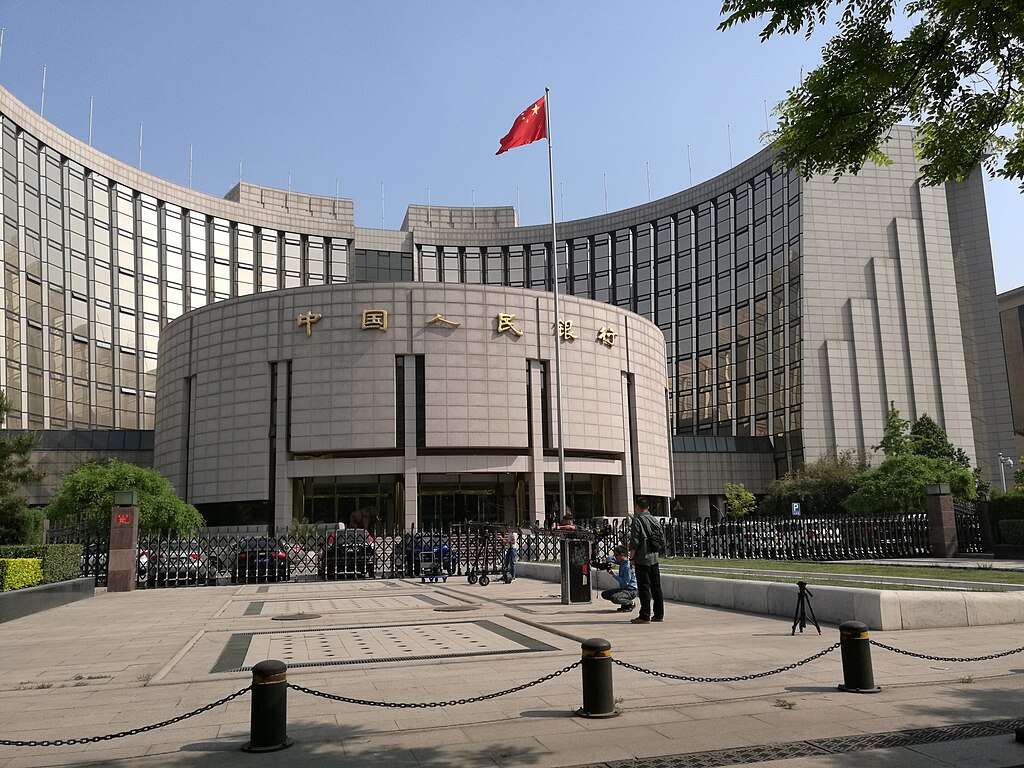
China's Central Bank Initiates 800 Billion Yuan Funding Schemes
On Friday, the People's Bank of China (PBOC) launched two significant funding schemes, injecting up to 800 billion yuan ($112.38 billion) into the stock market through new monetary policy tools aimed at fostering capital market stability.
The PBOC detailed the operational aspects of the swap and lending schemes, initially announced in late September, designed to support the "steady development" of China's capital markets. Recent market optimism has dwindled, leading to caution over the implementation of Beijing's stimulus plans. The benchmark CSI300 Index rose 0.8% on Friday, recovering from early losses.
The swap scheme, valued at 500 billion yuan, allows brokerages and fund management firms to secure liquidity through asset collateralization to purchase stocks. Currently, 20 companies have been approved for participation, with initial applications exceeding 200 billion yuan.
Additionally, the PBOC introduced a lending program worth 300 billion yuan, enabling financial institutions to borrow for share purchases by listed companies and their major shareholders at competitive interest rates.
These measures follow a meeting between China's financial regulators and key institutions, emphasizing the need for rapid implementation of policies to support economic growth and market stability.



India Manufacturing Growth Accelerates in May Despite Rising Costs
Rising Airfares May Challenge Cruise Industry Growth Ahead of 2027 Booking Season
New World Screwworm Found Near U.S. Border Raises Threat to Cattle Industry and Beef Prices
Trump, Syrian President Sharaa Discuss Sanctions Relief and Economic Recovery in Phone Call
US Launches New Trade Investigation Into Vietnam Over Intellectual Property Concerns
German Retail Sales Decline Less Than Expected in April 2026
Asian Stocks Climb as AI Optimism Boosts Tech Shares; South Korea Leads Gains
US Stock Futures Rise as Hopes Grow for U.S.-Iran Peace Deal
Asian Currencies Hold Steady as U.S. Dollar Gains on Inflation and Middle East Concerns
Gold Prices Fall as Stronger Dollar and Iran Tensions Weigh on Market Sentiment
Gold Prices Hold Steady as Fed Rate Hike Expectations Offset Middle East Tensions
Australia GDP Growth Faces Headwinds as Trade Deficit Widens and Imports Surge in Q1 2026
Japan Weighs Two-Year Food Tax Cut Starting in 2027 to Ease Cost-of-Living Pressure
South Korea Inflation Surges to Two-Year High, Boosting July Rate Hike Expectations
UK House Prices Record First Monthly Decline Since December as Iran Conflict Dampens Market Confidence
China’s Companion Economy Booms as Young People Pay for Friendship and Travel Partners in 2026
Trump Revises U.S. Tariffs on Copper, Aluminum, and Steel Imports Through 2027 


