


 Uber Ordered to Pay $8.5 Million in Bellwether Sexual Assault Lawsuit
  RBI Holds Repo Rate at 5.25% as India’s Growth Outlook Strengthens After U.S. Trade Deal
  Japan Economy Poised for Q4 2025 Growth as Investment and Consumption Hold Firm
  Trump Signs Executive Order Threatening 25% Tariffs on Countries Trading With Iran
  TrumpRx Website Launches to Offer Discounted Prescription Drugs for Cash-Paying Americans
  Gold Prices Slide Below $5,000 as Strong Dollar and Central Bank Outlook Weigh on Metals
  U.S.-India Trade Framework Signals Major Shift in Tariffs, Energy, and Supply Chains
  FDA Targets Hims & Hers Over $49 Weight-Loss Pill, Raising Legal and Safety Concerns
  Washington Post Publisher Will Lewis Steps Down After Layoffs
  India–U.S. Interim Trade Pact Cuts Auto Tariffs but Leaves Tesla Out
  Ukraine minerals deal: the idea that natural resource extraction can build peace has been around for decades
  Parasites are ecological dark matter – and they need protecting
  An unexpected anomaly was found in the Pacific Ocean – and it could be a global time marker
  Rise of the Zombie Bugs takes readers on a jaw-dropping tour of the parasite world
  Japanese Pharmaceutical Stocks Slide as TrumpRx.gov Launch Sparks Market Concerns
  Trump’s Inflation Claims Clash With Voters’ Cost-of-Living Reality


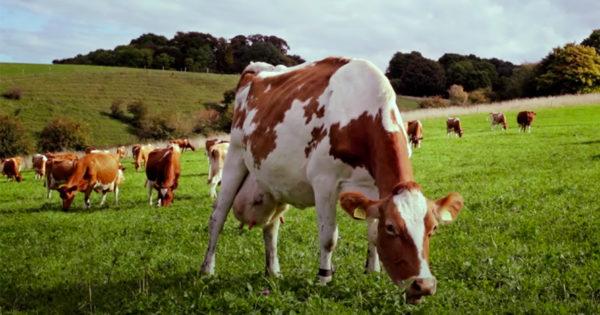
Burger King, Cargill, and the National Fish and Wildlife Foundation (NFWF) are providing cattle ranchers in a six-state region with technical support and resources to help cut greenhouse gas emissions.
The five-year Southern Great Plains effort, which includes $5 million from Cargill and Burger King, a subsidiary of Restaurant Brands International, as well as $5 million in matching funds from NFWF, has the potential to sequester 360,000 tons of CO2 equivalent year.
On ranches in Colorado, Kansas, Nebraska, New Mexico, Oklahoma, and Texas, the alliance is focusing on using regenerative agricultural approaches to improve grassland management and conserve ecosystems.
On April 12, NFWF awarded three grants to ranchers in Kansas, New Mexico, and Texas, financed by Burger King and Cargill, to support plans to apply grassland management strategies customized to their area.
Burger King's president, Tom Curtis, stated that as one of North America's largest buyers of beef, cooperating with Cargill and NFWF allows them to expedite ambitious efforts to cut greenhouse gas emissions in their beef supply chain.
The conservation initiatives, according to Jeff Trandahl, executive director and chief executive officer of NFWF, aim to apply grazing techniques particular to each region, as well as maintain and restore grasslands and the wildlife species they sustain.
The projects, according to Trandahl, will make grasslands more resilient to changing conditions, and they hope to expand this work by connecting conservation experts with ranchers who want to make a real difference.
To maximize the benefits of currently used practices, Heather Tansey, Cargill's vice president of environmental sustainability, said that reducing the environmental impact of the beef supply chain requires attention and commitments on multiple fronts.
Cross-industry collaboration, according to Cargill, allows beef production to preserve and positively impact land and resources. Burger King, Cargill, and the National Farmers Union Foundation (NFWF) are all committed to making beef production more sustainable, and have already implemented similar sustainable agriculture programs across North America to optimize beef production that is healthy for customers, regenerative for the land, and profitable for farmers.













