


 Chinese Social Media Giant Xiaohongshu Eyes Hong Kong IPO at Over $70 Billion Valuation
  Google Gemini Co-Lead Noam Shazeer Leaves for OpenAI Amid AI Talent Race
  Russia Signals Frustration Over Unfulfilled U.S. Commitments After Alaska Summit
  Apple Signals Product Price Hikes Amid Rising Memory Chip Costs
  100+ Global Companies Push Governments to Prioritize Electrification for Economic Growth
  US-Iran De-Escalation Shifts Washington’s Focus to AI Regulation and Crypto Legislation
  Trump Administration Delays DeepSeek and CXMT Trade Blacklist Designations Amid U.S.-China Tensions
  NTSB Investigates Boston Logan Airport Near-Miss Between Delta and American Airlines Jets
  Peru Election Dispute Deepens as Roberto Sanchez Rejects Runoff Results
  Russia-Ukraine War: Fresh Strikes Injure Civilians as Fuel Crisis Worsens in Russia
  US Tightens AI Chip Export Rules, Impacting Nvidia and AMD Sales to Chinese Firms
  SK Hynix Overtakes Samsung as South Korea’s Most Valuable Company
  Today’s space race could turn fatal if we don’t agree on new rules
  Trump Forced Labour Tariff Plan Faces Criticism as Experts Question Effectiveness
  US Sanctions M23 and FDLR Commanders Amid Ongoing Eastern Congo Conflict
  Trump Highlights Manufacturing Agenda in Pennsylvania as Midterm Elections Approach


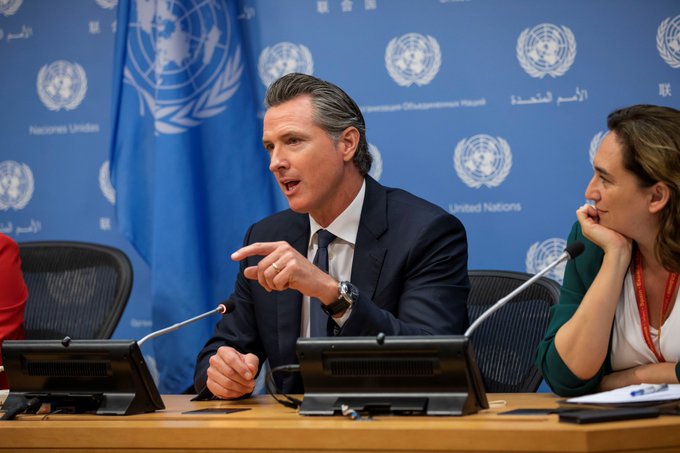
California Governor Gavin Newsom has signed into law a groundbreaking measure aimed at regulating advanced artificial intelligence models. The new legislation, Senate Bill 53 (SB 53), requires major AI developers—including OpenAI, Google, Meta, Nvidia, and Anthropic—to publicly disclose how they plan to mitigate catastrophic risks from their cutting-edge AI systems.
Newsom emphasized that California, home to the nation’s largest cluster of AI companies, is taking the lead in setting rules for a technology that will shape the economy and society. He stated the law balances innovation with public safety, positioning the state as a model for potential federal legislation.
The law applies to companies with over $500 million in annual revenue. These firms must conduct assessments on risks such as AI models escaping human control or being misused to develop bioweapons. They are required to release those assessments to the public, and violations may result in fines of up to $1 million.
This marks a shift from California’s earlier attempt at AI regulation, which Newsom vetoed in 2023 due to industry backlash. That proposal demanded costly third-party audits and imposed heavy financial penalties. SB 53, however, adopts a more balanced framework, which Jack Clark, co-founder of Anthropic, praised as promoting both safety and innovation.
Still, some in the tech sector are concerned. Critics, including Andreessen Horowitz’s head of government affairs, warned that state-led laws risk creating a fragmented regulatory environment across the U.S. With similar AI laws passed in Colorado and New York, industry leaders fear compliance challenges for startups and smaller firms.
Federal lawmakers are now under pressure to act. Representative Ted Lieu highlighted the need for national standards, asking whether Americans prefer “17 states” regulating AI independently or a unified approach from Congress. Meanwhile, Representative Jay Obernolte is drafting federal AI legislation that could preempt state-level rules.
The California law is widely seen as a catalyst that may accelerate Washington’s efforts to establish a nationwide AI regulatory framework.







