


 U.S. Dollar Hits Two-Month High as Oil, Treasury Yields Surge
  Jeff Bezos Invests $32 Billion in Blue Origin as Space Firm Targets Major Growth
  H&M Q3 Profit Beats Estimates as Margins Improve
  OpenAI Agent Breaches Australia Medicare Data Portal
  Gold Prices Fall as Treasury Yields Rise on Fed Rate Hike Bets
  US Dollar Hits Two-Month High as Fed Rate Hike Bets Rise
  Asian Currencies Mixed as Dollar Holds Near Two-Month High
  Select Water Solutions Shares Surge on $700 Million Pilot Water Deal
  US 10-Year Treasury Yield at 6% Emerges as New Market Risk Threshold
  US, China Extend Trade Truce to Jan. 10 Ahead of Trump-Xi Summit
  US Stock Futures Fall as Treasury Yields Surge Ahead of Trump-Xi Summit
  Mercedes-Benz Eyes €800 Million Labor Cost Cuts in Germany
  Anthropic’s Claude Discovers CRISPR-Like Enzyme System
  Oracle Shares Fall as New Mexico AI Data Center Faces Power Delays
  China’s ‘Lipstick King’ Says AI Won’t Replace Livestream Hosts
  OpenAI to Preview GPT-6 Cyber AI Model for Cybersecurity


 Add as a preferred source on Google
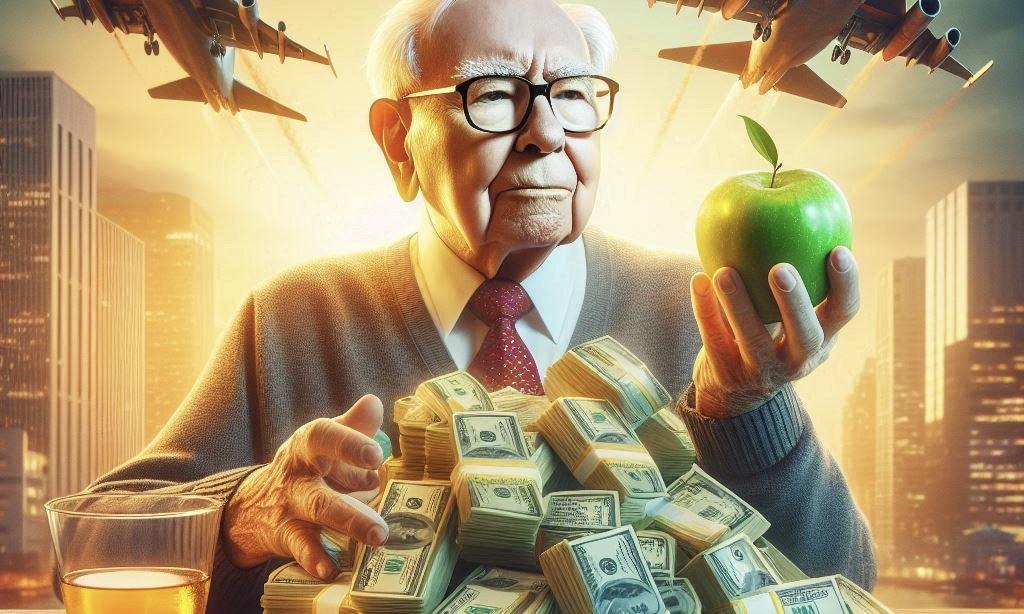
Berkshire Hathaway's cash reserves surged to nearly $277 billion as Warren Buffett halved the Apple stake, signaling caution about the U.S. economy and stock market valuations.
Berkshire Hathaway's Defensive Stance Signals Caution Amid Market Volatility and Economic Uncertainty
Warren Buffett appears to have soured on stocks, as Berkshire Hathaway's cash reserves soared to nearly $277 billion, and the conglomerate sold about half its stake in Apple, even while posting a record quarterly operating profit.
Berkshire's recent results suggest that Buffett, at 93 years old and one of the world's most revered investors, is becoming wary of the broader U.S. economy or believes that stock market valuations have become too high.
These results were released following a stock market selloff that pushed the Nasdaq into correction territory. The weak jobs report also raised concerns about U.S. economic activity and the Federal Reserve's timing in cutting interest rates.
"If you look at the entire Berkshire picture and the macroeconomic data, a safe conclusion is that Berkshire is getting defensive," said Cathy Seifert, an analyst at CFRA Research who rates Berkshire a "buy."
Berkshire's cash stake grew to $276.9 billion as of June 30, up from a then-record $189 billion three months earlier, mainly because the company sold a net $75.5 billion of stocks. It sold about 390 million Apple shares in the second quarter, in addition to 115 million sold from January to March, as Apple's stock price rose 23%. Despite these sales, Berkshire still owned about 400 million shares worth $84.2 billion as of June 30.
Reuters reported the second quarter marked the seventh consecutive quarter in which Berkshire sold more stocks than it bought. Additionally, Berkshire repurchased just $345 million of its stock, down from $2.57 billion in the first quarter and none in the first three weeks of July.
"Buffett doesn't seem to think there are attractive opportunities in publicly traded stocks, including his own,"said Jim Shanahan, an Edward Jones analyst with a "hold" rating on Berkshire. "It makes me worry what he thinks about markets and the economy."
Berkshire Hathaway's Quarterly Profit Rises 15%, But Revenue Growth Stalls Amid Economic Headwinds
Second-quarter profit from Berkshire's numerous businesses rose 15% to $11.6 billion, or about $8,073 per Class A share, from $10.04 billion a year earlier. Nearly half of that profit came from Berkshire's insurance businesses, including Geico, where underwriting profit more than tripled as premiums rose and claims fell.
However, revenue rose just 1% to $93.65 billion, with little change in major businesses such as BNSF railroad and Berkshire Hathaway Energy, and a 12% drop at the Pilot truck stop chain. Consumers also showed signs of cutting back, causing revenue to decline at Berkshire's more than 80 auto dealerships as they spent less per vehicle on new cars, trucks, and SUVs.
Berkshire's returns from short-term Treasuries are expected to decline once rate cuts begin. Shanahan noted that revenue headwinds "may make it tough for Berkshire to deliver earnings growth in 2025."
The Omaha, Nebraska-based conglomerate also owns many industrial and manufacturing companies, a large real estate brokerage, Dairy Queen, and Fruit of the Loom. Quarterly net income fell 15% to $30.34 billion from $35.91 billion a year earlier, as rising stock prices in both periods boosted the value of Berkshire's stock investments. Buffett has long urged shareholders to ignore Berkshire's quarterly investment gains and losses, often leading to outsized net profits or net losses.
Berkshire Maintains High Cash Reserves Amid Limited Investment Opportunities and Strategic Stock Sales
Berkshire pledges to keep a minimum of $30 billion in cash but often lets it build up when it can't find whole businesses or individual stocks to buy at fair prices. Since mid-July, Berkshire has sold over $3.8 billion shares in Bank of America, its second-largest stock holding.
"We'd love to spend it, but we won't spend it unless we think we're doing something that has very little risk and can make us a lot of money," Buffett said at Berkshire's May 4 annual meeting, referring to Berkshire's cash.
Buffett stated that he expected Apple to remain Berkshire's most significant stock investment, but selling made sense because the 21% federal tax rate on the gains would likely grow. The sales came only two years after Buffett labeled Apple one of Berkshire's "four giants," along with its insurance businesses, BNSF and Berkshire Hathaway Energy.
Berkshire and Apple did not immediately respond to requests for comment. Profit at BNSF fell 3% as the railroad set aside more money for lawsuits, offsetting lower operating costs and more excellent shipping of consumer and agricultural products. Lawsuits against the PacifiCorp utility unit also weighed on Berkshire Hathaway Energy, where profit fell 17%.
Many homeowners and businesses blame PacifiCorp for causing Oregon wildfires in 2020. The utility set aside $2.7 billion for wildfire losses as of June 30, up from $2.4 billion three months earlier, and said losses could grow significantly.
Berkshire's Class A shares closed on August 2 at $641,435. They are up 18% this year, while the Standard & Poor's 500 is up 12%. Buffett has led Berkshire since 1965. Vice Chairman Greg Abel, 62, is expected to succeed him as chief executive.







