


 EU Defence Build-Up Too Slow for 2030 Russia Readiness Goal
  RBI Uses $10 Billion Currency Swaps to Drain Excess Rupee Liquidity
  North Korea Warns South Korea Over US-Led Defense Role
  Asian Stocks Fall as Surging Bond Yields Rattle Markets
  Australia Unemployment Hits Five-Year High Despite Strong Jobs Growth
  NATO Boosts Intelligence Sharing Amid Russia Hybrid Threats
  Sudan Rejects US Legitimacy Remarks, Defends Sovereignty
  Asian Stocks Fall as Bond Yields Surge Ahead of Trump-Xi Summit
  Taiwan Thanks US for Support Ahead of Trump-Xi Summit
  Trump, Xi Focus on Trade and AI at White House Summit
  Wall Street Falls as Treasury Yields Surge, Oil Rebounds on Iran Tensions
  US, China Extend Trade Truce to Jan. 10 Ahead of Trump-Xi Summit
  Fed Unveils Stablecoin Rules Under GENIUS Act
  US Senate Rejects Iran War Powers Resolution in 50-49 Vote
  Kremlin Says No Decision Yet on Putin-Trump December Summit
  France Defends Netanyahu Airspace Clearance Despite ICC Warrant
  Yemen Violence Displaces 130,000 as Civilian Toll Rises


 Add as a preferred source on Google
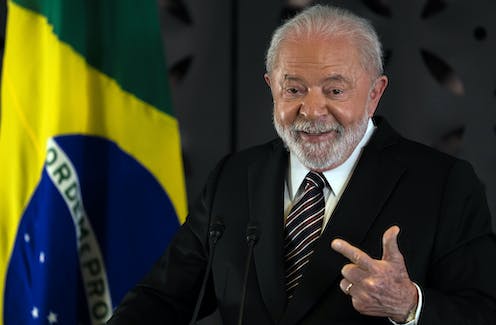
Brazilian President Luiz Inacio Lula da Silva has pledged a swift response after U.S. President Donald Trump imposed steep new tariffs on Brazilian exports. The White House announced on Wednesday that all goods imported from Latin America’s largest economy would now face a 50% tariff—more than double previous levels.
In a firm response, Lula’s office issued a statement declaring that Brazil will not remain passive. “Any measure to unilaterally raise tariffs will be responded to in accordance with Brazil’s Economic Reciprocity Law,” the statement read. The law empowers the Brazilian government to impose equivalent trade measures against countries that unfairly increase trade barriers.
This unexpected move from Washington threatens to escalate trade tensions between the two countries, whose bilateral trade reached nearly $80 billion last year. Brazil, a major exporter of agricultural products, iron, and industrial goods to the U.S., could see significant impacts on its economy if countermeasures are not taken quickly.
Analysts warn that retaliatory tariffs by Brazil could hit key American industries such as tech, chemicals, and machinery, potentially leading to broader trade disruptions. Lula’s administration is currently reviewing possible actions, which may include increased tariffs on select U.S. imports or restrictions on American investments.
This is not the first time Trump has clashed with trading partners over tariffs. His administration previously targeted China, the EU, and other allies, citing the need to protect American jobs and manufacturing. With Brazil now in the crosshairs, global markets are bracing for the potential fallout.
The situation remains fluid, but Lula’s strong stance signals that Brazil is prepared to match U.S. trade aggression with equal force. Both governments have yet to confirm if negotiations will be pursued to de-escalate tensions.







