


 Locked up then locked out: how NZ’s bank rules make life for ex-prisoners even harder
  Columbia Student Mahmoud Khalil Fights Arrest as Deportation Case Moves to New Jersey
  6 simple questions to tell if a ‘finfluencer’ is more flash than cash
  Disaster or digital spectacle? The dangers of using floods to create social media content
  Why financial hardship is more likely if you’re disabled or sick
  Debate over H-1B visas shines spotlight on US tech worker shortages
  Yes, government influences wages – but not just in the way you might think
  Glastonbury is as popular than ever, but complaints about the lineup reveal its generational challenge
  Why a ‘rip-off’ degree might be worth the money after all – research study
  Heritage, desire and diplomacy: why China still values scotch whisky
  Want to cut your energy bills? Here’s how five experts are doing it
  The Beauty Beneath the Expressway: A Journey from Self to Service
  The pandemic is still disrupting young people’s careers
  AI is driving down the price of knowledge – universities have to rethink what they offer
  Time to buy local: war fuel price shocks reveal the folly of a long food supply chain


 Add as a preferred source on Google
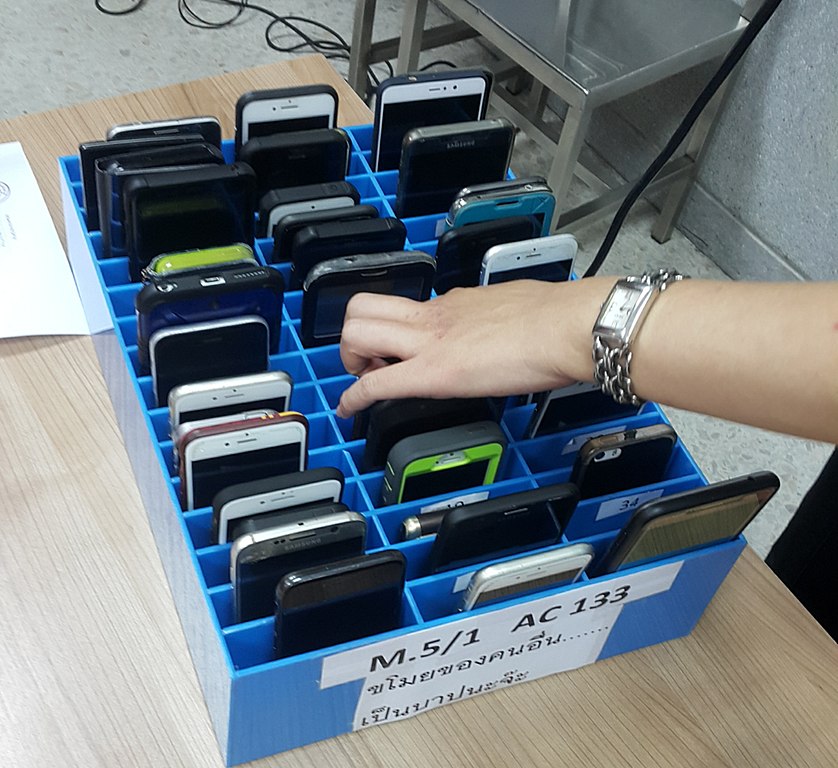

The effects of mobiles phones and other technology at school is a hotly debated topic in many countries. Some advocate for a complete ban to limit distractions, while others suggest using technology as a teaching tool.
Kids in public South Australian primary schools started the school year without being allowed to bring their mobile phones to class, unless they are needed for class activity. All students in public Western Australian Victorian, and Tasmanian schools have a mobile phone ban in place since for all or some of 2020. New South Wales also banned mobile phones in public primary schools, with secondary schools having the option to opt in, since the start of 2020.
Education departments have introduced the bans for various reasons including to improve academic outcomes and decrease bullying.
Several recent papers point to positive impact of banning mobile phones at school on student performance and other outcomes. Understanding the evidence is crucial for best policy.
In a 2015 paper, we used a method — called a difference-in-difference strategy — as well as student data from England to investigate the effect of banning mobile phones on student performance. In this method, we compared schools that have had phones removed to similar schools with no phone bans. This allowed us to isolate the effect of mobiles phones on student performance from other factors that could affect performance.
We found banning mobile phones at school leads to an increase in student performance. Our results suggest that after schools banned mobile phones, test scores of students aged 16 increased by 6.4% of a standard deviation. This is equivalent to adding five days to the school year or an additional hour a week.
The effects were twice as large for low-achieving students, and we found no impact on high achieving students.
Our results suggest low-performing students are more likely to be distracted by the presence of mobile phones, while high performing students can focus with or without mobile phones.
The results of our paper suggest banning mobile phones has considerable benefits including a reduction in the gap between high- and low- achieving students. This is substantial improvement for a low-cost education policy.
Other studies show similar results
Recent studies from Spain and Norway, using a similar empirical strategy to ours, also show compelling evidence on the benefit of banning mobile phones on student performance, with similar effect size.
In Spain, banning mobile phones has been shown to increase students’ scores in maths and science. Researchers also documented a decrease in incidences of bullying.
In Norway, banning phones significantly increased middle school students’ grade point average. It also increased students’ likelihood of attending an academic high school rather than choosing a vocational school. And it decreased incidents of bullying.
Evidence from Belgium suggests banning mobile phones can be beneficial for college student performance. This context might be different, but still informative as students are of similar age to those in high school.
Research from Sweden, however, suggests little effect of banning mobile phones in high school on student performance. It is worth noting, however, the study did not find any detrimental effect of banning mobile phones.
A similar conclusion can be drawn from the literature on the effect of computers used at school. Evidence from the US suggests using laptops in class is detrimental to learning, and the effects are large and more damaging for low-performing students.
Potential psychological mechanisms involved
The psychological literature might shed lights on the potential mechanisms as to why mobile phones and other technology in school might affect student performance. This literature finds multitasking is detrimental to learning and task execution.
Many recent experimental papers present evidence mobile phone use while executing another task decreases learning and task completion. Research also shows computers might be a less efficient way to take notes than pen and paper.
It may be that taking notes by hand allows you to remember the material better than typing those notes on a computer. This may be because students are not just typing out every word said, but thinking of how to summarise what they’re hearing.
These findings do not discount the possibility mobile phones and other technology could be a useful structured teaching tool. However, ignoring or misunderstanding the evidence could be harmful to students and lead to long term negative social consequences.







