


 SpaceX Eyes Starlink Mobile Phone Service to Challenge Verizon, AT&T, and T-Mobile
  South Korea’s KOSPI Plunges as Apple Price Hikes and OpenAI IPO Delay Shake AI Chip Stocks
  Morgan Stanley Sees Chinese Auto Market Recovery Gaining Momentum in Late Summer
  Trump Requests $11 Billion More in Farm Aid as Rising Costs Pressure U.S. Farmers
  Gold Prices Rise Above $4,000 as Inflation Data and Weaker Dollar Boost Demand
  South Korea’s KOSPI Jumps Over 5% as Samsung, SK Hynix Rally on Micron Earnings Boost
  US Dollar Slips After PCE Inflation Data Eases Fed Rate Hike Expectations
  S&P Affirms Brazil’s BB Credit Rating with Stable Outlook Amid Fiscal Challenges
  Bank Regulation Rollbacks in the U.S. and UK Could Increase Financial Risks, Study Warns
  Gold Prices Fall Amid Rate Jitters; Copper Steady as China Stimulus Eyed
  US Dollar Slips After PCE Inflation Data as Fed Rate Hike Expectations Stay Elevated


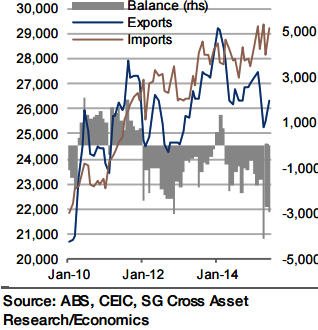
According to the official advanced estimate, imports were practically unchanged in July from June (0.2% mom), meaning that they remained at a high level, and were up by around 4.5% yoy. That said, all of this gain, and more, can be explained by the exchange rate, which in trade-weighted terms was down 13.5% yoy in July.
The volume of imports was estimated about flat over the past year, with the difference explained by weakness in commodity prices, specifically oil, of which Australia is a net importer. Exports, meanwhile, are expected to have continued their recovery after the 8.1% decline they suffered in March/April, but faced a serious headwind in July as the price of iron ore plummeted 17% from June (Port of Qingdao).
"Still, China's July figures for imports from Australia jumped to -4.5% yoy from - 26.5% in June, a move that can only partly be explained by a base effect. Overall, a muted 0.5% increase is expected in exports. As a consequence, the trade deficit should only improve fractionally", says Societe Generale.

- News

- Economy

- Central Banks
- Investing
- Research
- Roundups
- Digital Currency
- Insights
- Technical Analysis
- Technology
- Business
- Law
- Health
- Nature
- Fintech
- Science
- Topic
- Opinions
- ©Econometrics LLC . All Rights Reserved.
Australia's robust imports and weak export prices keep trade deficit elevated
Monday, August 31, 2015 6:09 AM UTC
Editor's Picks



- Market Data
Most Popular




