


 S&P Affirms Brazil’s BB Credit Rating with Stable Outlook Amid Fiscal Challenges
  Asian Stocks Sink as Apple Price Hikes Spark AI Valuation Fears, South Korea and Japan Lead Selloff
  Wall Street Ends Mixed as Micron Surges, Apple Drops After Price Hikes
  Trump Threatens 100% Tariffs on Countries Imposing Digital Services Taxes on U.S. Tech Firms
  Oil Prices Drop as Middle East Supply Recovery Eases Market Concerns
  Gold Prices Rise Above $4,000 as Inflation Data and Weaker Dollar Boost Demand
  SpaceX Eyes Starlink Mobile Phone Service to Challenge Verizon, AT&T, and T-Mobile
  Bank Regulation Rollbacks in the U.S. and UK Could Increase Financial Risks, Study Warns


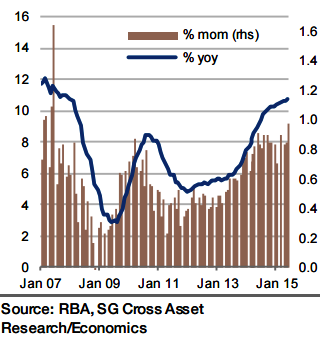
Two key developments are expected to shape Australia's monthly credit data for July. One is the beginning of a moderation in credit growth to housing investors as a result of regulatory pressure.
Banks have raised mortgage rates to such investors, and will also be more restrictive in their lending policy given warnings by the regulator (APRA) that banks which exceed the 10% guidance on maximum growth in this segment will be subject to special attention and potentially be forced to make additional provisions.
"This may begin to affect the data in July or in any case soon, after a particularly strong expansion in June (12.3% mom annualised). Two, some revival is expected in credit growth to businesses which has been weak for the last four months", says Societe Generale.
In light of recent legislation encouraging small investment activity through tax breaks, a pick-up in credit demand ought to materialise, and in any case rather optimistic about non-resource investment activity.
"As to the mainstay of credit growth, lending to owner-occupiers for house purchasing, steady growth of 5 -6% is expected in annualised terms. In short, easy monetary policy is expected to remain effective in supporting credit growth", added Societe Generale.

- News

- Economy

- Central Banks
- Investing
- Research
- Roundups
- Digital Currency
- Insights
- Technical Analysis
- Technology
- Business
- Law
- Health
- Nature
- Fintech
- Science
- Topic
- Opinions
- ©Econometrics LLC . All Rights Reserved.
Regulatory pressure beginning to slow Australian housing investor credit
Monday, August 31, 2015 5:17 AM UTC
Editor's Picks



- Market Data
Most Popular




