


 Meta Connect Spotlights Camera-Free Smart Glasses Amid Privacy Concerns
  SK Hynix, Intel Discuss U.S. Memory Chip Production Deal
  Databricks to Invest $350 Million in Singapore AI Expansion
  Apple Pay Set for India Launch With Axis Bank
  Trump Plans Federal AI Force and AI Czar
  China Reviews Broadcom Switch Use in State Data Centres
  SoftBank Launches $11 Billion Bond Sale to Fund OpenAI Investment
  US Federal Register Drops Alibaba Qwen AI Search Tool
  Hyundai CEO Warns Chinese Automakers Could Disrupt US Market
  OpenAI Urges US-Led Global Standards for Frontier AI
  SoftBank Raises $11.1 Billion in Bond Sale to Fund OpenAI Investment
  Microsoft Stock Upgraded as Stifel Sees Stronger Azure Growth
  France Urges Faster AI Push Despite Safety Risks
  DOJ Will Investigate AI-Related Crimes, Attorney General Blanche Says
  Nvidia CEO Jensen Huang Expected at Trump-Xi State Dinner
  Anthropic’s Claude Discovers CRISPR-Like Enzyme System


 Add as a preferred source on Google
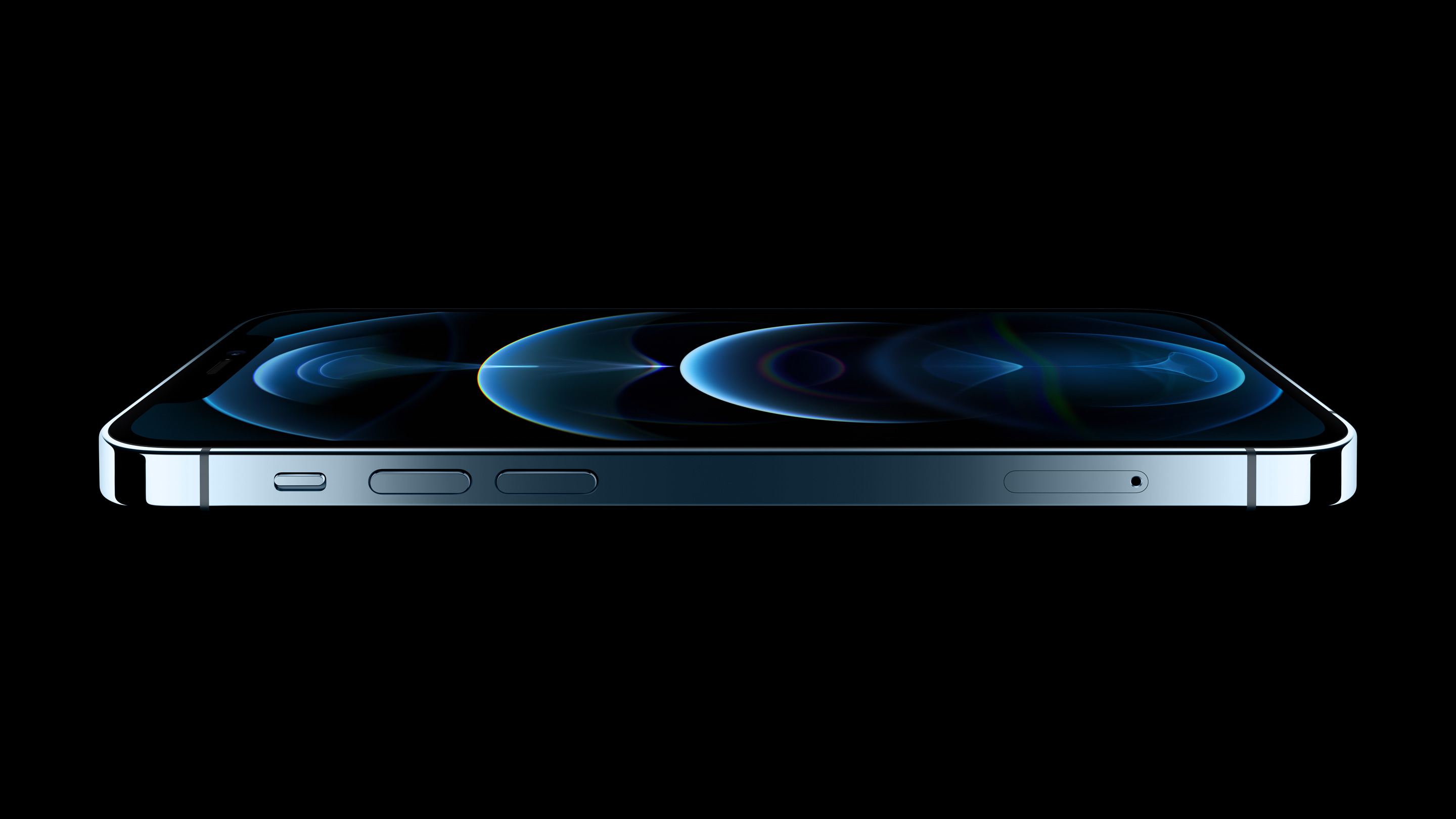

Following in the footsteps of Samsung, Apple has released its first high-spectrum 5G smartphone, the iPhone 12. But only US customers will benefit.
High-spectrum 5G uses millimetre-wave frequencies in the 26GHz range (25.1GHz to 27.5GHz). But Australia’s mobile phone networks, although they can access the mid-range 5G spectrum, don’t have access to these high frequencies.
Unlike the US version, the iPhone 12 model for Australia lacks the distinct millimetre-wave antenna necessary to access them. In other words, Australians who purchase an iPhone 12 wouldn’t be able to access high-spectrum 5G even if it was available here.
How did we fall so far behind?
Using millimetre waves (such as the 26GHz frequency range) allows massive data transfer capacity over short distances.
Millimetre waves are what will help US iPhone 12 users reach speeds of up to 4Gbps (gigabits per second). The extra bandwidth will be especially useful in public spaces that require higher data capacity throughput, such as shopping centres and sport stadiums.
In the US, Samsung’s Galaxy S20+ and Galaxy S20 Ultra (launched in March) both support millimetre-wave frequencies. Telcos AT&T, Verizon and T-Mobile had rolled out the network even before the millimetre wave 5G-capable smartphones were released.
Meanwhile, individual customers and businesses in Australia are still limited to 5G in the sub‑6 GHz range (not millimetre-wave frequencies).
The high-frequency 5G technology is currently only available in the US, but has also been assigned in Italy and Finland. Several other countries are planning to upgrade soon including Singapore, Japan, Taiwan and South Korea. Local licenses are also available in the UK.
According to a European Commission report, 15 of the European Union member states, as well as the UK, have already completed at least one 26GHz spectrum auction. In 25 countries, as well as the UK, at least one spectrum auction was scheduled for this year.
On the other hand, the Australian government is planning to auction off the use of the 26GHz frequencies in March next year, for the first time ever. This leaves us trailing behind.
The longer the delays in bringing the millimetre wave spectrum to Australia, the longer we’ll have to wait before benefiting from it.
Sold to the highest bidder
Following the scheduled auction, Australians may not be able to experience any 5G millimetre wave connectivity until late 2021 or even early 2022.
The result will depend on the best business cases put forth by mobile companies, as well as how telcos allocate the bandwidth between individuals and business customers. The millimetre-wave spectrum will likely be prioritised for industrial use first, before it’s rolled out to residential customers.
That said, if businesses such as manufacturers, sports stadiums, shopping malls, offices and high-rise residential buildings benefit, then individual customers are likely to benefit as well. This is because costs will likely drop and prices will soon follow.
This was the strategy followed in the US and which Optus has indicated it will also likely follow.
What speed tests in Australia reveal
During isolated tests in Australia, non-millimetre wave 5G speeds were recorded to be at least 3.9 to 4.6 times faster than 4G, for Optus and Telstra. But this is still slower than the 1Gbps speeds usually associated with 5G.
According to a Telstra report from last month, millimetre-wave tests conducted by the company promised speeds of 4.2Gbps. While this was for a data call, as opposed to wifi access, theese results are positive and on par with what Apple is promising for new iPhone 12 users in the US (but not yet the UK).
Telstra claims it already has live mobile sites that can support millimetre-wave frequencies on its network, ready for deployment. The company says it has spent the past 18 months laying the foundations for a millimetre-wave 5G network to come into use once these frequencies become available — after which all telcos will purchase their own share.
We’re letting ourselves down
In today’s age, compounded by a global pandemic and severe economic downturns the world over, it matters whether or not a nation has millimetre-wave 5G.
This technology has been available in the US since 2019 and its adoption is separating the world’s trailblazers from those trailing behind.
Millimetre-wave frequencies are need for advanced manufacturing processes, self-driving vehicles, factory automation and reliable communications across hospitals and the (now heavily remotely-operated) educational sectors. These are just some areas where high data capacity is a necessity.
Once millimetre wave-enabled industrial applications are rolled out, we should see customers in high-density public places prioritised for such services, before this rolls down to individuals in their homes. A focus on boosting business will likely underpin this sequence.
Australia wants to upscale its emerging technologies, research and manufacturing capacity, with a focus on the COVID-19 bounce back. But to do this, we’ll need an even speedier resolution than under normal circumstances.
Stanley Shanapinda does not work for, consult, own shares in or receive funding from any company or organisation that would benefit from this article, and has disclosed no relevant affiliations beyond their academic appointment.







