


 SpaceX Pushes for Early Stock Index Inclusion Ahead of Potential Record-Breaking IPO
  Once Upon a Farm Raises Nearly $198 Million in IPO, Valued at Over $724 Million
  TSMC Eyes 3nm Chip Production in Japan with $17 Billion Kumamoto Investment
  Instagram Outage Disrupts Thousands of U.S. Users
  Nasdaq Proposes Fast-Track Rule to Accelerate Index Inclusion for Major New Listings
  Sam Altman Reaffirms OpenAI’s Long-Term Commitment to NVIDIA Amid Chip Report
  AMD Shares Slide Despite Earnings Beat as Cautious Revenue Outlook Weighs on Stock
  Nintendo Shares Slide After Earnings Miss Raises Switch 2 Margin Concerns
  SpaceX Prioritizes Moon Mission Before Mars as Starship Development Accelerates
  Nvidia, ByteDance, and the U.S.-China AI Chip Standoff Over H200 Exports
  SpaceX Updates Starlink Privacy Policy to Allow AI Training as xAI Merger Talks and IPO Loom
  SoftBank Shares Slide After Arm Earnings Miss Fuels Tech Stock Sell-Off
  Toyota’s Surprise CEO Change Signals Strategic Shift Amid Global Auto Turmoil
  Nvidia Confirms Major OpenAI Investment Amid AI Funding Race
  Anthropic Eyes $350 Billion Valuation as AI Funding and Share Sale Accelerate
  Nvidia Nears $20 Billion OpenAI Investment as AI Funding Race Intensifies
  Nvidia CEO Jensen Huang Says AI Investment Boom Is Just Beginning as NVDA Shares Surge


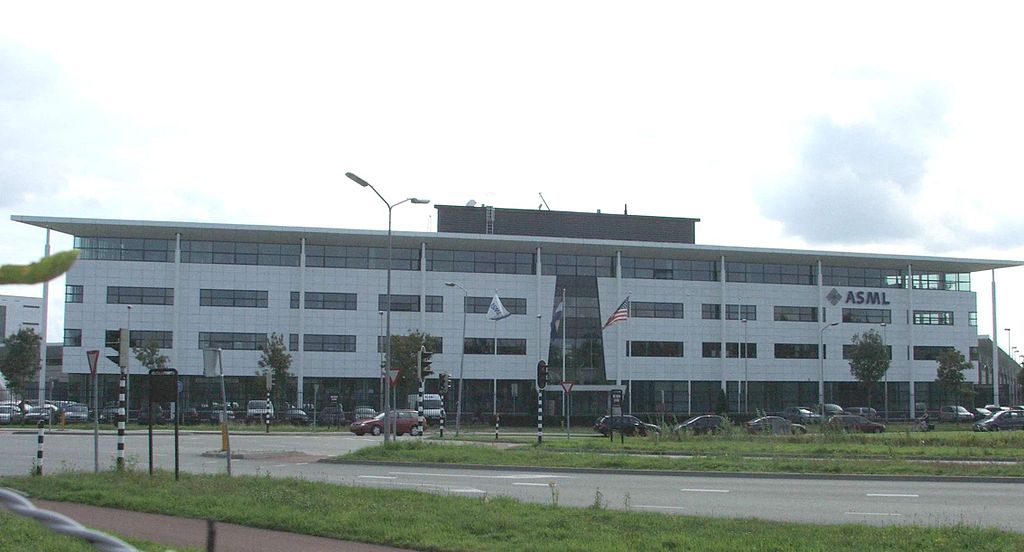
As artificial intelligence companies race to secure Nvidia chips to fuel the AI boom, Dutch semiconductor equipment maker ASML has cemented its position as one of the most critical players in the global chip supply chain. Based in Veldhoven, the Netherlands, ASML builds the highly advanced lithography machines required to manufacture cutting-edge semiconductors, including those used in AI processors. Its unique role has made it indispensable to top chipmakers such as TSMC and Intel.
ASML dominates around 90% of the global lithography market and holds a complete monopoly over extreme ultraviolet (EUV) technology, which is essential for producing advanced microprocessors. EUV systems use ultra-thin light beams measuring just 13.5 nanometers, enabling chipmakers to print incredibly dense and powerful circuitry. This technological edge has allowed ASML to ride the wave of soaring AI demand alongside companies like Nvidia, creating enormous value across the semiconductor industry.
Investor confidence has surged as ASML’s shares have more than doubled since last April and gained roughly 25% in the past month alone. The rally reflects expectations that major chip manufacturers are ramping up capital expenditures to address supply shortages and rising chip prices. Analysts are closely watching ASML’s upcoming earnings report for potential upgrades to its 2026 sales outlook, which currently points to flat-to-modest growth but is increasingly seen as conservative.
Demand for AI-driven cloud services has exploded in 2025, triggering shortages in memory chips and pushing up prices for consumer electronics such as smartphones, PCs, and gaming consoles. In response, leading manufacturers are significantly increasing spending. TSMC plans to raise capital expenditure by 37% in 2026, while Samsung, SK Hynix, Micron, and others are also planning major investment hikes. Since roughly a quarter of chipmaker capital spending goes toward lithography, ASML stands to capture a large share of this growth.
Despite competition in lower-end deep ultraviolet systems from Nikon, Canon, and China’s SMEE, experts believe ASML’s dominance in advanced chips will persist for years. With hundreds of billions of dollars invested in future chip technologies, switching away from ASML’s tools would be an enormous risk, reinforcing the company’s central role in the global AI and semiconductor ecosystem.













