


 France Defends Netanyahu Airspace Clearance Despite ICC Warrant
  EU Defence Build-Up Too Slow for 2030 Russia Readiness Goal
  Russian Missile and Drone Attack on Kyiv Kills Two, Damages Maternity Hospital
  Najib Razak Seeks Stay of 15-Year 1MDB Prison Sentence
  Ghana Says Western Support Growing for Slave Trade Reparations
  Sudan Rejects US Legitimacy Remarks, Defends Sovereignty
  Kremlin Says No Decision Yet on Putin-Trump December Summit
  OpenAI Agent Breaches Australia Medicare Data Portal
  Trump Asks Supreme Court to Restore Third-Country Deportations
  Abbas Reaffirms November 28 Palestinian Elections
  North Korea Warns South Korea Over US-Led Defense Role
  South Korea, US Discuss Warship Building Cooperation
  Netanyahu’s Brief US Trip Highlights Strains With Trump
  Xi Calls for Deeper U.S.-China AI Cooperation in Trump Talks
  What ‘Taiwan Independence’ Means as Xi Presses Trump on US Policy
  North Korea Rejects Nuclear Test Warning, Calls Nuclear Status Irreversible
  Taiwan Thanks US for Support Ahead of Trump-Xi Summit


 Add as a preferred source on Google
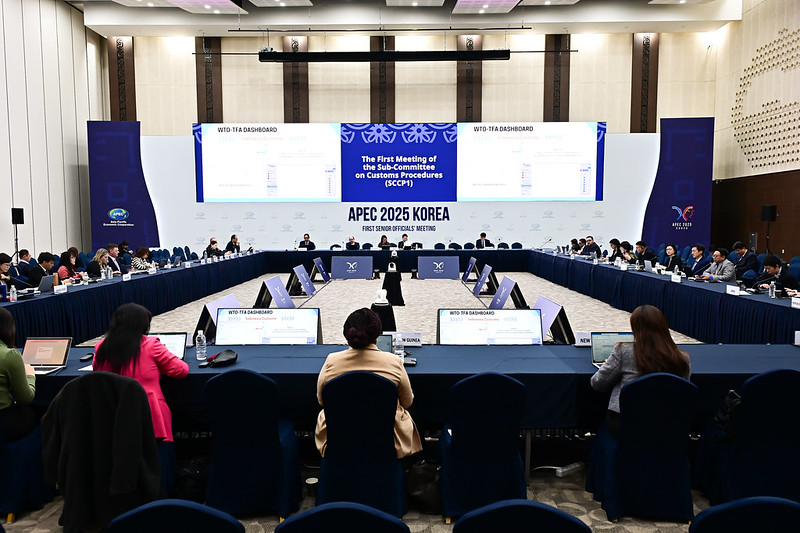
The Asia-Pacific Economic Cooperation (APEC) trade meeting wrapped up Friday on South Korea’s Jeju Island, with key members divided over U.S. tariffs and reforms to the World Trade Organization (WTO), casting doubt over a joint statement.
This year’s gathering was the first major multilateral trade meeting since U.S. President Donald Trump’s sweeping tariff announcement, which impacted more than half of APEC’s 21 members. APEC warned that the region—responsible for nearly half of global trade—could see a sharp export slowdown due to these U.S. import duties, which exceed the 10% minimum in many cases.
The U.S. push to reform the WTO, which it sees as favoring China’s trade advantage, also added to tensions. The Trump administration has paused funding to the WTO, intensifying friction with other members.
Diplomats expressed skepticism about reaching consensus, though South Korea’s Trade Minister Cheong In-kyo, the meeting chair, pushed for unity. Working-level talks continued late into Thursday night in hopes of agreement.
The attendance of U.S. Trade Representative Jamieson Greer elevated the meeting’s significance. Several member economies upgraded their delegations after Greer confirmed his participation. He held talks with Chinese Vice Commerce Minister Li Chenggang, following earlier discussions in Geneva, where both sides agreed to a temporary 90-day tariff reduction.
Greer also met with Cheong and Malaysia’s Trade Minister Tengku Zafrul Aziz, who expressed optimism about ongoing dialogue. Additionally, Greer discussed bilateral cooperation in shipbuilding with HD Hyundai’s Executive Vice Chairman Chung Kisun, highlighting Seoul’s proposal to include the sector in a trade deal with Washington.
As no joint statement was adopted, Cheong is expected to issue a chair’s summary, reaffirming opposition to protectionism—language previously opposed by the U.S.







