


 Iran-U.S. Oil Tensions Escalate as Revolutionary Guards Threaten Strait of Hormuz Blockade
  Israel-Iran War: Herzog Urges Patience as U.S. and Israeli Strikes Intensify
  Japan's BOJ Independence Under Fire as PM Takaichi's Rate Stance Draws Political Heat
  Iran's Government Remains Stable Despite U.S. and Israeli Strikes, Intelligence Shows
  IEA Releases Record 400 Million Barrels of Oil Amid U.S.-Iran War
  Shots Fired at U.S. Consulate in Toronto in Suspected National Security Incident
  Trump Administration Spent $5.6 Billion in Munitions in Opening Days of Iran Strikes
  U.S.-Israel War on Iran Sends Crude Oil Prices Surging Amid Strait of Hormuz Tensions
  Ukraine Strikes Russian Missile Component Factory in Bryansk Using British Weapons
  Trump Doubts Iran Mining Reports as Strait of Hormuz Tensions Escalate
  Trump Hints at Possible U.S. Takeover of Cuba Amid Deepening Humanitarian Crisis
  Venezuela Names Paula Henao as New Oil Minister Amid U.S.-Led Industry Overhaul
  Anthropic Sues Pentagon Over AI Blacklist, Citing Free Speech Violations
  Trump Announces New U.S. Oil Refinery in Texas with Indian Energy Giant Reliance
  After the Iran war, Persian Gulf nations face tough decisions on the US – a former diplomat explains
  Boeing Secures $289 Million Smart Bomb Contract With Israel
  Taiwan's MQ-9B SkyGuardian Drone Order Stays on Schedule Despite Middle East Conflict


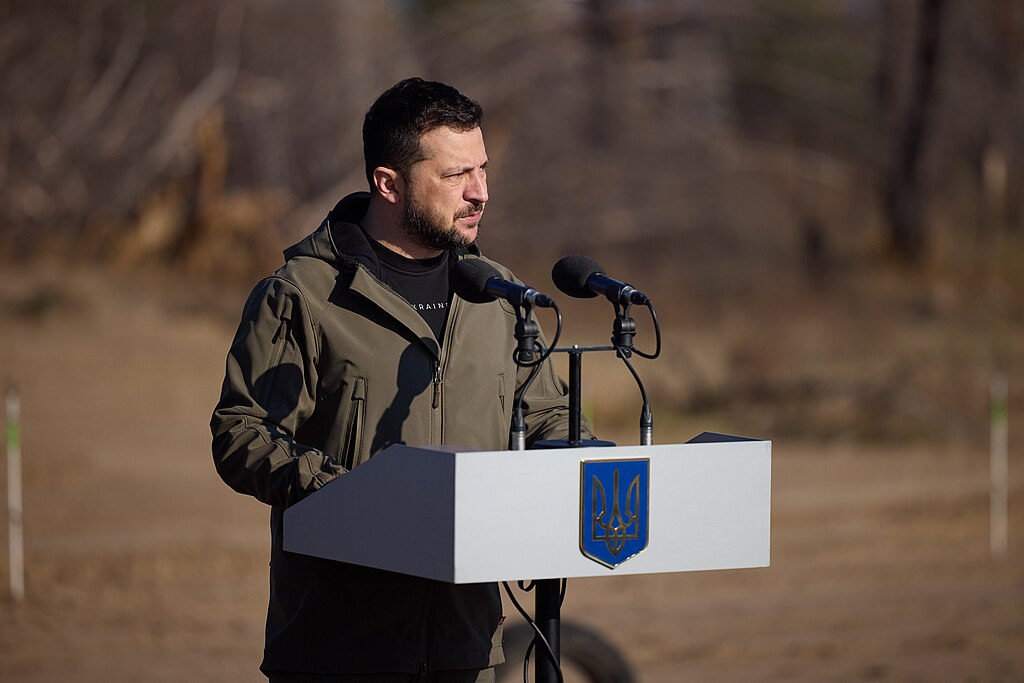
Ukrainian President Volodymyr Zelenskiy has indicated a major shift in Ukraine’s long-standing foreign policy by offering to drop the country’s aspirations to join NATO, as part of renewed efforts to end the war with Russia. The proposal emerged during more than five hours of high-level talks in Berlin on Sunday between Ukrainian officials and U.S. envoys, with negotiations set to continue on Monday.
The discussions were hosted by German Chancellor Friedrich Merz and involved U.S. envoy Steve Witkoff and Jared Kushner, signaling increased engagement from Washington nearly four years after Russia’s 2022 invasion of Ukraine. Witkoff said “a lot of progress was made,” though specific details of the negotiations remain undisclosed. Zelenskiy’s adviser, Dmytro Lytvyn, confirmed that draft documents are being reviewed and that the Ukrainian president will comment publicly once talks conclude.
Ahead of the meeting, Zelenskiy said Ukraine could formally abandon its NATO membership goal in exchange for strong, legally binding Western security guarantees. These would include U.S. commitments similar to NATO’s Article 5, along with guarantees from European allies and partners such as Canada and Japan. Zelenskiy described the proposal as a significant compromise, noting that NATO membership is enshrined in Ukraine’s constitution and has long been viewed as the strongest deterrent against future Russian aggression.
The offer aligns with one of Moscow’s core demands. Russian President Vladimir Putin has repeatedly insisted that Ukraine renounce NATO ambitions, adopt neutrality, and withdraw forces from contested territories. Russian officials have also sought written assurances that NATO will not expand further eastward.
Zelenskiy reiterated that Ukraine has so far refused to cede territory, though he said a ceasefire along current front lines could be a fair interim solution. Germany’s Defence Minister Boris Pistorius cautiously welcomed the talks but warned that Ukraine’s past experience with security assurances, notably the 1994 Budapest Memorandum, highlights the risks of guarantees without firm U.S. backing.
European allies have described the negotiations as a critical moment, with Britain, France, and Germany working to adjust U.S. peace proposals while exploring ways to support Ukraine financially, including the potential use of frozen Russian assets.













