


 FxWirePro: EUR/AUD gains some ground but outlook is bearish
  FxWirePro-The Crypto Leaderboard Dashboard
  Fed Unveils Stablecoin Rules Under GENIUS Act
  FxWirePro: EUR/NZD recovers from early dip, upside pressure builds
  Fed’s Hammack Says More Data Needed Before Next Rate Move
  BlackRock’s Rick Rieder Favors Bonds Over Stocks as Treasury Yields Surge
  FxWirePro: GBP/AUD steadies above 1.9000, retains bid tone
  NZDJPY: Bearish Bias Below 90 — Sell Rallies Toward 86.40
  JPY Major Currency Score: Mixed Trend — USDJPY Bullish; NZDJPY, AUDJPY, GBPJPY and EURJPY Bearish
  FxWirePro- Major Crypto levels and bias summary
  FxWirePro: NZD/USD rebounds modestly but outlook is still bearish
  RBA Says ASX Still Falls Short on Governance and Risk Controls
  Fed’s Williams Signals One More Rate Hike Before Year-End
  AUD/JPY Stays Above 110 as Weak Yen Fuels a Potential Move Toward 112


 Add as a preferred source on Google
Today Japan released Current account data with positive numbers. It's directly linked to currency demand - a rising surplus indicates that foreigners are buying more of the domestic currency to execute transactions in the country.
- In addition average Cash earning data was released with Negative numbers at 0.1% vs 0.7% expected.
- Moreover, BOJ released a summary of opinions at their January 28-29 meeting. Such report confirmed that Bank of Japan board members were totally divided over the cost of adding a potentially contradictory negative interest rate policy to the bank's easing programme.
- According to the report - "QQE with a Negative Interest Rate" is expected to bring about a further decline in expected real interest rates by lowering the short end of the yield curve, in combination with large-scale purchases of JGBs."
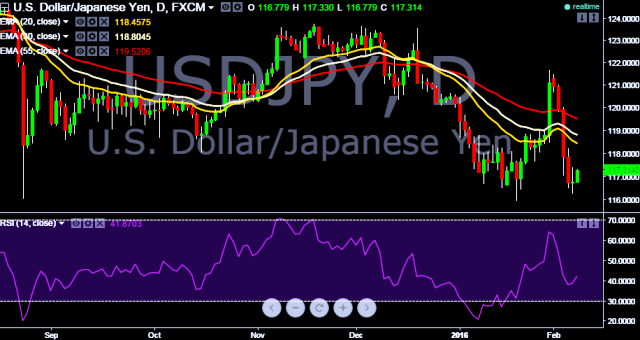
- Pair is currently trading above 117.00 marks, made intraday high at 117.27 and low at 116.77 levels.
- On the Top side resistance levels are seen around 118.24 and 119.02 levels.
- On the other side, resistance levels are seen at 116.29, 115.97 and 115.32 levels.
We prefer to take long position in USDJPY at current level around 117.25, stop loss 116.29 and target 119.02 levels.







