


 Nasdaq Hits Record High as Tech Stocks Lift Wall Street
  Hong Kong Stocks Slip as Property, Financial Shares Weigh
  German Industrial Orders Plunge 10.6% in August
  Japan Real Wages Rise 1.5%, Supporting BOJ Rate Hikes
  Samsung, SK Hynix Shares Fall Ahead of Q3 Earnings
  Euro Hits 17-Month Low as France Debt Fears Boost Dollar
  Gold Prices Rise as Dollar Weakens, Treasury Yields Ease
  Ukraine Faces $56 Billion Budget Gap as War Costs Soar
  Australia Consumer Confidence Plunges as RBA Rate Hike Hits Households
  Asian Stocks Rise as Nasdaq Record Offsets Bond Yield Pressure
  Gold Prices Fall Amid Rate Jitters; Copper Steady as China Stimulus Eyed


 Add as a preferred source on Google
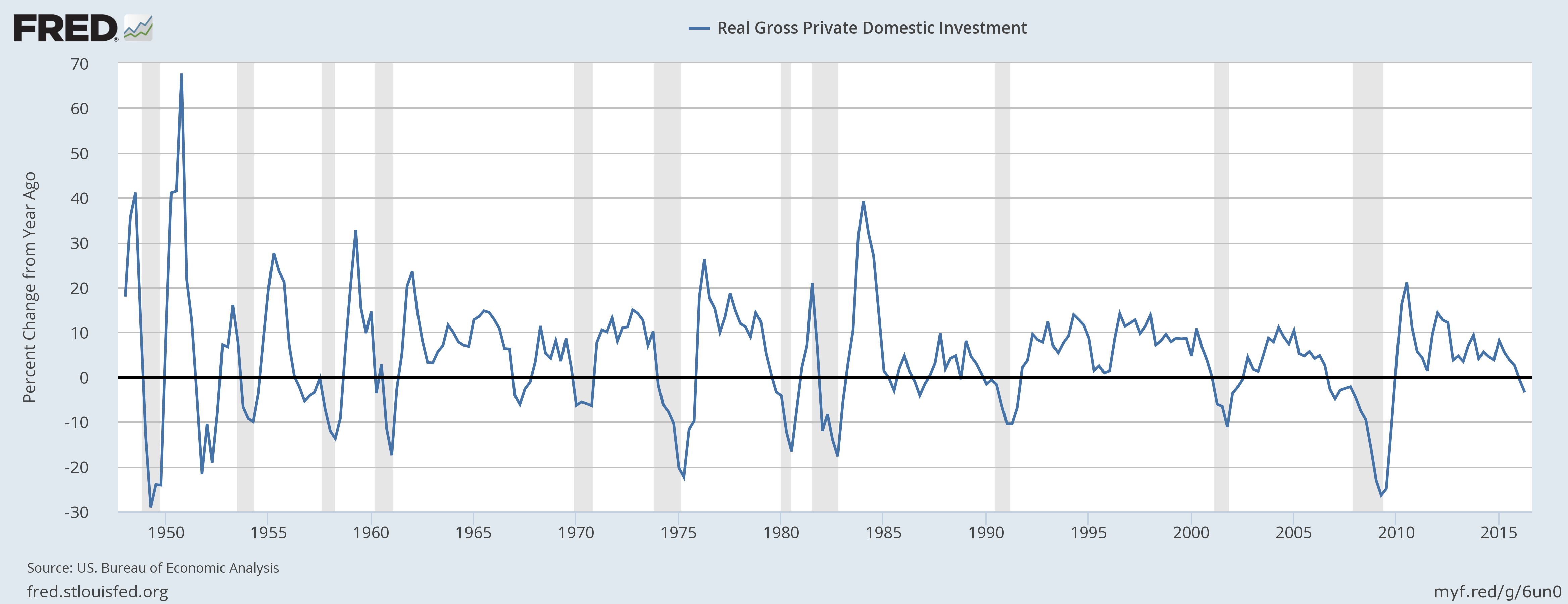
After reaching $2.77 trillion in the first quarter of 2006, the real gross private domestic investments started declining and by the time U.S. economy entered recession it was down to $2.5 trillion and after which it declined sharply to just 1.8 trillion in the third quarter of 2009. Since then economic and monetary policies have given it a boost. In the third quarter of 2015, it reached a fresh all-time high of $2.88 trillion and again it is in decline. By the second quarter of 2016, it is down to $2.77 trillion.
In the second quarter of 2016, the measure is down 3.42 percent from a year ago. Since 1948, there have been 16 instances, when this measure has declined into the negative on a yearly basis and in 13 cases recession followed within a span of one to two years. It is one of the many measures which have been warning against looming recession in the United States.







