


 GM and Peak Energy Partner to Advance Sodium-Ion Battery Technology for Grid Storage
  Oracle Stock Falls Despite Earnings Beat as Company Plans $40 Billion Financing for FY2027
  Apple Unveils Enhanced Apple Intelligence and Next-Generation Siri at WWDC 2026
  Nvidia Expands South Korea AI Partnerships to Strengthen Data Center and Memory Chip Supply
  Bouygues, Orange and Iliad Strike €20.35 Billion Deal to Acquire SFR
  oOh!media Takeover Battle Intensifies as Bain Capital Joins Competing Bids
  Asics Considers Onitsuka Tiger Spinoff as Luxury Sneaker Brand Expands Globally
  OpenAI May Slash AI Service Prices Amid Growing Rivalry With Anthropic
  Frasers Group Launches €2 Billion Hugo Boss Takeover Offer Amid Control Speculation
  Naver Stock Jumps on NVIDIA Partnership to Build South Korea’s AI Infrastructure
  OpenAI Eyes Massive 10GW Ohio Data Center Campus in Potential $500 Billion AI Infrastructure Deal
  Qualcomm Stock Gains After Jensen Huang Endorsement
  SK Hynix Stock Rebounds as AI Memory Chip Demand Fuels Expansion Plans
  GSK Reportedly Nears $9 Billion Acquisition of Cancer Drug Developer Nuvalent
  BitGo Expands Regulated Crypto Trading Services in MENA
  Intesa Sanpaolo Launches €30.6 Billion Bid for Monte dei Paschi to Drive Italian Banking Consolidation
  Changchun Targets EV Growth as China’s Auto Industry Consolidation Accelerates


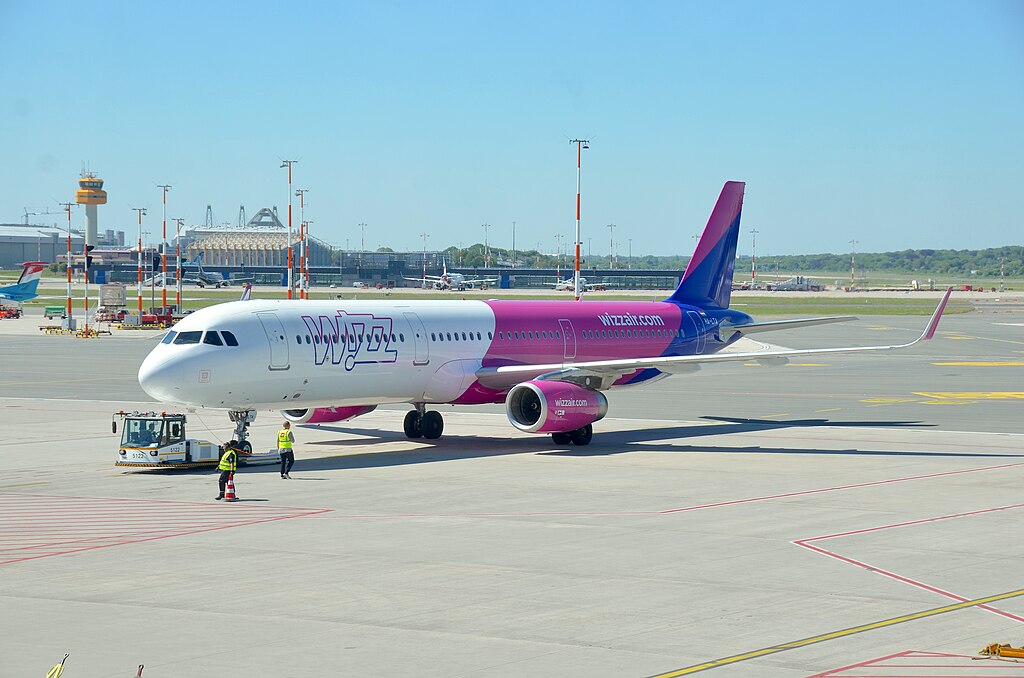
Wizz Air reported stronger-than-expected annual earnings, demonstrating resilience despite ongoing challenges facing the global aviation sector. The Hungarian low-cost airline benefited from fleet expansion, improved operational efficiency, and disciplined cost management, helping it outperform market expectations even as geopolitical tensions in the Middle East continued to affect the industry.
For the fiscal year ending March 31, Wizz Air posted an operating profit of €139.7 million, significantly exceeding analyst estimates of €88.5 million, according to LSEG data. Although the result represented a 16.6% decline compared with the previous year, investors welcomed the earnings surprise, sending Wizz Air shares higher in early London trading.
The airline generated total revenue of €5.7 billion, an increase of 8% year-over-year and broadly in line with market forecasts. Total unit revenue slipped slightly by 0.4%, with ticket revenue per available seat kilometer (ASK) remaining stable at €2.39 cents. Ancillary revenue per ASK, which includes services such as baggage and seat selection fees, declined marginally by 0.8% to €1.92 cents.
Wizz Air continued to expand capacity during the year. Available seat kilometers increased by 8.5%, while the number of seats flown rose 10.5%, partly due to a strategic shift toward shorter-haul routes. This growth supported revenue performance despite a competitive operating environment.
Operating expenses remained a key focus. Excluding fuel costs, unit costs increased 5.8% during the year, driven by higher depreciation, maintenance, navigation, and crew-related expenses. In the fourth quarter, ex-fuel unit costs surged 18.1%, largely because the previous year included a one-time maintenance cost credit that did not recur.
Meanwhile, fuel unit costs fell 9.6% to €1.34 cents, benefiting from lower fuel prices for much of the fiscal year. However, the savings were partially offset by sustainable aviation fuel requirements and emissions trading expenses.
At the EBITDA level, Wizz Air delivered earnings of €1.32 billion, up 16.2% from the previous year. The airline’s EBITDA margin improved by 1.6 percentage points to 23.2%, highlighting stronger profitability and operational performance.
Despite the positive earnings results, Wizz Air declined to provide fiscal 2027 guidance. The company cited limited visibility due to the prolonged Middle East conflict, which continues to create uncertainty for airlines and the broader travel industry.







