


 Scope Warns US Debt Could Hit 160% of GDP
  Gold Prices Fall Amid Rate Jitters; Copper Steady as China Stimulus Eyed
  US Treasury Bond Buybacks Fall Short Despite Expanded $6 Billion Cap
  Yen Strengthens on Tokyo Inflation as Dollar Awaits US Jobs Data
  Wall Street Edges Higher as Treasury Yields Retreat
  Oil Prices Hold Steady as Middle East Supply Risks Persist
  Best Gold Stocks to Buy Now: AABB, GOLD, GDX
  G20 Divided Over US Push to Curb Industrial Overcapacity


 Add as a preferred source on Google
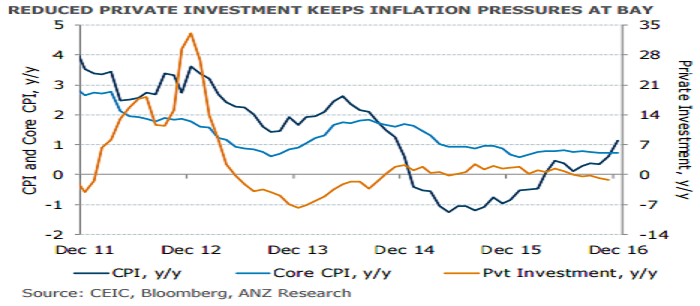
Weak domestic activity in Thailand is expected to cap the country’s inflation prospects this year. The latest numbers on domestic activity still point to a sequential slowdown in Q4 2016.
Thailand’s headline inflation rose in December, posting its second straight month of increase. Various indicators of domestic demand still point to GDP growth slowdown in Q4 2016. Gross domestic product growth in 2016 is expected to have averaged 3.2 percent y/y. Growth in private consumption continues to ease while private investment remains in contractionary zone, ANZ reported.
Growth in private consumption eased for the second straight month in November on sluggish consumer spending and fewer in-country travels among locals. Consumer confidence of both farm and non-farm households remains weak on pullbacks in non-farm income, while gains in farm income were concentrated only in certain crops.
Private investment remains a drag, posting its fifth month of straight contractions. However, the prolonged weaknesses in domestic activity will likely cap consumer price gains. Credit growth remains subdued at 4.1 percent y/y as of October.
"We still expect inflation to maintain its slow rise in 2017 averaging 1.6 percent, putting it in the lower half of the central bank’s 1-4 percent target range," the report said.







