


 HP Stock Drops 9% Despite Q3 Earnings Beat and Raised 2026 Outlook
  U.S. Disrupts China-Linked Hacking Campaign Targeting Government Agencies
  Google Expands Gemini Enterprise With AI Tools for Legal Sector
  Trump Buys SpaceX Shares After Record IPO
  U.S. Probes Apex Logistics Over Nvidia AI Chip Shipments to China
  Nvidia Pauses AI Cloud Financing Deals Amid Antitrust Concerns
  Nvidia Options Price in $280 Billion Earnings Swing
  SpaceX Mobile Network Could Cost Up to $130 Billion, Bernstein Says
  SK Hynix Shares Fall as Workers Reject Wage Deal
  BofA Names ASML Top Semiconductor Equipment Pick on Growth, Valuation
  SoftBank Eyes $20 Billion Bond Sale to Refinance OpenAI Loan
  Luxshare Shares Rise as First-Half Profit Jumps 18%
  Unitree Shares Plunge 45% After Blockbuster IPO, Raising China Tech Bubble Fears
  Xiaomi Unveils Xring O3 Chip for Flagship Foldable Phone
  Salesforce Shares Surge as AI Demand Powers Q2 Earnings Beat
  OpenAI AI Agent Swarm Behind Hugging Face Hack


 Add as a preferred source on Google
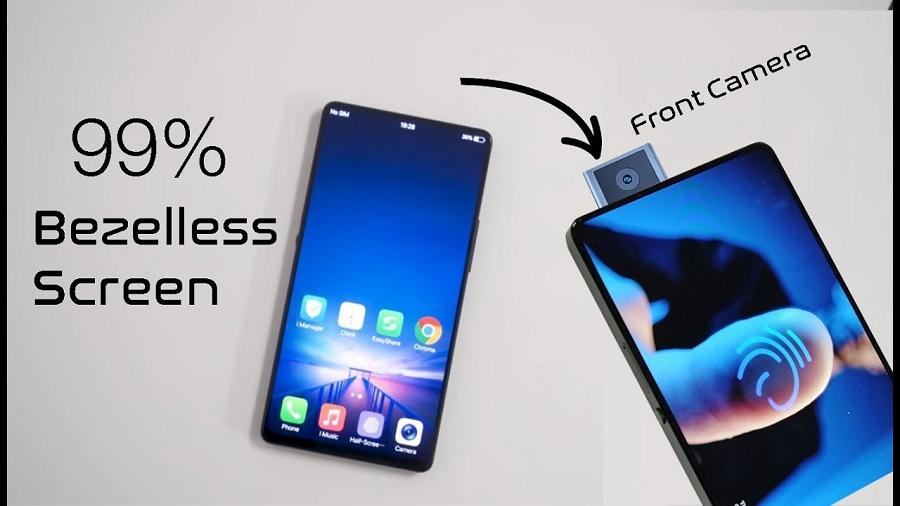
Lenovo recently failed to provide the world with the first true full-screen smartphone with the Z5. This disappointment might have just provided Vivo the opportunity to make history. With its announcement of the smartphone Nex, the Chinese smartphone company promises to succeed where Lenovo failed. Not only will it supposedly be completely bezel-free, it will have no notch.
The Nex is actually based on the Apex, the concept smartphone that Vivo unveiled last February, during the Mobile World Congress, The Verge reports. Much like the final product, the Apex didn’t have a notch and its bezel was so minimal it was practically non-existent. Now, Vivo has launched the Nex to provide consumers with an actual full-screen device.
Introduced in China, where the product is now available for purchase, it comes with several neat features that are worth noting. First would be the pop-up camera, which allows the company to get rid of the notch. The front-facing, image-capture device is an 8MP unit while the back camera offers 12MP.
Due to the design choices that Vivo made, the Nex is 91.24 percent screen. There is still a hint of a chin on the bottom, but this is one aspect that can be easily overlooked.
As for the speaker, the company’s “screen sound casting technology” that involves vibrating glass to produce sound takes care of that. The result is a device that needs no speaker while still producing a relatively decent audio quality.
A firsthand impression of the device is featured by Android Authority via a YouTube video. The publication notes its initial thoughts on what the smartphone offers and what consumers can expect.
With regards to the actual specs, the Nex is equipped with a Qualcomm Snapdragon 845 processor, Engadget reports. It also comes with 8GB of RAM and the Adreno 630 GPU.
Overall, this new smartphone from Vivo holds a ton of promise. Its biggest impact, however, is likely related to the reprieve it provides consumers from the infamous notch. This notch is a trend that was started by Apple with the iPhone X. It has since been adopted by other manufacturers, which many consumers and critics consider to be an eyesore.







